This article has been reviewed according to Science X's editorial process and policies. Editors have highlighted the following attributes while ensuring the content's credibility:
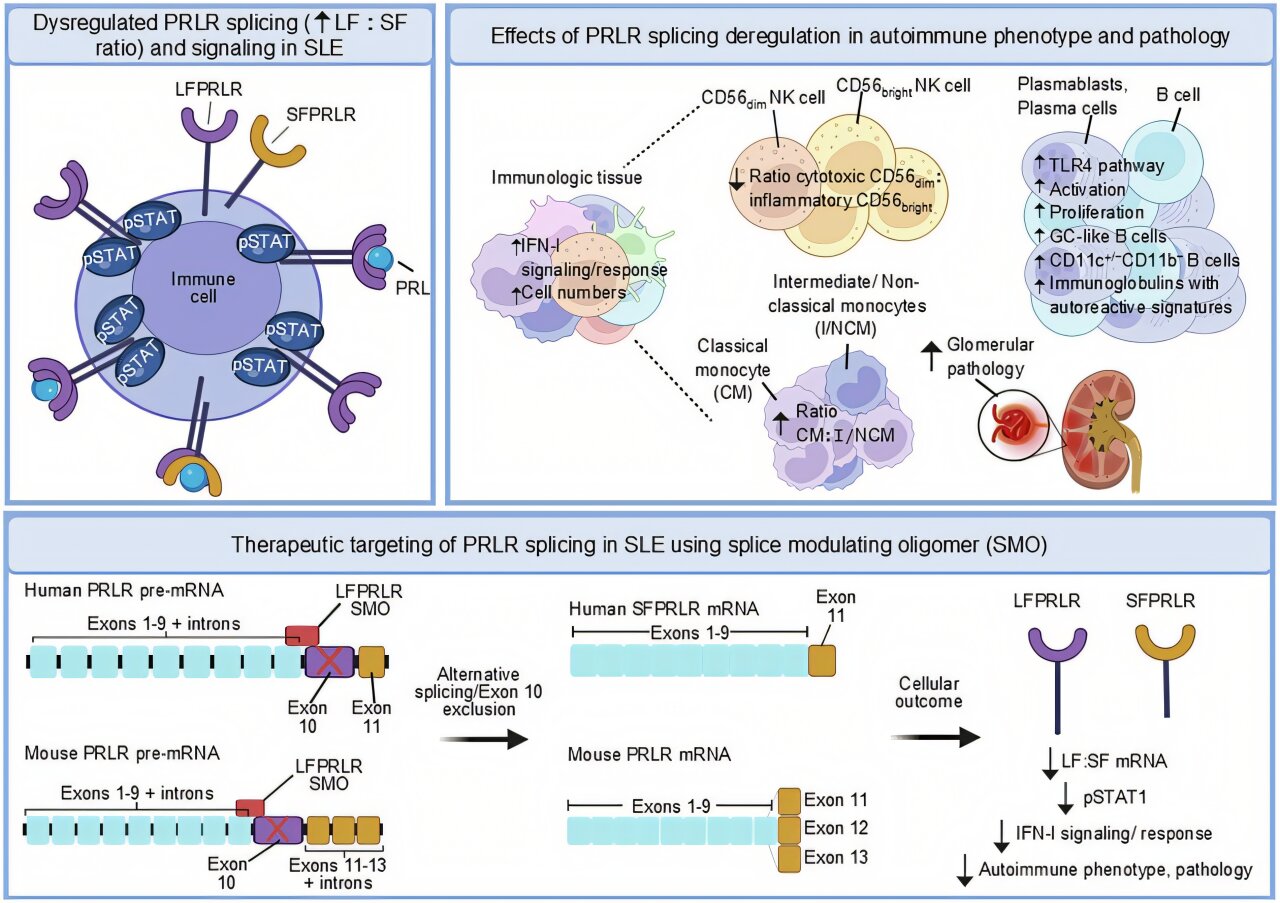
Researchers at the University of California, Riverside, and City of Hope have identified a new strategy for treating systemic lupus erythematosus (SLE), or lupus, an autoimmune disease in which the immune system attacks healthy tissues. By targeting an imbalance in receptors for the hormone prolactin in disease-causing immune cells, the team reduced inflammatory molecules and harmful immune cells while preserving their normal counterparts.
Prolactin acts as a signaling molecule in many tissues throughout the body. Previous clinical evidence has linked the hormone to lupus, but the mechanisms behind the relationship have remained unclear. The study, published in Experimental and Molecular Medicine and done in human cells and mouse models, points to an important role for a specific form of the prolactin receptor in lupus.
Ameae Walker, a professor of biomedical sciences in the UCR School of Medicine and co-corresponding author of the study, explained that prolactin receptors are produced in two main varieties, long and short. They both bind prolactin via identical regions outside the cell but produce different signaling inside the cell.
"In immune cells from patients with lupus, the balance is shifted toward the long form," she said. "The long-form prolactin receptor is not a mutant; it's a perfectly normal form of the receptor. But its expression, and its ratio with the short form, is abnormal in pathogenic immune cells in lupus."
Source link