
This article has been reviewed according to Science X's editorial process and policies. Editors have highlighted the following attributes while ensuring the content's credibility:
Scientists have discovered that a sugar produced by a gut bacterium can increase energy burning in visceral fat—the harmful fat that accumulates around internal organs—while reducing weight gain and improving metabolic health, offering a potential new approach to tackling obesity.
Their findings come as concerns over rising obesity rates continue to grow, with half of the world's population expected to be overweight or obese by 2035. In Singapore, over 12% of the country's population is living with obesity.
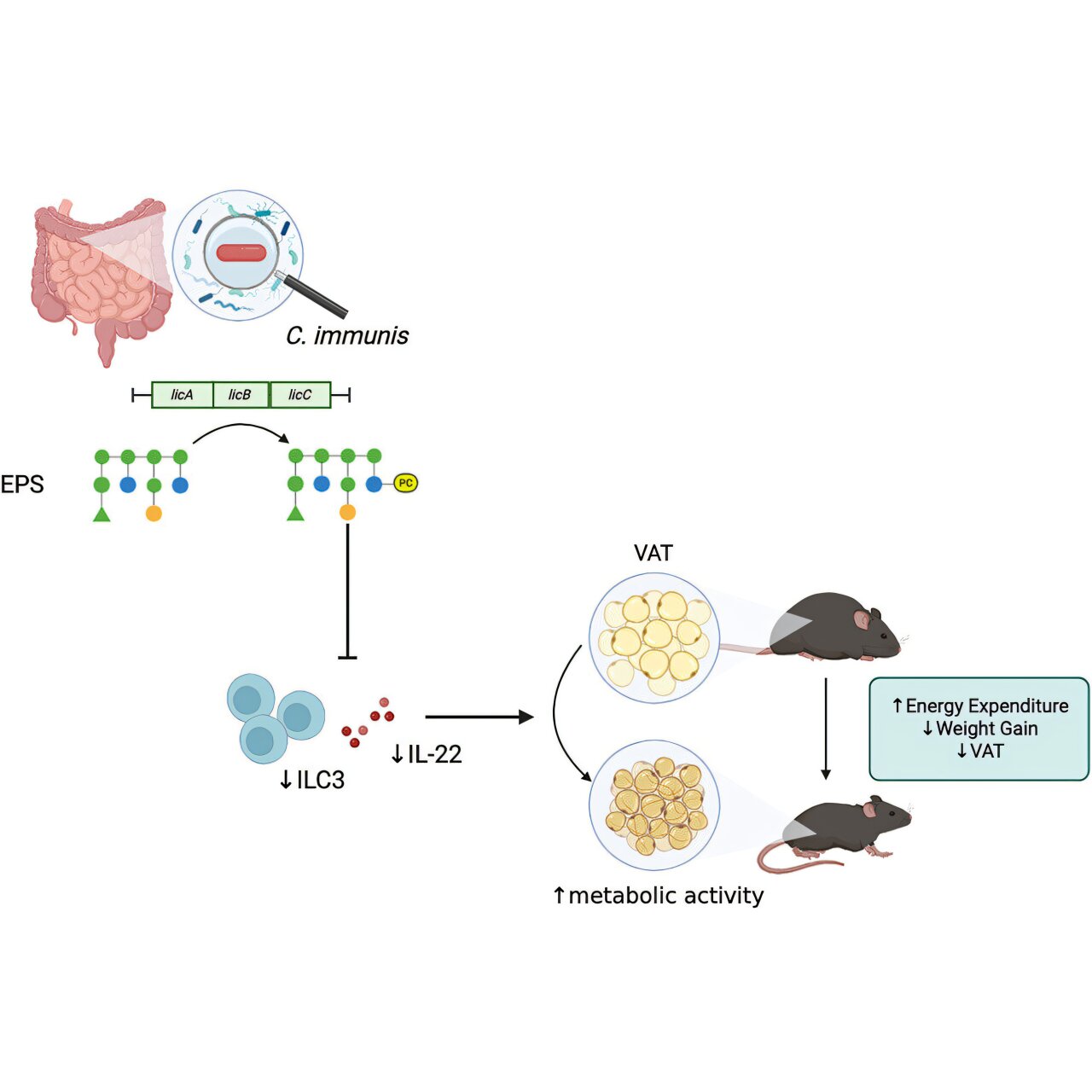
In the study, published in Cell Host & Microbe, researchers from Duke-NUS Medical School and Duke University School of Medicine identified a bacterium, Clostridium immunis (C. immunis), which lives in the gut. The team discovered that C. immunis produces a sugar molecule known as an exopolysaccharide (EPS).
This sugar requires a small chemical group called phosphocholine for activity. This phosphocholine-modified sugar—like an "on switch"—catalyzes the reduction of weight gain and visceral fat, which is closely linked to metabolic diseases such as type 2 diabetes and cardiovascular disease.
The team also established the critical role that phosphocholine-modified molecules play by examining existing metagenomic data in 4,145 people globally. They found that people with obesity had fewer copies of a gene that adds phosphocholine as compared to those with a BMI below 25 (typically defined in international standards as within the healthy or normal weight range).
Source link





