
This article has been reviewed according to Science X's editorial process and policies. Editors have highlighted the following attributes while ensuring the content's credibility:
Cancer immunotherapy uses the body's defenses to attack cancer, but it does not help every patient. One reason may be the environment surrounding a tumor. Macrophages normally clear damaged cells, but some can suppress immune responses inside tumors, making it harder for cancer-fighting cells to work.
A research team, led by doctoral student Yan Zhang, along with Dr. Megumu Tanaka and Professor Takayuki Shindo from the Department of Cardiovascular Research, School of Medicine, Shinshu University, Japan, studied receptor activity-modifying protein 3 (RAMP3), which had previously been linked to stromal regulation in cancer.
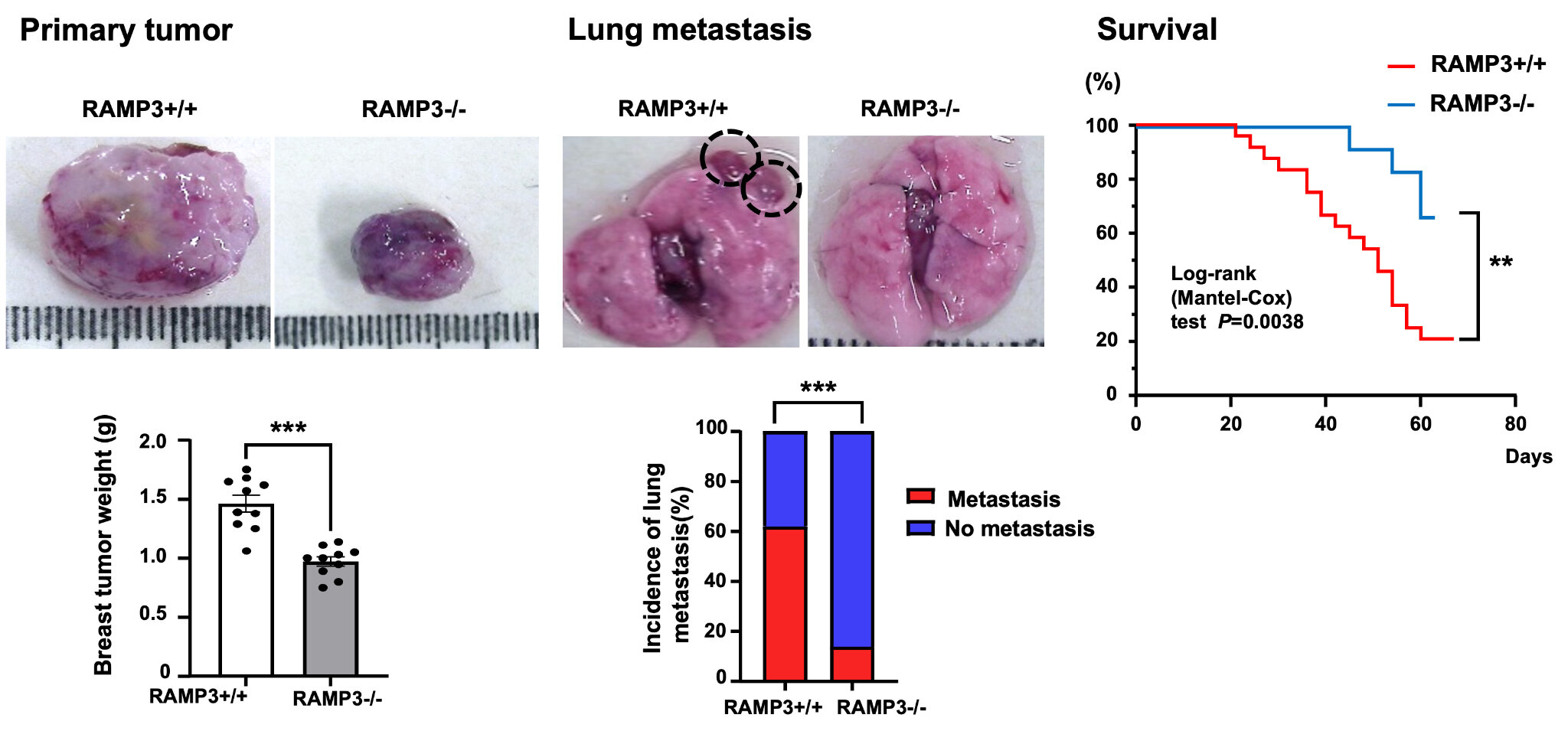
In mouse breast cancer models, they compared tumor growth, lung spread, survival, immune cells and response to anti-programmed cell death protein 1 (PD-1) treatment when RAMP3 was present or genetically removed. They also analyzed single-cell and spatial data and public breast cancer patient data.
Mice lacking RAMP3 developed smaller primary tumors, had less spread to the lungs and lived longer than mice with the gene. Their tumors contained fewer immune-suppressing macrophages and more CD8⁺ T cells, which can attack cancer cells. These findings suggest that removing RAMP3 changed the tumor environment in ways that supported immune activity.
Further analyses offered clues about how this happens. Without RAMP3, macrophages were less likely to adopt an immune-suppressing state. The researchers found reduced activity in the IL-4/STAT6 signaling pathway, which is involved in this process, and lower levels of CCL8, a molecule associated with immune suppression.
Source link





