
This article has been reviewed according to Science X's editorial process and policies. Editors have highlighted the following attributes while ensuring the content's credibility:
An international study has found new evidence of a key element in how our body and brain communicate, opening the door to new research on obesity and related metabolic disorders. This work was authored by Dr. Sonia Fernández-Veledo and Maria Repollés-de-Dalmau at the Southern Catalonia Biomedical Research Institute (IRB CatSud) in collaboration with the University of Cambridge and other partners.
At the University of Cambridge, the work was led by the lab of Dr. Luca Peruzzotti-Jametti, a specialist in neuroimmune research in the Department of Clinical Neurosciences.
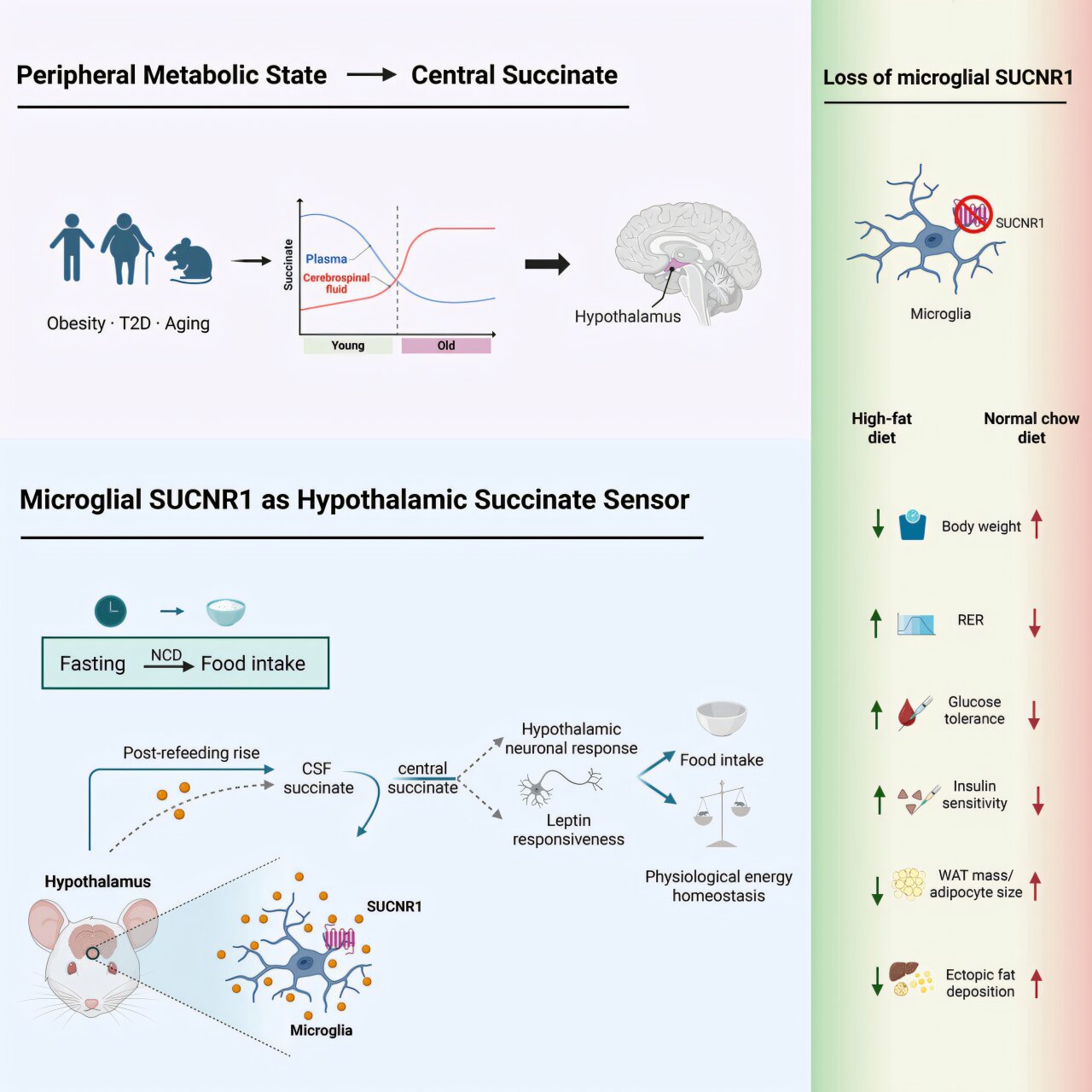
The study identified a mechanism that offers new insight into how the brain controls metabolism and food intake. Published in Cell Metabolism, it reveals that microglial cells, part of the brain's immune system, detect changes in the body's metabolic state and help maintain energy balance.
The messenger in this communication is succinate, a molecule that helps produce cellular energy and is dependent on the body's metabolic state.
The research team analyzed how this signal is interpreted by immune cells in the brain through a receptor called SUCNR1 and, in turn, how it influences the neural circuits that regulate food intake and metabolism.
They found SUCNR1 is involved when the brain responds to eating after a period of fasting. It also regulates the response to leptin, a hormone involved in the regulation of satiety and energy balance.
Source link





