
This article has been reviewed according to Science X's editorial process and policies. Editors have highlighted the following attributes while ensuring the content's credibility:
As its name suggests, a hormone called relaxin-2 is involved in relaxing tissues throughout the body, such as dilating blood vessels to increase blood flow; loosening pelvic ligaments and suppressing uterine contractions in preparation for childbirth; and reducing inflammation and scar-tissue buildup (fibrosis) in the heart, lungs, liver, kidneys and skin.
Scientists have grown interested in using relaxin-2—or developing medicines that act like relaxin-2—to treat conditions including heart failure and pulmonary fibrosis. They've made progress in the last few years, but some of these drug candidates have failed to achieve their promise when they reached clinical trials. It's also hard to design relaxin-mimicking drugs because the receptor the drugs need to bind to, known as RXFP1, has a wickedly complex structure.
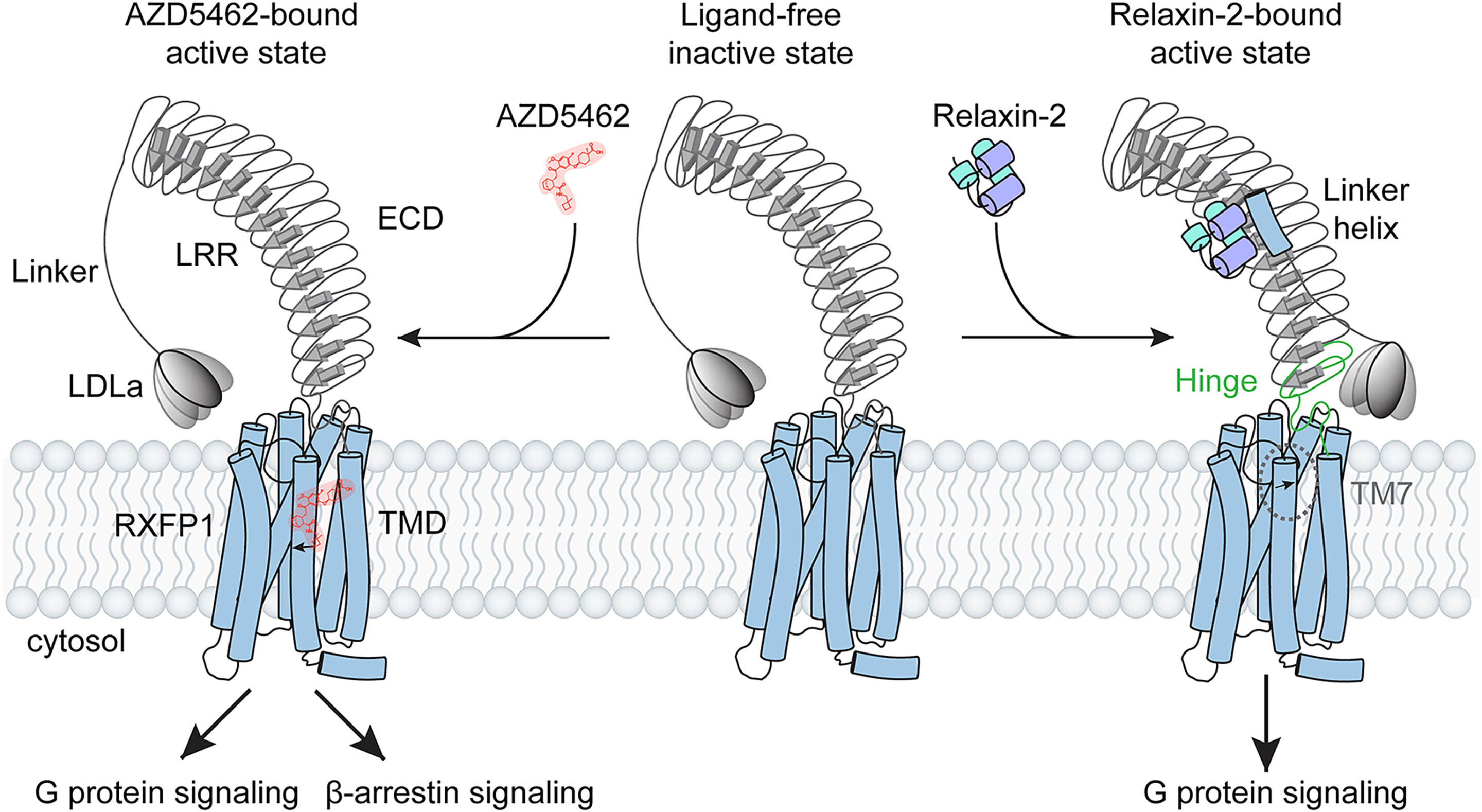
A team led by the lab of Andrew Kruse in the Blavatnik Institute at Harvard Medical School has now revealed that the two types of drugs currently being tested actually bind to different parts of RXFP1 and activate it using different mechanisms.
The discovery, published in Science, reveals at least two distinct sites on the receptor where drugs could act, boosting the chances of successfully targeting it.
"Developing drugs that target RXFP1 has been very challenging because we couldn't see in detail how the receptor works. Now that we can see where different kinds of drugs bind, we have more options for designing new ones that work—and for understanding why some haven't," said first author James Osei-Owusu, HMS research fellow in biological chemistry and molecular pharmacology and a Howard Hughes Medical Institute Hanna Gray postdoctoral fellow in the Kruse Lab.
Source link





