
This article has been reviewed according to Science X's editorial process and policies. Editors have highlighted the following attributes while ensuring the content's credibility:
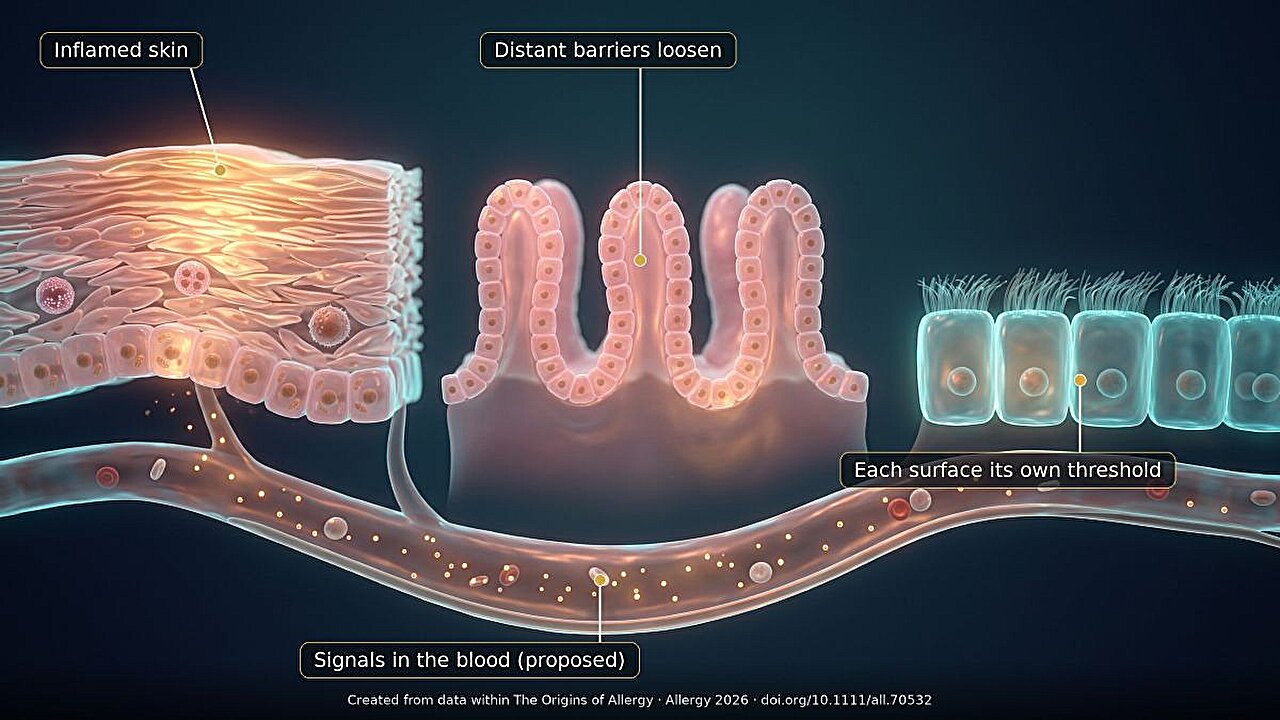
Scientists are challenging centuries-old teaching that allergies start in the immune system, suggesting instead that they may be due to a power failure inside the body's barrier cells, which line the skin, gut, nose, lungs and esophagus.
Study leader Peter Smith, a professor and clinical immunologist from Griffith's School of Medicine and Dentistry, said the team analyzed the largest multi-omic collection of allergy data it was aware of, encompassing 116 case-control cohorts, 3,776 patients and 2,164 controls. The study's co-authors were from Mount Sinai, Leuven, Cork, Southampton, Zurich, Miami, Singapore and Aberdeen.
The paper "The origins of allergy: An outside-in, bioenergetic hypothesis" has been published in Allergy.
"For 60 years, we've taught that allergies start with the immune system and the barrier breaks as a consequence, but our work suggests it may be the other way around," Smith said.
"Allergic diseases, which now affect up to one in three children, may start one step earlier as a power failure in the mitochondria of the epithelial cells that form the body's barrier surfaces.
"The barrier cell can't meet the energy and stress demands of the modern environment, so it raises the alarm too easily, and the immune events we recognize as an allergy follow.
"It could help to explain why some children have eczema, food allergies, hay fever, asthma and related conditions."
The evidence was strongest in eosinophilic esophagitis, an allergic disease of the esophagus.
Source link





