This article has been reviewed according to Science X's editorial process and policies. Editors have highlighted the following attributes while ensuring the content's credibility:
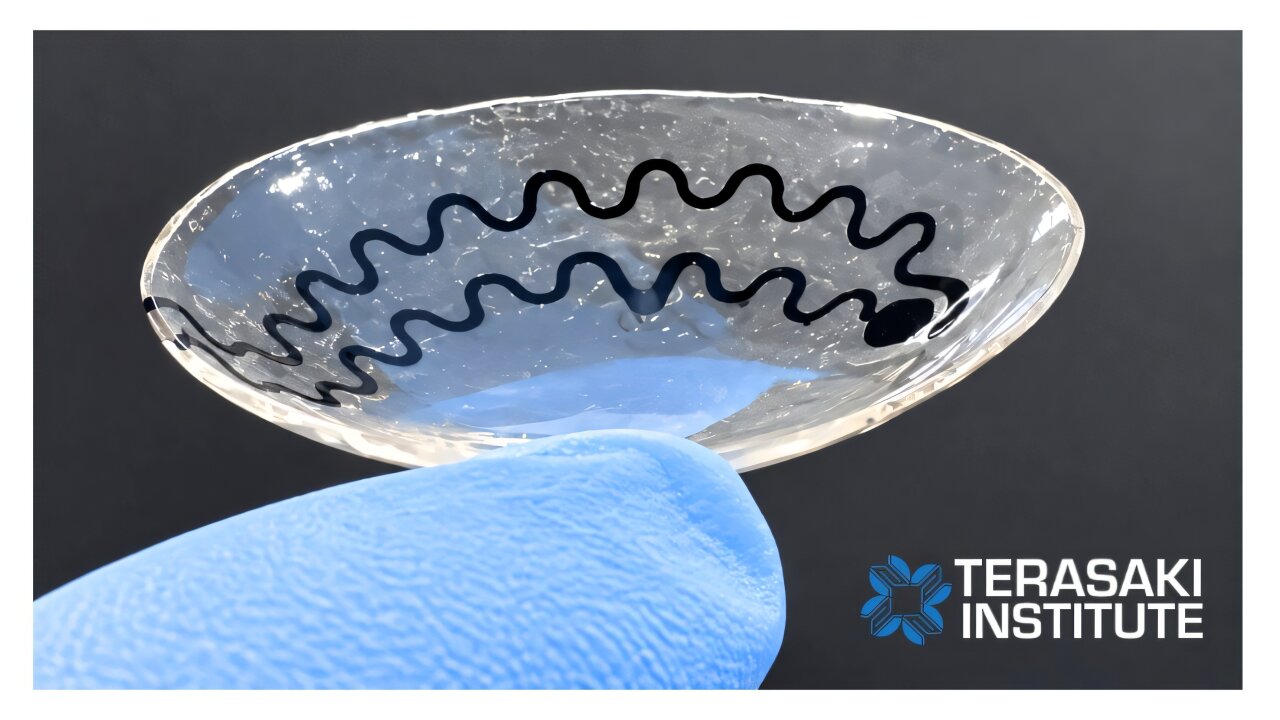
A research team led by Dr. Yangzhi Zhu, principal investigator and assistant professor at the Terasaki Institute for Biomedical Innovation, has developed a soft, reusable smart contact lens as part of its broader Ocular Library for the Analysis of Tear Biomarkers (OCULAB), a tear bioelectronics platform for noninvasive, longitudinal biochemical monitoring through the ocular surface and tear film. In this study, the platform was used to measure serotonin directly from tears as a proof-of-concept target for monitoring stress-related physiological changes.
Stress affects many aspects of physical and mental health, yet physiological changes associated with stress can be difficult to monitor objectively over time. Serotonin is an important signaling molecule involved in mood regulation and stress-related physiology. It is also present in tears, making tear fluid an attractive, minimally invasive source of biochemical information. The study was designed to explore whether a soft ocular bioelectronic platform could sensitively detect serotonin in this small and dynamic biofluid.
The team developed the device, termed a lab-on-a-contact-lens, by integrating a thin, flexible sensor into a standard soft contact lens. The sensor uses a compound called ferrocene, which reacts with serotonin to generate a small electrical signal that can be measured and converted into a concentration reading. The work, published in Science Translational Medicine , showed that the sensor could detect serotonin at concentrations as low as 72 picomolar, roughly 200 times more sensitive than needed to measure typical human tear serotonin levels.
Source link