
This article has been reviewed according to Science X's editorial process and policies. Editors have highlighted the following attributes while ensuring the content's credibility:
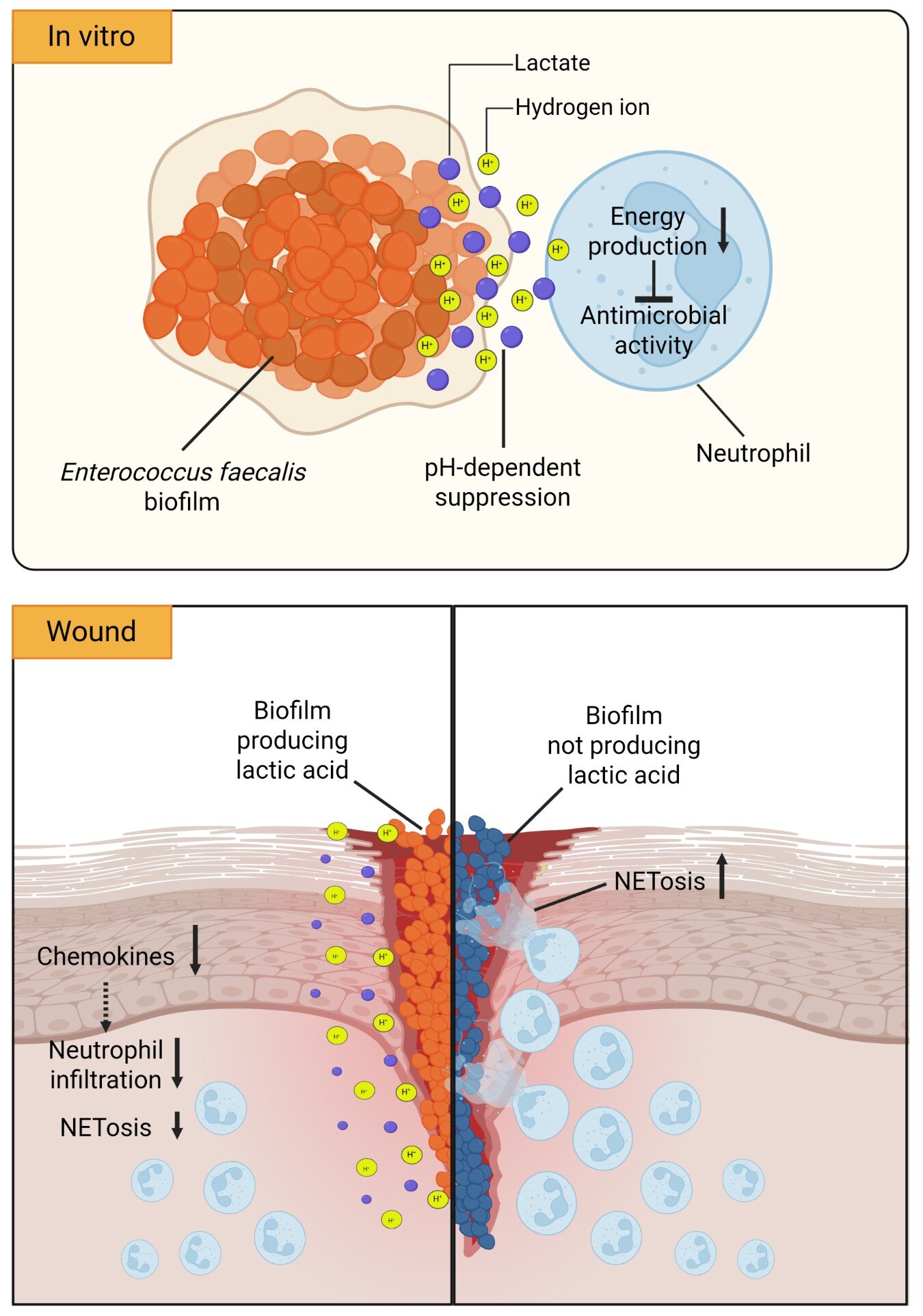
Scientists from Nanyang Technological University, Singapore (NTU Singapore) have uncovered how biofilms of Enterococcus faecalis (E. faecalis), a type of bacteria, systematically disarm the human immune system. The findings could pave the way for new treatments that neutralize bacterial metabolism rather than relying solely on conventional antibiotics.
E. faecalis lives harmlessly in human intestines but can cause serious infections, such as chronic wound infections, infective endocarditis and catheter-associated urinary tract infections, when it spreads to other parts of the body. These bacteria form slime-like communities called biofilms that are hard to get rid of.
The study, published in Science Advances, was led by researchers from the Singapore Center for Environmental Life Sciences Engineering (SCELSE), School of Biological Sciences in collaboration with the Lee Kong Chian School of Medicine at NTU, the Singapore-MIT Alliance for Research and Technology (SMART), and the University of Geneva.
Neutrophils are white blood cells and among the body's first responders to infection. They can engulf invading bacteria or release web-like structures called neutrophil extracellular traps, or NETs, which capture and help kill microbes. Despite strong neutrophil recruitment, E. faecalis biofilms often persist during infection.
This study reveals how E. faecalis disarms neutrophils. The team exposed human neutrophils to biofilm secretions and watched their metabolic activity grind to an abrupt halt.
They uncovered this effect using microcalorimetry, a technique that measures the heat released by cells, alongside liquid chromatography–mass spectrometry, which quantifies molecules involved in the cells' metabolic processes.
Source link





