This article has been reviewed according to Science X's editorial process and policies. Editors have highlighted the following attributes while ensuring the content's credibility:
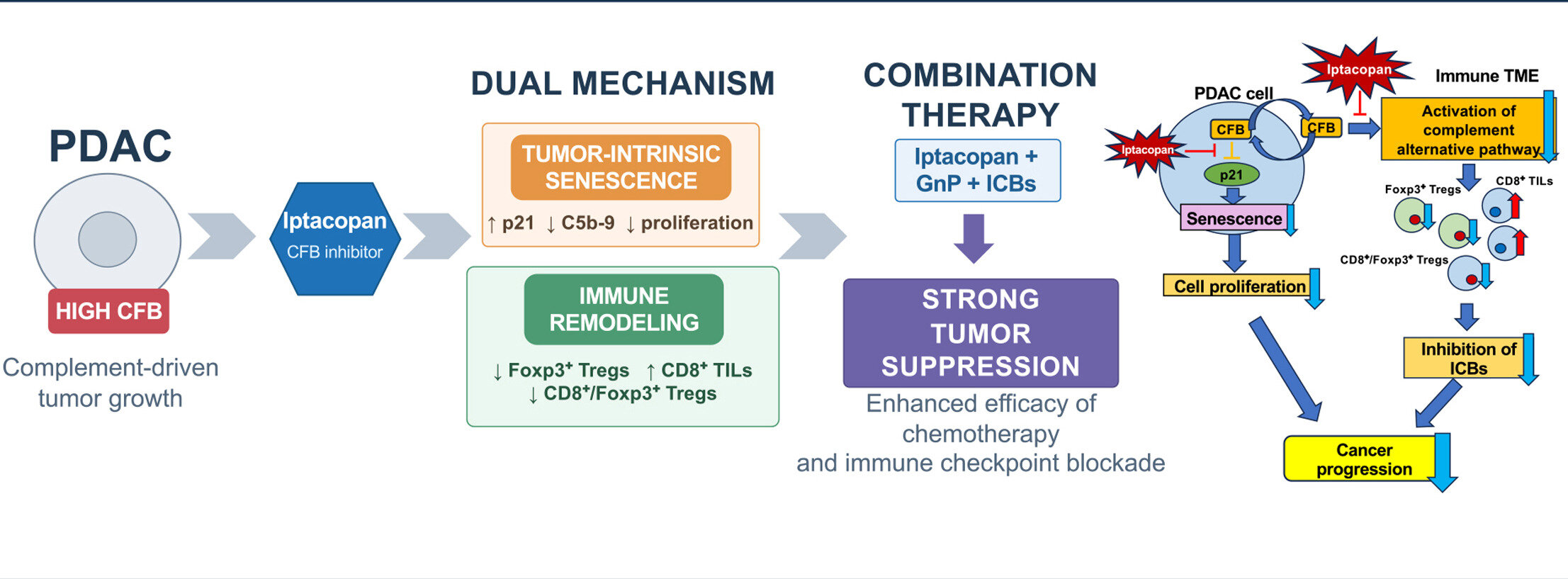
Researchers have identified a promising new target in the treatment of pancreatic cancer. A new study in The American Journal of Pathology demonstrates that blocking complement factor B (CFB), a pivotal enzyme in the alternative complement pathway, halts cancer growth and alters the tumor microenvironment. The greatest tumor suppression was observed when CFB inhibition was combined with chemotherapy and immunotherapy.
Pancreatic ductal adenocarcinoma (PDAC) remains one of the most difficult cancers to treat, in large part because of its highly immunosuppressive nature. Effective therapies are limited, and the five-year survival rate is below 15%.
The researchers in this study first examined the clinical significance of CFB in human PDAC tissues and found that high levels of the enzyme in the connective tissue surrounding the tumor were associated with poorer patient survival rates and more frequent hematogenous recurrence. They then investigated the effects of the selective CFB inhibitor iptacopan in pancreatic cancer cells and found that CFB blockade reduced cancer cell proliferation and promoted cellular senescence, accompanied by increased expression of p21, a protein that signals cancer cells to stop growing.
, Department of General Surgery, Chiba University, Graduate School of Medicine, Japan. "In our previous research, we identified that CFB is upregulated during PDAC development.
Source link