
This article has been reviewed according to Science X's editorial process and policies. Editors have highlighted the following attributes while ensuring the content's credibility:
Why do certain cancer-associated mutations cause malformations in some blood vessels while leaving others largely unaffected? The answer lies in the identity and developmental stage of endothelial cells, the cells lining the inside of blood vessels.
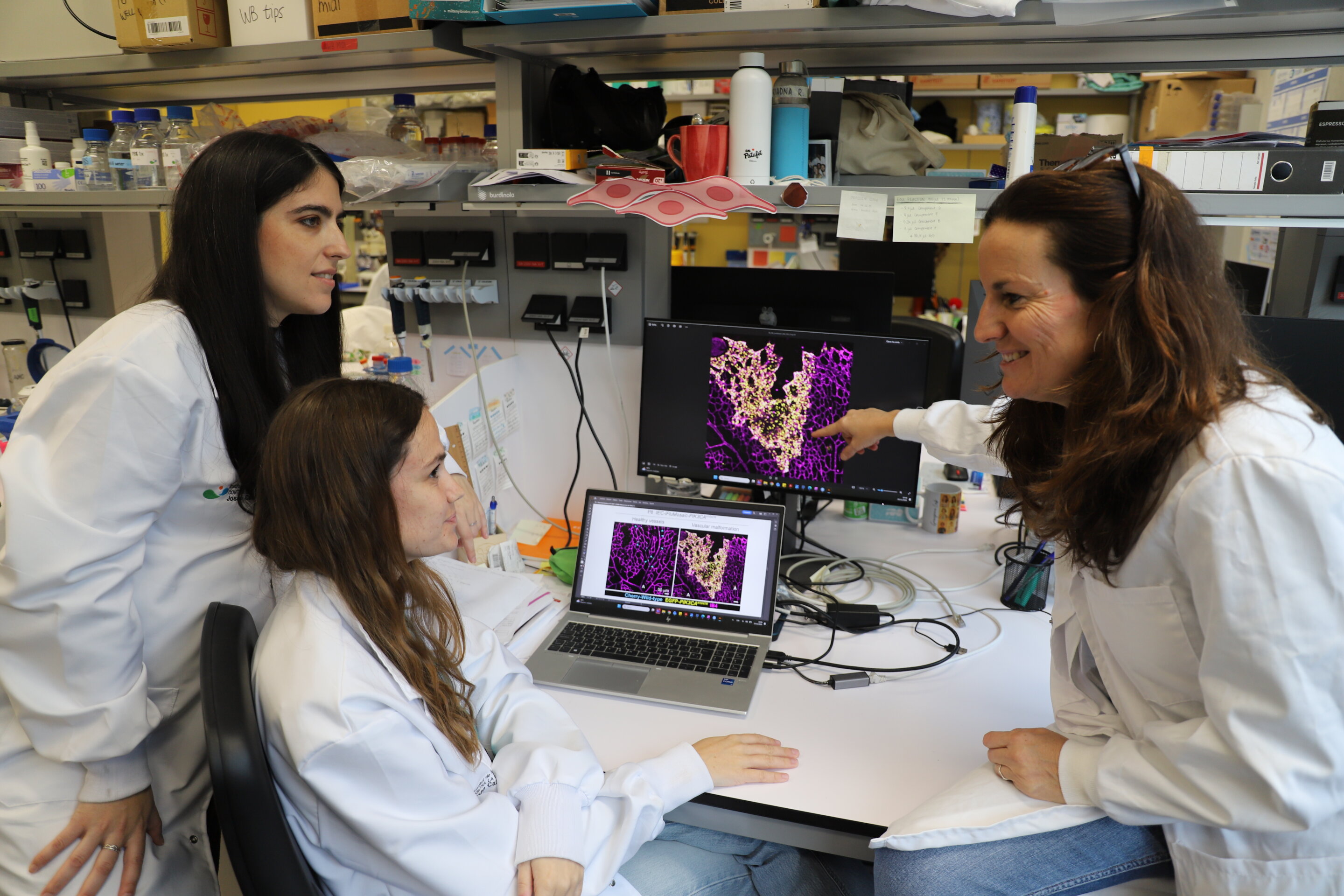
Published in Nature, the study led by Dr. Mariona Graupera and Dr. Ana Angulo-Urarte, from the Josep Carreras Leukaemia Research Institute, helps explain a striking clinical observation: vascular malformations associated with a gene called PIK3CA predominantly affect veins and capillaries while arteries are largely spared.
PIK3CA is a gene involved in regulating cell proliferation and growth. When this gene is mutated at birth or during development, its mutations can also cause rare disorders characterized by excessive tissue growth and vascular malformations, in which blood vessels develop abnormally. Alterations in PIK3CA have also been implicated in certain blood cancers, including mantle cell lymphoma.
To understand why different blood vessels respond differently to the same mutation, the researchers used experimental models that track mutated endothelial cells, the cells lining the inside of blood vessels, during vascular development, as they develop and acquire their distinct identities.
They found that mutant cells in veins and capillaries proliferate excessively, whereas mature arterial cells remain remarkably resistant to these effects, maintaining their normal growth and identity. However, when the mutation affects immature cells destined to become arterial cells, the outcome is strikingly different. The mutation prevents these cells from developing normally into arterial cells, instead pushing them toward the characteristics of cells found in veins and capillaries.
Source link





