
This article has been reviewed according to Science X's editorial process and policies. Editors have highlighted the following attributes while ensuring the content's credibility:
A joint research team comprising professor Kyeong A So of the Department of Obstetrics and Gynecology at Korea University Guro Hospital and professors Jae-Wook Jeong and Tae Hoon Kim of the University of Missouri School of Medicine has comprehensively examined how pain develops and persists in patients with endometriosis. The team proposed new research directions to translate these insights into personalized treatment. Their review article was selected as a featured article in the journal Endocrine Reviews, highlighting its scientific significance and clinical relevance.
Endometriosis is a common chronic condition among women of reproductive age. It can cause severe menstrual pain, chronic pelvic pain and pain during intercourse, substantially affecting patients' physical and mental health and quality of life. However, the size or severity of endometriotic lesions does not necessarily correspond to the severity of pain experienced by patients. This discrepancy highlights the limitations of explaining endometriosis-associated pain solely in terms of hormonal changes and inflammation.
To develop a more comprehensive understanding of these mechanisms, the researchers reviewed a wide range of clinical and basic science studies published through December 2025. These studies investigated several mechanisms, including inflammation and immune responses, hormonal changes, angiogenesis and neurogenesis around endometriotic lesions, and sensitization of the nervous system.
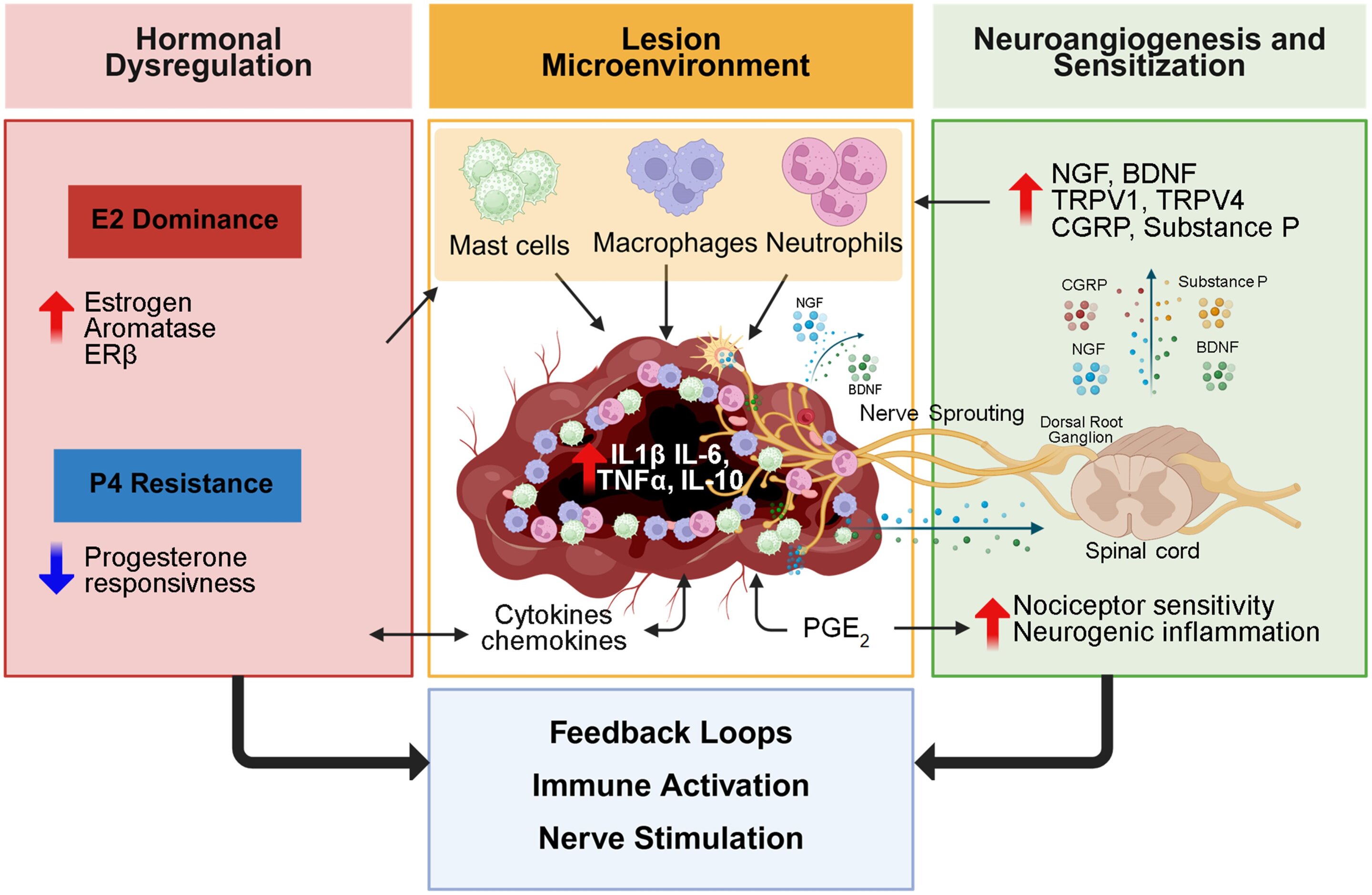
The review showed that endometriosis-associated pain involves complex interactions among hormones, the immune system and the nervous system. Estrogen-dependent inflammation and progesterone resistance establish a permissive microenvironment that promotes immune dysfunction, neurotrophic signaling and nociceptor sensitization.
Source link





