
This article has been reviewed according to Science X's editorial process and policies. Editors have highlighted the following attributes while ensuring the content's credibility:
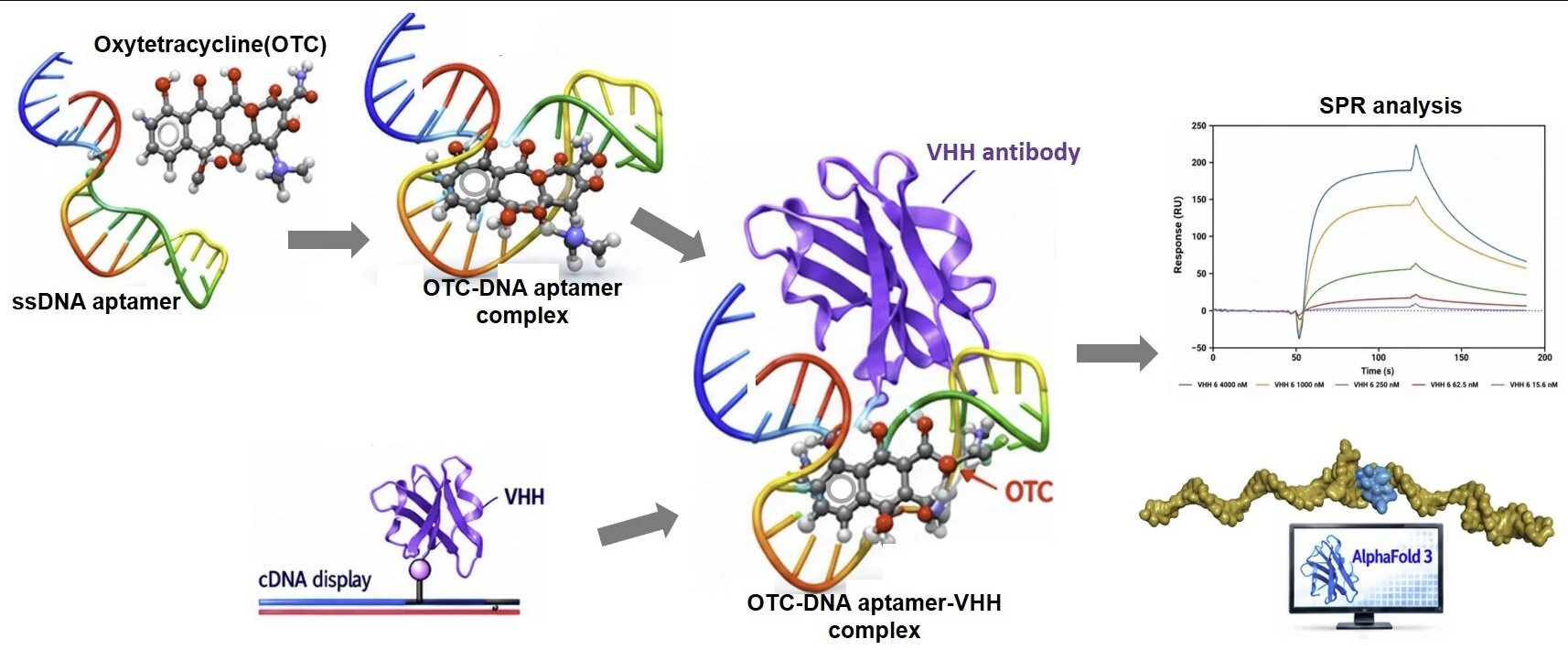
DNA aptamers are attracting attention as alternatives to antibodies in biosensing and diagnostics. Yet little is known about whether antibodies themselves can recognize the folded structures of DNA aptamers. Researchers at Saitama University have now identified a VHH antibody that preferentially binds an oxytetracycline-associated DNA aptamer.
A DNA aptamer is a short, single-stranded DNA molecule that folds into a specific shape and selectively binds to a target, such as a protein or small chemical compound. Because of their molecular recognition capabilities, DNA aptamers are attracting growing interest as alternatives to conventional antibodies in biosensors, diagnostics and other biotechnology applications.
Most research on DNA aptamers has focused on identifying DNA molecules that recognize specific targets. However, the reverse approach—developing proteins or antibodies that recognize the three-dimensional structures of DNA aptamers—remains relatively unexplored.
Although antibodies capable of recognizing certain specialized DNA structures have been reported, identifying antibodies that recognize the diverse folded structures of single-stranded DNA aptamers presents a new challenge. Such antibodies could provide new ways to detect changes in DNA structure and potentially expand the possibilities for molecular sensing.
A research team led by specially appointed Professor Naoto Nemoto and Professor Koji Matsuoka of the Graduate School of Science and Engineering at Saitama University aimed to determine whether small, single-domain antibodies known as VHH antibodies could recognize the three-dimensional structural characteristics of DNA aptamers.
The researchers focused on a DNA aptamer that binds to oxytetracycline (OTC), an antibiotic used in veterinary medicine, and investigated how its interaction with VHH antibodies changes depending on the presence or absence of OTC.
Source link





