This article has been reviewed according to Science X's editorial process and policies. Editors have highlighted the following attributes while ensuring the content's credibility:
A Northwestern Medicine study has identified a previously unrecognized population of immune cells that appears to fuel harmful blood vessel growth in multiple blinding eye diseases, according to the study published in the Journal of Clinical Investigation. The discovery could open the door to new treatments for patients who don't respond to existing therapies, said the study's senior author Jeremy Lavine, M.D., Ph.D., assistant professor of ophthalmology.
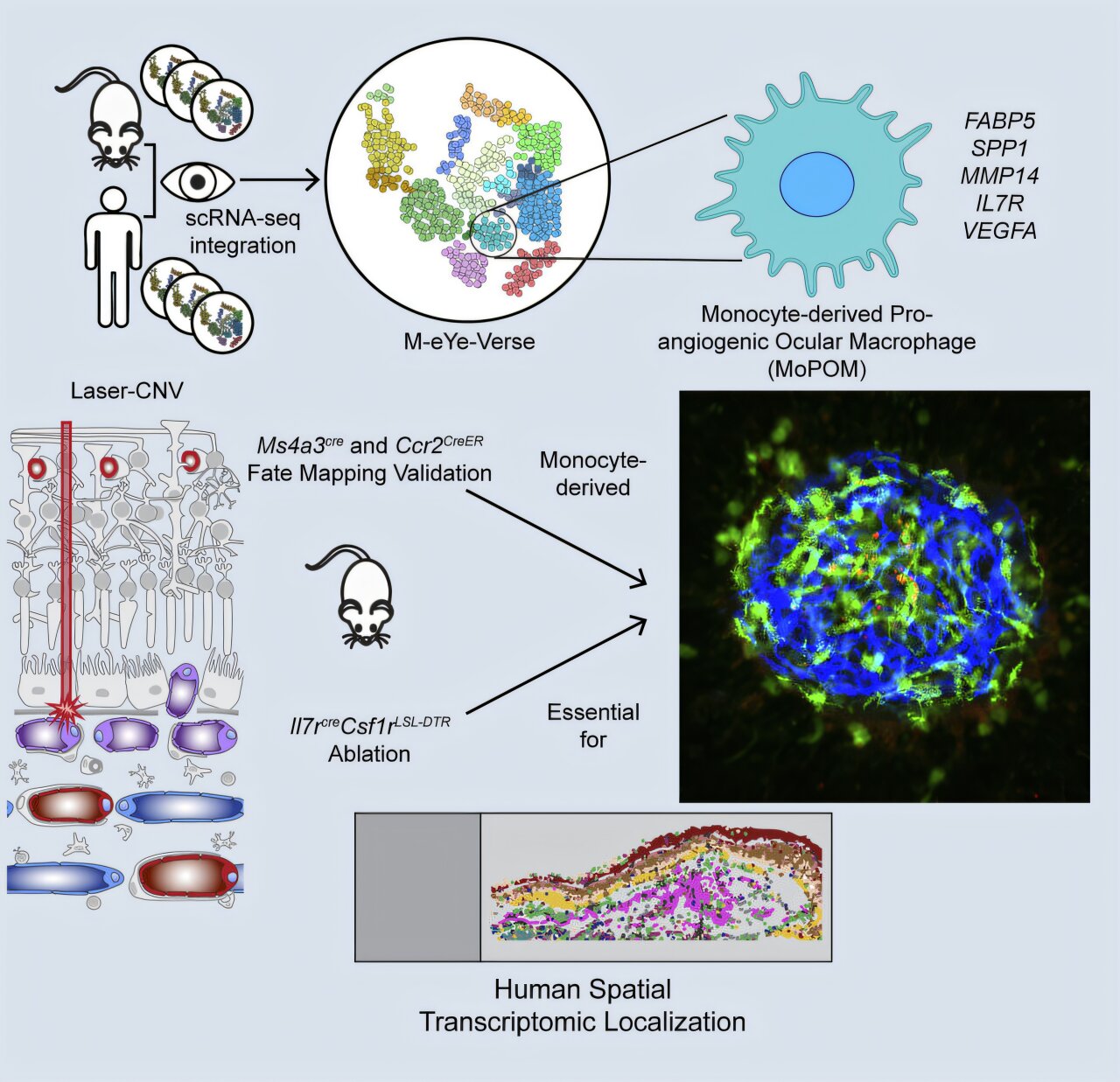
In the study, Northwestern Medicine investigators analyzed nearly 100,000 immune cells from human and mouse eye tissues, combining data from 173 samples across multiple eye diseases. They identified a distinct subtype of macrophage, dubbed monocyte-derived pro-angiogenic ocular macrophages (MoPOMs), which was consistently enriched in subjects with eye diseases that feature harmful blood vessel growth, including wet age-related macular degeneration (AMD) and proliferative diabetic retinopathy.
Wet AMD and diabetic retinopathy are among the leading causes of vision loss worldwide, according to National Institutes of Health data. Both diseases are commonly treated with drugs that block vascular endothelial growth factor (VEGF), a protein that promotes blood vessel formation. While anti-VEGF therapies have transformed care, many patients eventually experience diminishing responses or treatment resistance, Lavine said.
"We hypothesized that a joint escape mechanism existed where macrophages could potentially be targeted in both diseases for patients who are treatment resistant," Lavine said. "Outside of the eye in cancer and other diseases, macrophages can promote abnormal angiogenesis.
Source link