This article has been reviewed according to Science X's editorial process and policies. Editors have highlighted the following attributes while ensuring the content's credibility:
After thoracic surgery—any medical operation done inside the chest—patients can experience pain, soreness or numbness even years later. This is because the incisions cut through muscles and nerves on sensitive ribs, which can cause damage and inflammation.
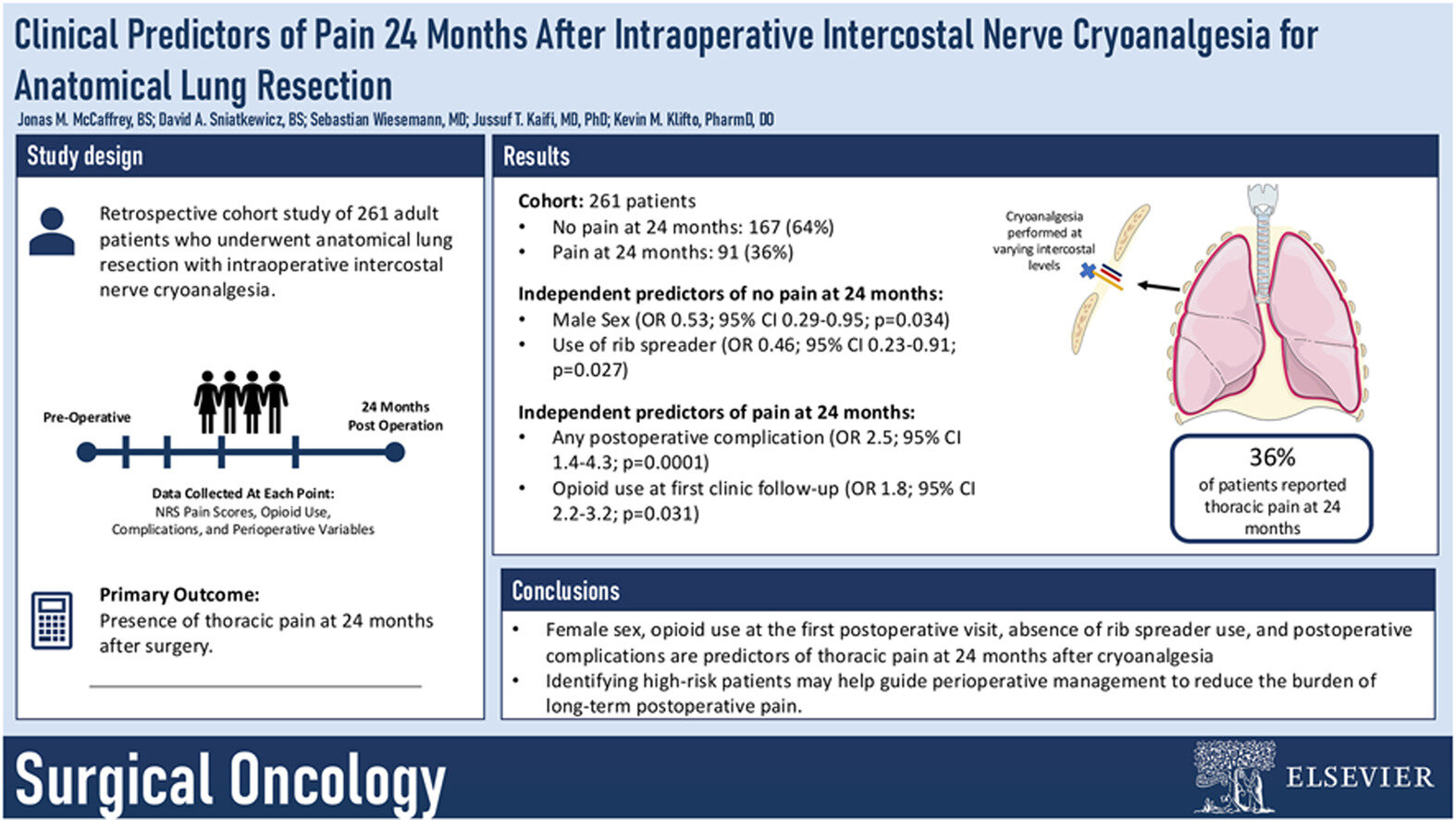
Researchers at the University of Missouri School of Medicine have been investigating ways to treat postoperative pain without having to rely on opioid medications. They explored using cryoanalgesia during surgery—in other words, freezing the nerves. Applying extreme cold to nerves temporarily blocks them from sending pain signals, which significantly reduces or stops pain sensations. However, this method may not provide long-term pain relief for all patients. The research is published in the journal Surgical Oncology.
"Patients who were female, had postoperative complications or continued to use opioids at the time of the first follow-up visit tended to experience pain even two years later," co-author and resident physician Dr. Kevin Klifto said. "In addition, 80% of those who experienced pain experienced neuropathic pain, or chronic pain caused by an injury or malfunction of the nervous system. It's unclear if these results were related to cryoanalgesia or the surgery itself."
A total of 261 patients at the academic health system received cryoanalgesia at the end of their pulmonary resection, a type of thoracic surgery in which parts of the lung were removed. One hundred sixty-seven patients, or about 64%, reported no pain after two years, while 35% still reported pain.
Source link