
This article has been reviewed according to Science X's editorial process and policies. Editors have highlighted the following attributes while ensuring the content's credibility:
Wilson disease is a rare genetic condition in which the liver loses the ability to effectively remove copper, allowing it to accumulate in the body. This toxic buildup affects the liver, brain, eyes and kidneys and is particularly bad for mitochondria, the cell's all-important power plants.
Wilson disease treatments have included removing copper from patients' bodies (copper chelation) and dietary restrictions to reduce copper intake. But now, UC Davis Health scientists are looking at a different therapeutic approach: mitigating the condition's effects on mitochondria.
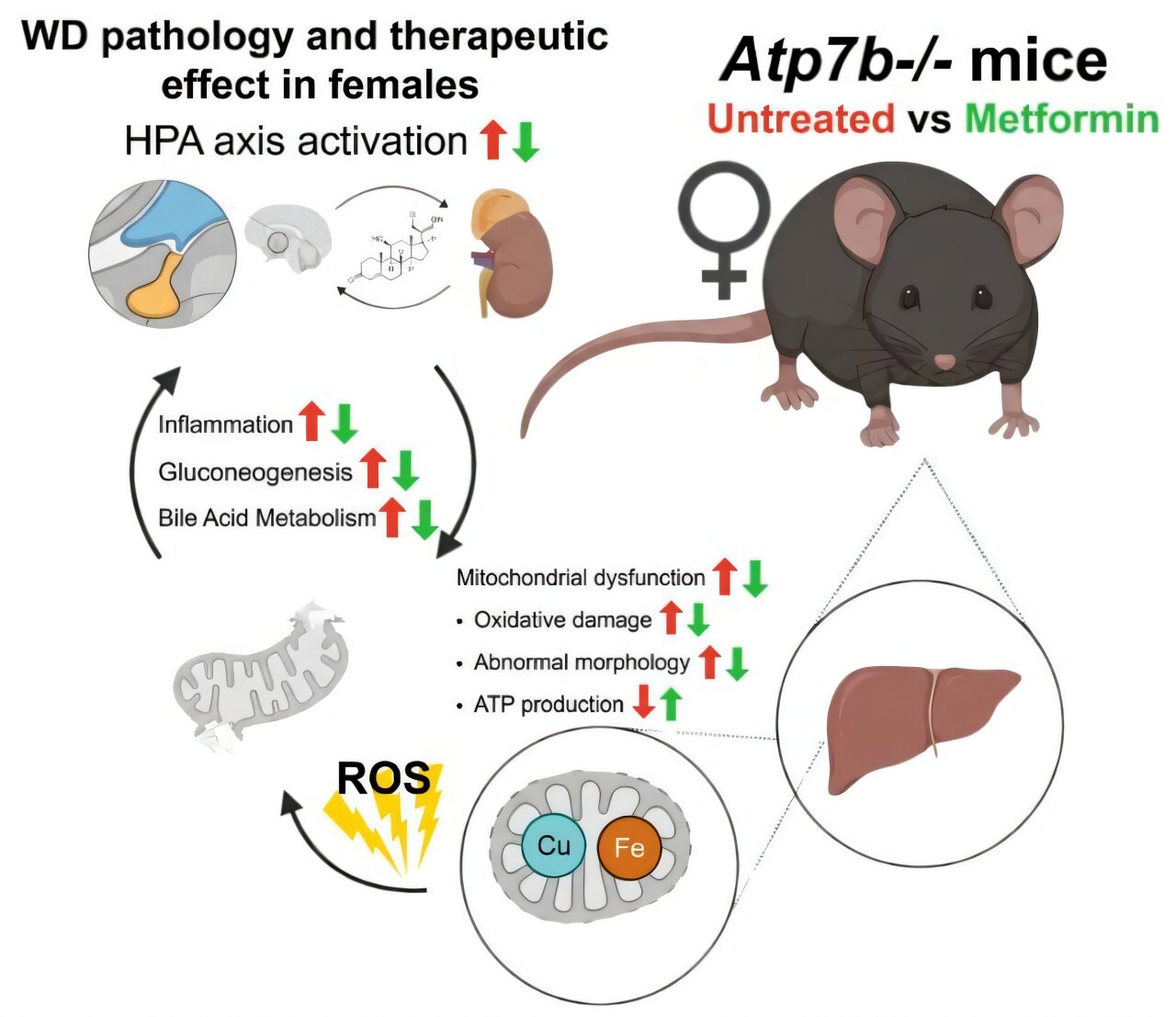
In a study published in Scientific Reports, researchers showed that metformin, a common treatment for type 2 diabetes, could help control mitochondrial dysfunction in an animal model of Wilson disease. This effect was particularly noticeable in female mice.
"We've been exploring the possibility that we could retask existing drugs to improve mitochondrial function in people with Wilson disease," said Valentina Medici, first author on the study and professor of gastroenterology and hepatology. "There are several drugs that can do this, but metformin is particularly interesting because it's available on the market and extensively studied."
UC Davis Health researchers are in a unique position to study this condition: the Wilson Disease Association has designated the health system one of 11 Centers of Excellence. Medici and colleagues including Cecilia Giulivi, professor of molecular biosciences in the UC Davis Weill School of Veterinary Medicine and senior author on the paper, have focused their research on mitochondrial bioenergetics: the ability to produce enough energy to power cells.
Source link





