
This article has been reviewed according to Science X's editorial process and policies. Editors have highlighted the following attributes while ensuring the content's credibility:
A University of Glasgow spinoff has developed a handheld device that uses ozone generated from fresh air to tackle one of the most persistent and overlooked sources of hospital infection—contaminated sink drains.
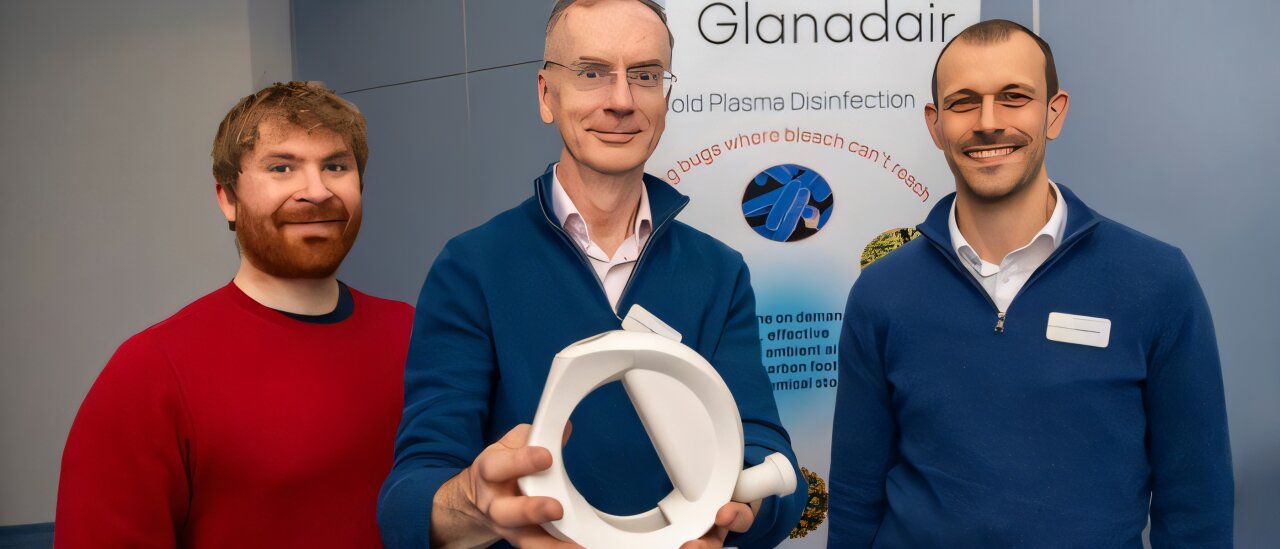
Developed through more than 15 years of university research and now being commercialized by Glanadair, the latest version of the technology is a device that creates ozone on demand using only air and electricity and can be placed easily over a drain opening in a hospital sink.
Ozone is generated by the device inside the drain system, allowing it to reach bacteria hidden in areas that are difficult or impossible to clean using conventional methods such as bleach. Once treatment is complete, any remaining ozone is safely converted back into ordinary oxygen, leaving no chemical residue behind.
The Glasgow team believes using ozone, widely recognized as one of the most powerful disinfectants available, to target the root of drain contamination could help reduce the risk of health care-associated infections while reducing reliance on harsh chemical cleaning agents.
Declan Diver, a professor who co-founded Glanadair with Dr. Hugh Potts and is one of the inventors of the technology, said, "About 10% of patients who go into the hospital pick up another infection when they are there—and the source of that infection is the drains.
"Hospital drains can harbor harmful bacteria within biofilms that are very difficult to remove.
Source link





