This article has been reviewed according to Science X's editorial process and policies. Editors have highlighted the following attributes while ensuring the content's credibility:
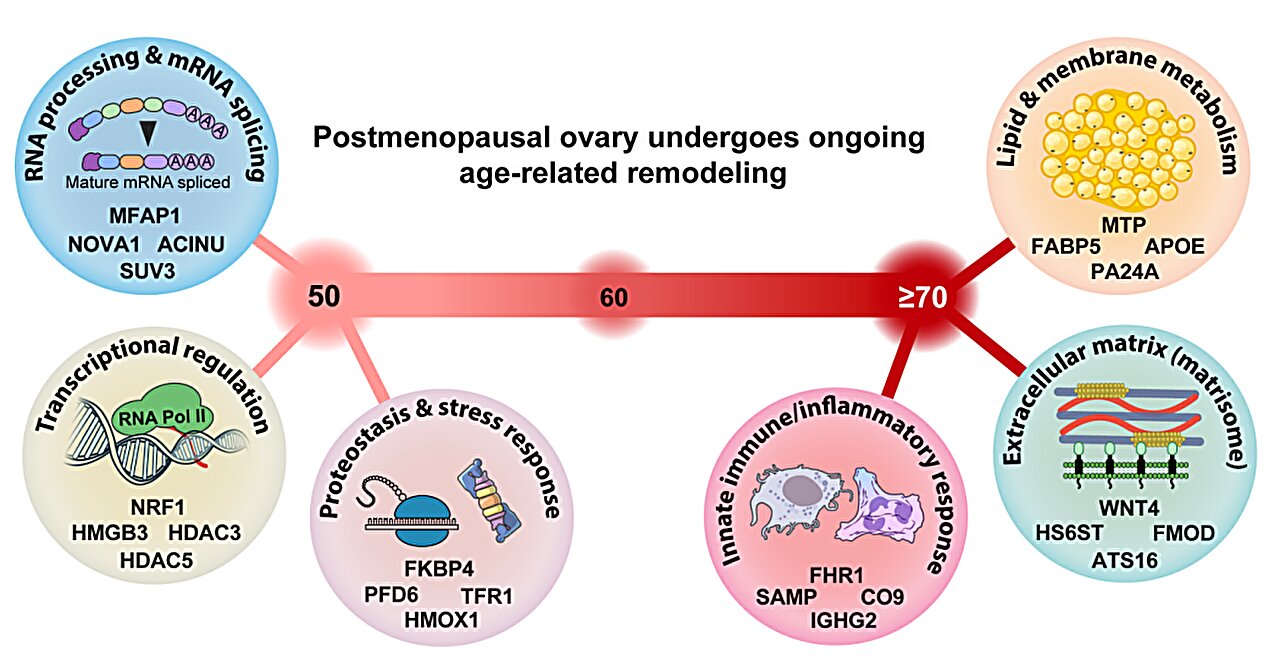
Contrary to popular belief, the postmenopausal ovary is not defunct. In a new study of ovaries from 28 women, scientists at Northwestern University and the Buck Institute for Research on Aging found that in the decades well past menopause, the ovary remains biologically active and continues to remodel with age, showing increased inflammation and changes in tissue structure. The study also found a molecular link between ovarian aging and cancer.
"In the ovary, we reach a point of no return with respect to fertility in which it's no longer producing eggs, and I would venture to say most people assume those ovaries are just sitting there doing nothing, similar to the appendix," said co-corresponding author Francesca Duncan, associate professor of reproductive science in medicine at Northwestern University Feinberg School of Medicine. "But that's what makes this study very different."
The findings challenge the notion that the ovary is an innocent bystander after reproduction ends, raising new questions about whether it could play a more active role in aging and chronic disease in women.
"The ovary is not just a reproductive organ," said co-corresponding author Birgit Schilling, professor and director of the Mass Spectrometry Center at the Buck Institute. "It really influences how somebody ages because it speaks to all these other organs, such as the brain, and also to the bone, and women after menopause often experience a lot of bone problems.
Source link