
This article has been reviewed according to Science X's editorial process and policies. Editors have highlighted the following attributes while ensuring the content's credibility:
A new derivative of a natural compound reduced symptoms associated with multiple sclerosis and promoted the central nervous system's regenerative pathways in a mouse model, report researchers at the University of Illinois Urbana-Champaign and collaborators at Keio University and Chiba University in Japan.
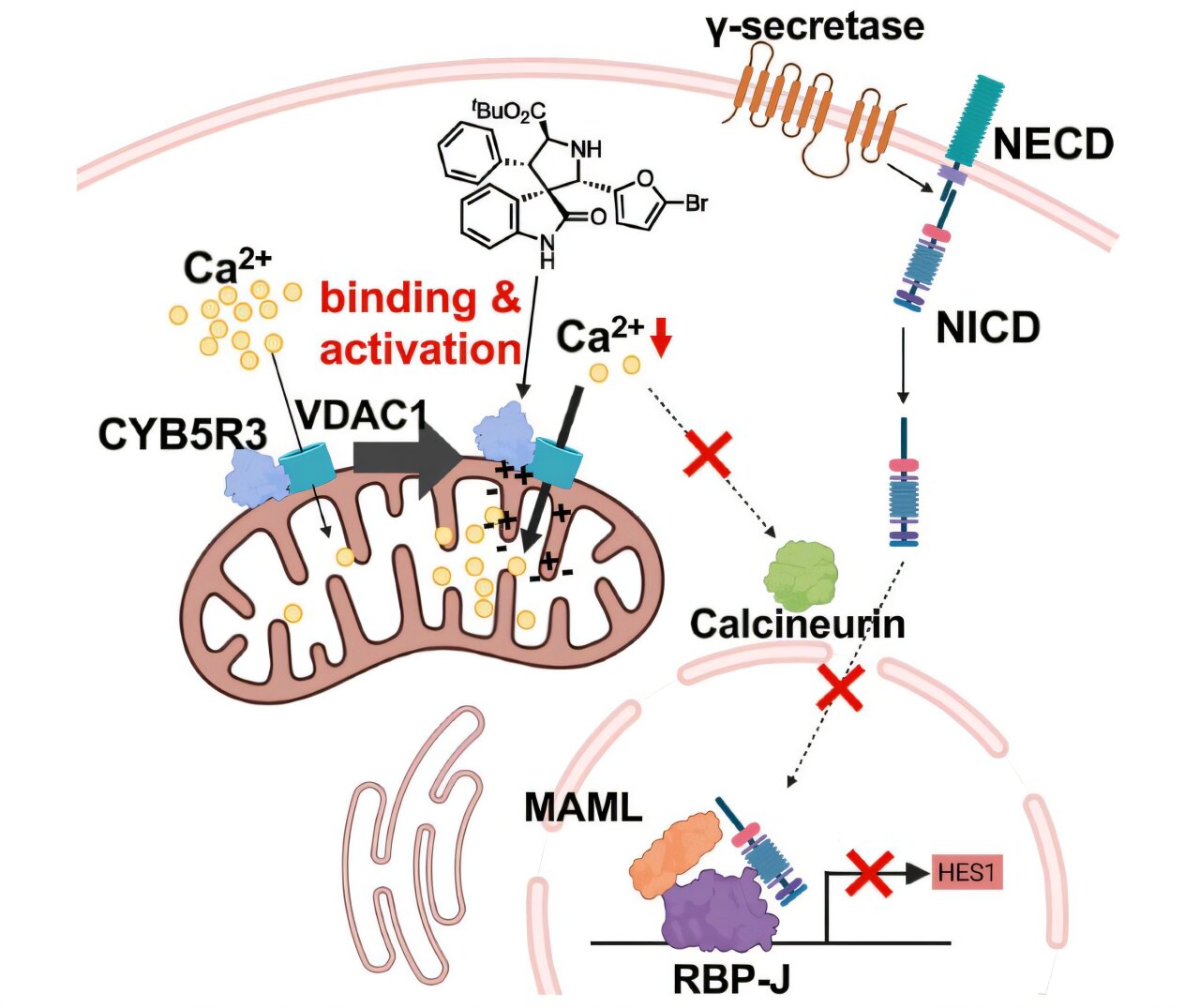
The compound activates a mitochondrial enzyme that regulates a cellular signaling pathway key for regeneration. The researchers saw improvements in paralysis and changes associated with neural regeneration in the mice, pointing to the compound furapyrrodole, or FP, as a possible drug candidate for further study. The findings are published in the journal Advanced Science.
"It may be possible to stimulate the body's own repair mechanisms to restore damaged nerve cells and myelin in MS," said Makoto Inoue, an Illinois professor of comparative biosciences who co-led the work with professors Midori Arai of Keio University and Takayoshi Arai of Chiba University. "Our findings identify FP as a promising compound that may help unlock this natural regenerative potential."
MS is a neurodegenerative disease in which the immune system attacks and damages the myelin sheaths that cover and protect neurons of the central nervous system. Although treatments are available to suppress relapses and progression, no established therapies can adequately restore neurons or neurological functions that have already been lost.
The research team wanted to find a candidate for treatment that could achieve some functional recovery for MS by promoting the differentiation of neural stem or progenitor cells, which reside in the adult brain and spinal cord, into neurons and myelin-forming cells.
Source link





