
This article has been reviewed according to Science X's editorial process and policies. Editors have highlighted the following attributes while ensuring the content's credibility:
Engineering patients' own immune cells to find and destroy cancer using chimeric antigen receptor (CAR) T-cell therapy has transformed the treatment of blood cancers. However, its use is limited in solid tumors because the immunosuppressive tumor microenvironment prevents CAR T-cell entry into the tumor and causes cells that enter to become exhausted.
To overcome these barriers and effectively eliminate tumors, researchers at the University of Chicago Medicine Comprehensive Cancer Center developed a novel CAR T-cell platform with a built-in switch. The engineered CAR T cells carry a gene for tumor necrosis factor (TNF), a potent inflammatory cytokine, that turns on only when the tumor is irradiated.
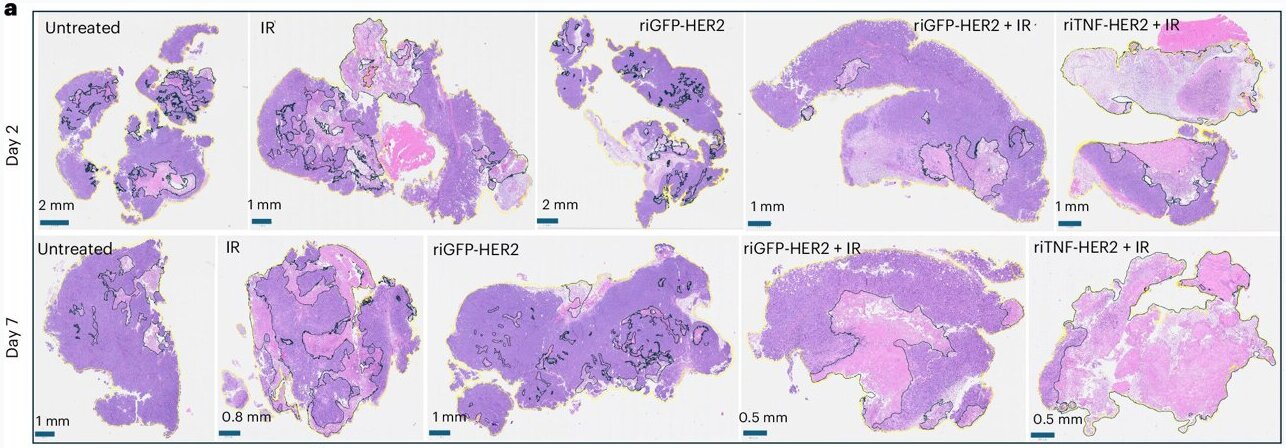
In a study published in Nature Cancer, the researchers reported greater tumor regression with the combination of TNF-releasing CAR T cells and local radiation than with either treatment alone or with standard CAR T cells plus radiation, providing a new and effective platform to treat therapy-resistant cancer.
A tumor is not simply a mass of cancer cells, but consists of a heterogeneous mixture of immune cells, blood vessels and cancer-associated fibroblasts that together form the tumor microenvironment (TME), which feeds cancer cells and shields them from immune attack. This is one reason why chemotherapy and radiotherapy often fail: While they kill cancer cells, they don't necessarily knock out this support network, allowing the cells that survive to regrow with support from the TME.
Source link





