This article has been reviewed according to Science X's editorial process and policies. Editors have highlighted the following attributes while ensuring the content's credibility:
A humble fish can experience features of mental health conditions such as schizophrenia and autism, raising the possibility that some of our most complex social behaviors may be more deeply encoded in our DNA than previously thought.
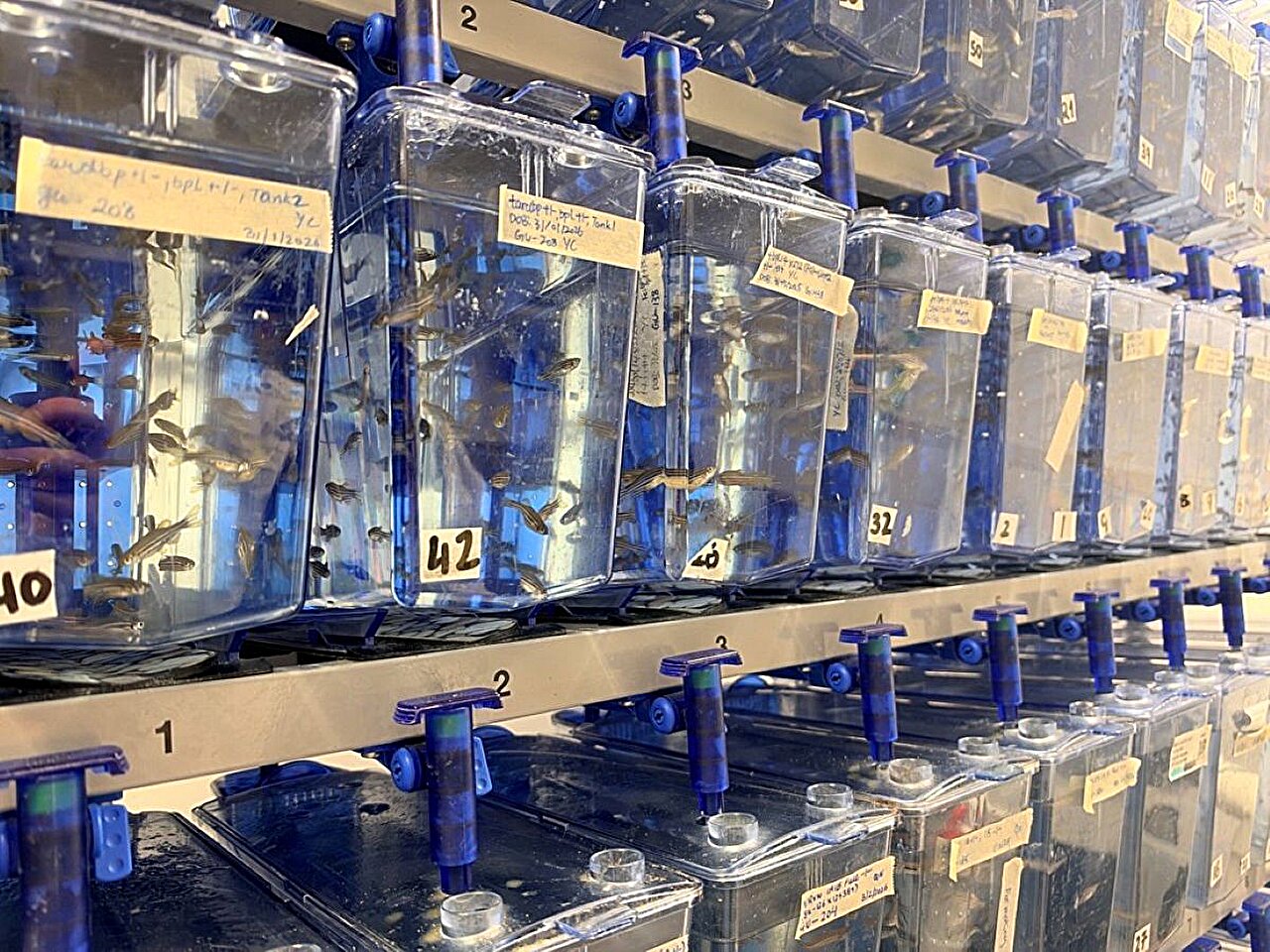
Researchers from Griffith University's Institute for Biomedicine and Glycomics created the world's first complete collection of zebrafish models lacking members of the neurexin gene family, one of the strongest groups of genes associated with psychiatric disorders.
Despite no obvious changes in brain development or behavior during their early development, the fish developed profound, permanent and highly specific behavioral changes emerging in their juvenile stage.
This delayed emergence was one of the central findings of the study and strikingly mimics the human disease trajectories. The findings are published in the journal Molecular Psychiatry.
Dr. Jean Giacomotto said the findings challenged assumptions about the biological complexity required for mental-health-related behaviors.
"These animals function and behave remarkably normally early in life, but as they mature, removing specific neurexin genes led to profound changes in their social behavior, anxiety and aggression, features also affected in patients with surprisingly comparable timing," Giacomotto said.
"The findings suggest that even highly complex behaviors may arise from deeply conserved biological and genetic programs.
"We often think of social behavior as being shaped primarily by experience, environment and learning.
"Yet changing a single family of genes was enough to profoundly and permanently reshape how these animals interact with others and respond to their environment."
Source link