This article has been reviewed according to Science X's editorial process and policies. Editors have highlighted the following attributes while ensuring the content's credibility:
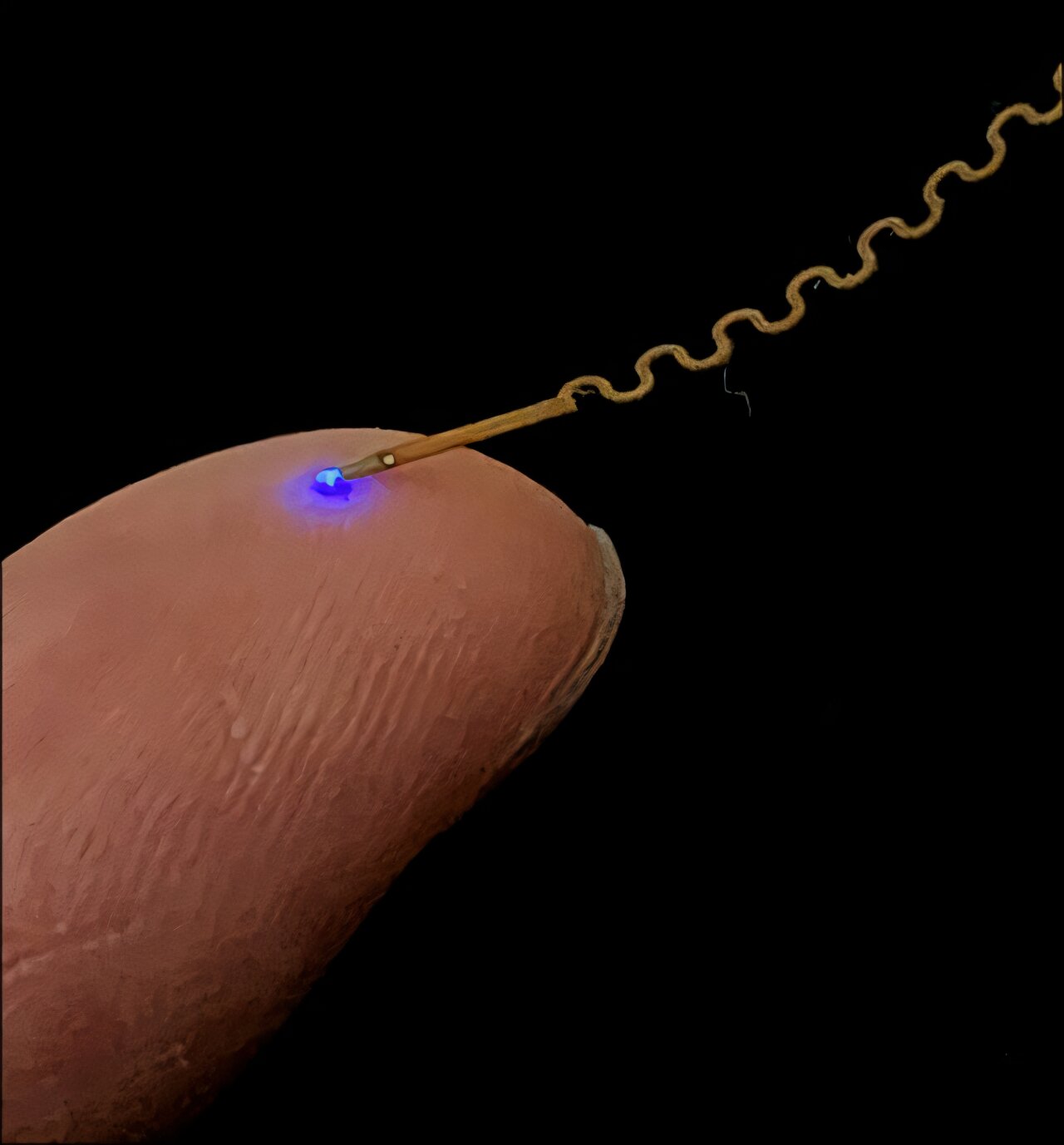
A joint research team led by KAIST has used a small, implantable neural chip to wirelessly monitor real-time changes in a neurotransmitter involved in memory and learning after an Alzheimer's drug has been administered. In miniature pigs (minipigs), the team observed an increase in the neurotransmitter signal following drug administration, followed by a gradual return to baseline. The technology could help researchers assess how drugs act in the brain and develop stimulation methods that adapt to the brain's response.
The research team was led by Professor Kyung-In Jang from the Department of Mechanical Engineering, in collaboration with researchers from the Daegu Gyeongbuk Institute of Science and Technology (DGIST), the Korea Brain Research Institute (KBRI) and the Korea Research Institute of Bioscience and Biotechnology (KRIBB). Their implantable neural chip integrates a sensor for detecting the neurotransmitter acetylcholine, a light-stimulation component and miniaturized wireless measurement technology.
Acetylcholine transmits signals between nerve cells and plays an important role in memory and learning. Donepezil, a drug used to treat Alzheimer's disease, inhibits acetylcholinesterase, the enzyme that breaks down acetylcholine, allowing the neurotransmitter to remain active for longer periods of time. Tracking changes in acetylcholine in specific brain regions after drug administration can help researchers better understand the drug's action.
The research team implanted the neural chip in the prefrontal cortex of minipigs, administered donepezil and wirelessly measured acetylcholine signals.
Source link