This article has been reviewed according to Science X's editorial process and policies. Editors have highlighted the following attributes while ensuring the content's credibility:
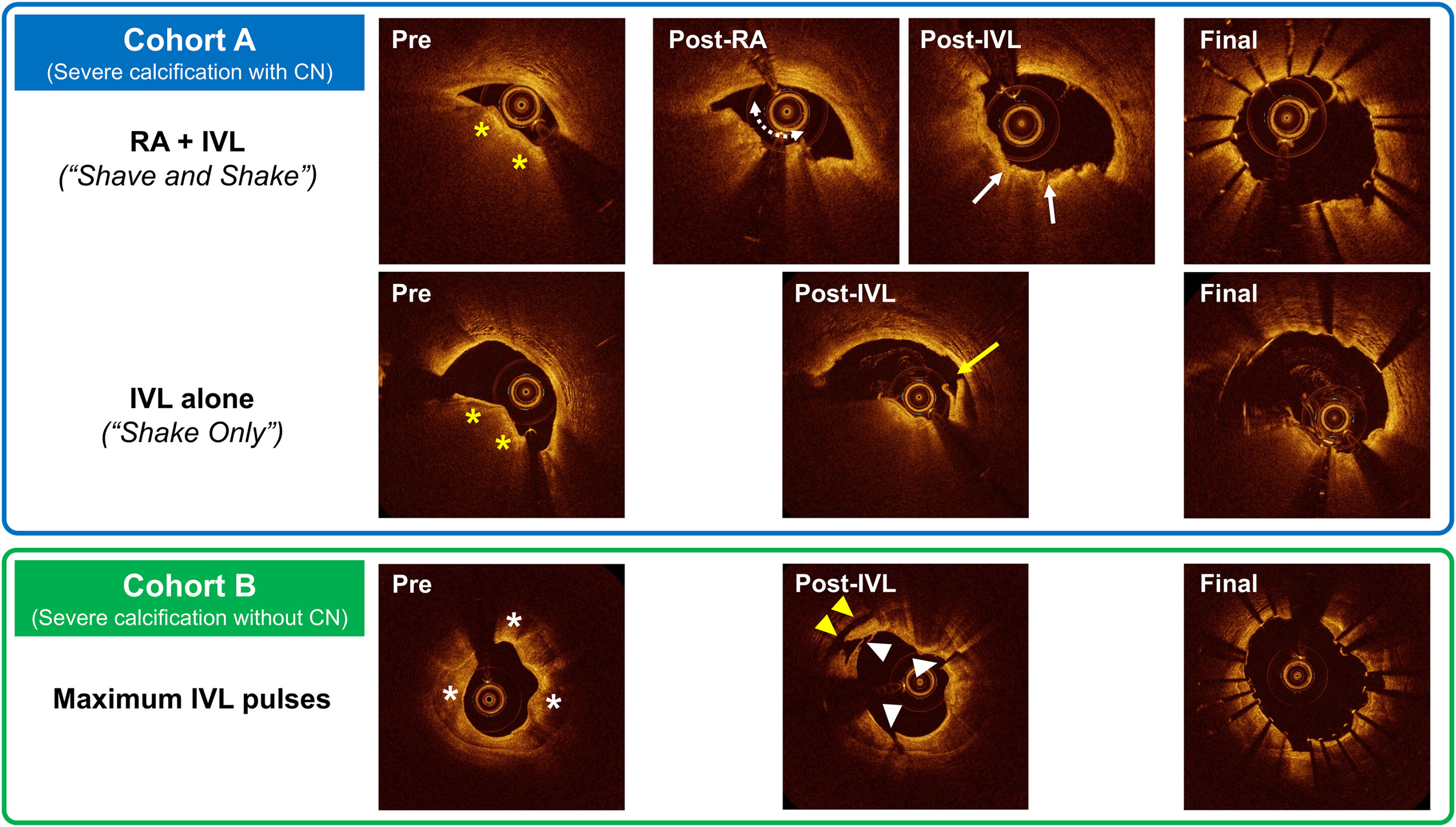
A randomized clinical trial at The Mount Sinai Hospital found that combining two techniques for removing calcium nodules—rotational atherectomy and intravascular lithotripsy (IVL)—before coronary stent placement allowed stents to expand more fully than IVL alone in patients with calcified coronary nodules.
Using this novel treatment approach yielded a stent area approximately 19% larger than that achieved with the standard single treatment, the NODULE-SHOCK study found. The researchers presented their findings during a Featured Clinical Research session at the Transcatheter Cardiovascular Therapeutics conference in San Diego. The results were simultaneously published in JACC: Cardiovascular Interventions.
"Calcified nodules are among the most challenging coronary lesions because their hard, irregular structure prevents stents from fully expanding. Our study introduces the 'Shave and Shake' concept: using rotational atherectomy to modify protruding calcium, followed by lithotripsy to fracture deeper calcium," explains lead researcher Annapoorna S. Kini, M.D., director of the Cardiac Catheterization Lab at The Mount Sinai Hospital and the Zena and Michael A. Wiener Professor of Medicine at the Icahn School of Medicine at Mount Sinai.
"Combining these complementary technologies resulted in larger and more uniformly expanded stents. This supports taking a more personalized approach to these complex cases, based on the type of calcium, rather than treating all calcified lesions the same way."
Patients with severely blocked coronary arteries require percutaneous coronary intervention (PCI). In this nonsurgical procedure, interventional cardiologists use a catheter to place stents in the blocked coronary arteries to restore blood flow.
Source link