This article has been reviewed according to Science X's editorial process and policies. Editors have highlighted the following attributes while ensuring the content's credibility:
Researchers from the University of California, Berkeley may have discovered a new strategy for treating complex neurodegenerative diseases. Their study, recently published in Science, describes a new approach that allows specialized enzymes to clear out several disease-causing proteins. So far, the method has proved useful for protecting neurons in lab tests.
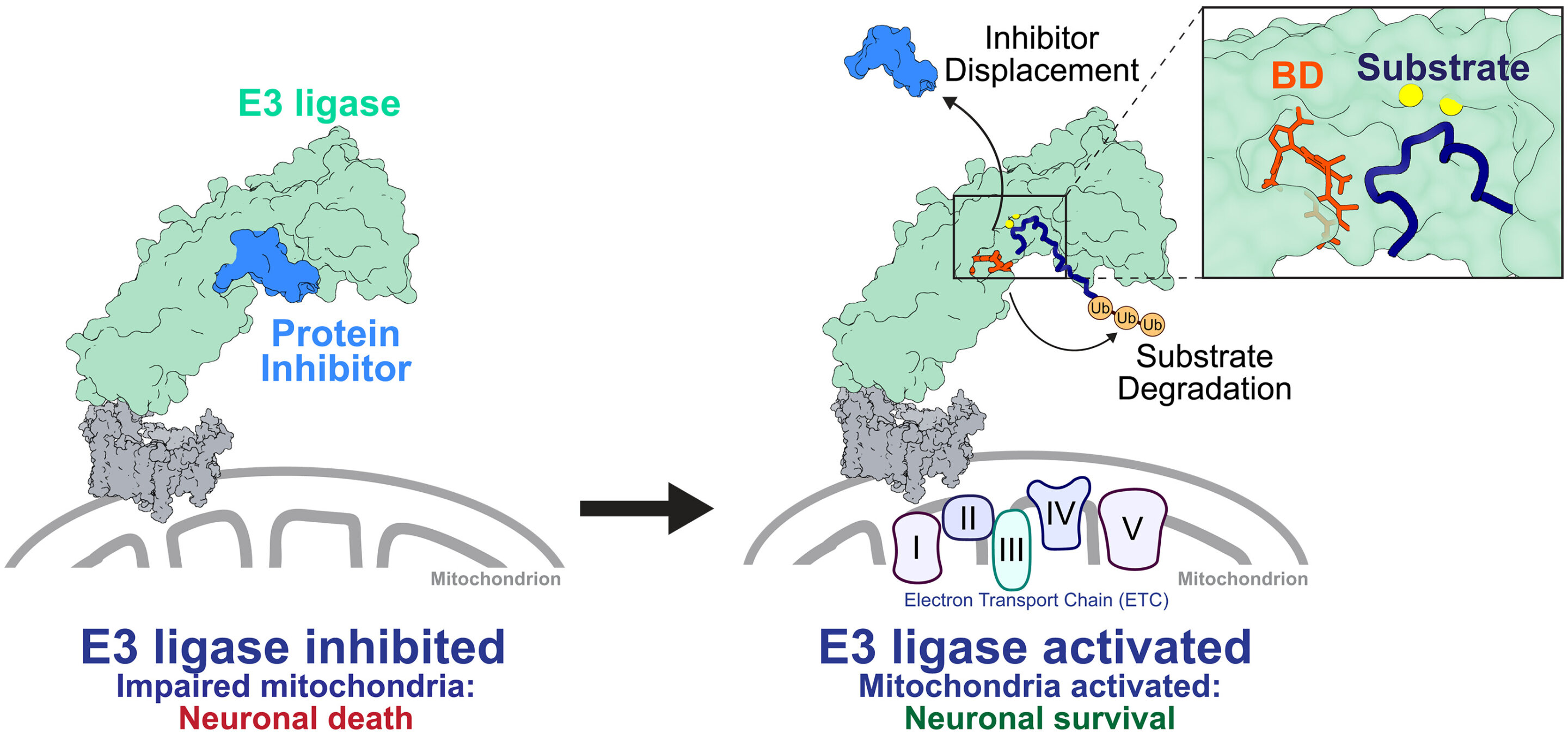
Mitochondria are crucial for supplying energy to cells, but misfolded and dysfunctional proteins can disrupt this process and block healthy proteins. This can ultimately lead to nerve and muscle degeneration and neurodegenerative diseases. Clearing out the bad proteins can help mitochondria import the proteins needed to assemble their energy-producing machinery.
One emerging therapeutic strategy, called targeted protein degradation (TPD), has been shown to eliminate disease-causing proteins. TPD works by destroying disease-causing proteins rather than just blocking their function and has the potential to treat cancer, autoimmune diseases and inflammatory syndromes. However, TPD typically only targets one type of protein at a time, while complex diseases can involve many disrupted proteins. This generally makes a single-protein target insufficient for a robust treatment approach.
Previous studies had identified an enzyme called the E3 ligase CUL2FEM1B that clears away multiple harmful proteins obstructing entry channels into mitochondria. Other studies identified BEX proteins that act as brakes on this enzyme and showed that certain genetic changes could release that inhibition, allowing the E3 ligases to clear these channels and help mitochondria function efficiently again.
Source link