This article has been reviewed according to Science X's editorial process and policies. Editors have highlighted the following attributes while ensuring the content's credibility:
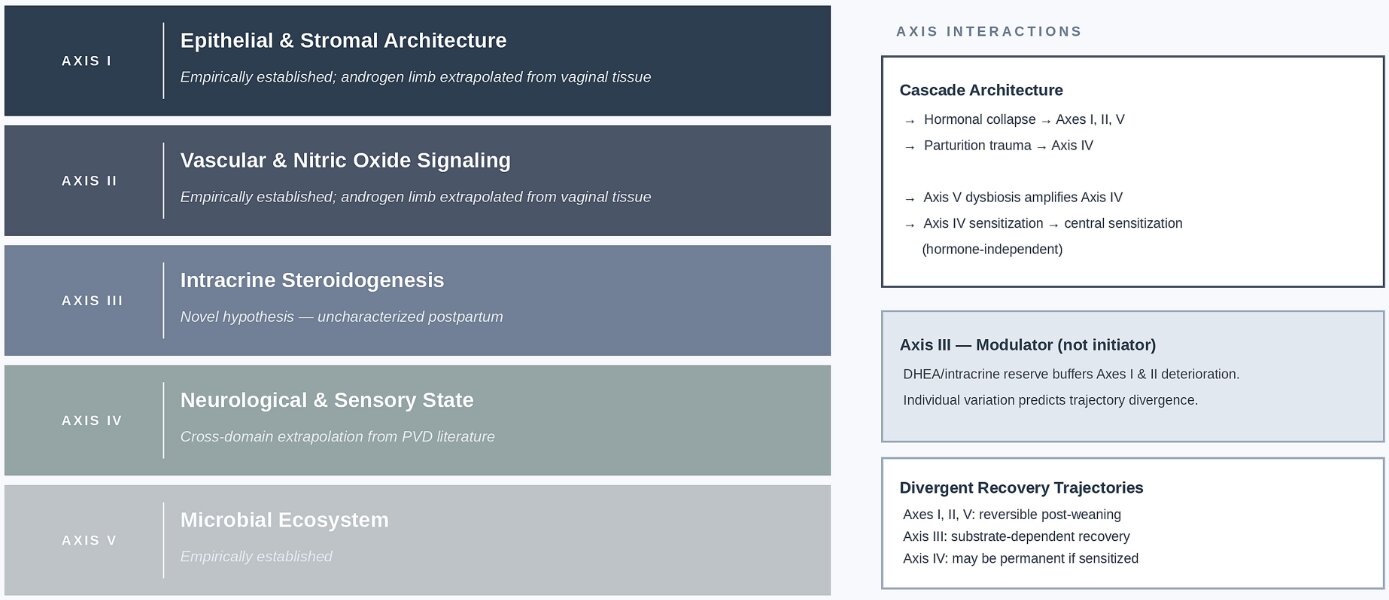
A new biological model published in Sexual Medicine Reviews by Oxford University Press addresses why pain during sex after childbirth—reported by 60% of women at three months—persists for some long after hormones return to normal. Developed by Dr. Laura Kelly of the Ronin Institute for Independent Scholarship 2.0, the Postpartum Vulvar Tissue-State Model maps five biological systems that change after delivery and recover on distinct timelines.
The 60% figure stems from a 2025 meta-analysis of 65 studies, which also revealed that over one in four women still report pain with sex a year postpartum, with breastfeeding women affected at more than twice the rate. While Perelmuter and colleagues named genitourinary syndrome of lactation (GSL) in 2024, Kelly's model investigates why women with similar breastfeeding histories experience divergent outcomes, why pain persists post-weaning and how delivery mode influences the condition.
The new review synthesizes 61 publications across reproductive endocrinology, lower genital tract biology, sensory neuroscience, pelvic pain and microbiome science. It outlines five partially independent axes disrupted post-delivery:
The central finding is that these systems recover on different schedules. While tissue, blood flow and the microbiome are expected to normalize post-weaning, the nervous system may not. If delivery-related inflammation progresses to sensitization, pain can become independent of tissue state, meaning a woman with fully normalized tissue can still experience discomfort.
"We have been treating postpartum vulvar pain as if it were a temporary version of menopause, and it isn't," Kelly stated.
Source link