This article has been reviewed according to Science X's editorial process and policies. Editors have highlighted the following attributes while ensuring the content's credibility:
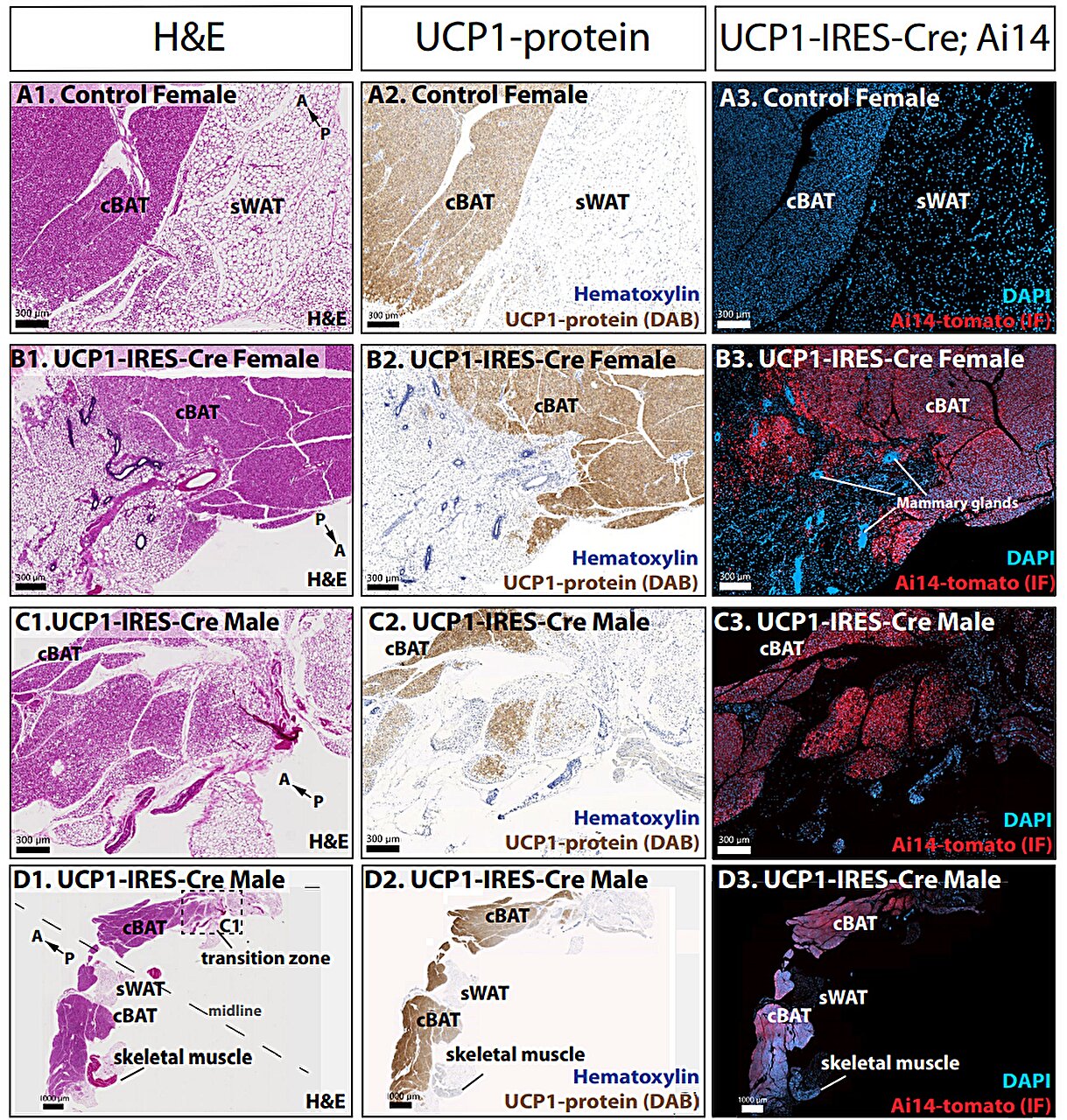
Researchers at LSU's Pennington Biomedical Research Center have developed and validated a new genetic animal model that gives scientists a more precise way to study brown and beige fat, specialized tissues that use energy to produce heat and play an important role in metabolism. The paper is published in the journal Scientific Reports.
The UCP1-IRES-Cre animal model closely follows the expression of UCP1, a protein that plays a central role in the heat-producing function of brown and beige fat, while reducing unintended genetic activity. The new tool could help researchers better understand how thermogenic fat contributes to energy expenditure, body weight regulation and metabolic health.
Brown adipose tissue, commonly known as brown fat, helps the body produce heat by using stored energy. Beige fat cells can also develop thermogenic properties and contribute to this process. Because of their role in energy metabolism, brown and beige fat have become important areas of research in obesity and metabolic health.
Scientists frequently use genetic tools called Cre animal models to study the function of specific cell types. Widely used UCP1-Cre models have allowed researchers to target brown and beige fat, but previous research has shown that some of these models can also produce unintended genetic activity in the brain and other tissues.
That can make it difficult to determine whether an experimental effect is caused by changes in thermogenic fat or by genetic activity elsewhere in the body.
Source link