This article has been reviewed according to Science X's editorial process and policies. Editors have highlighted the following attributes while ensuring the content's credibility:
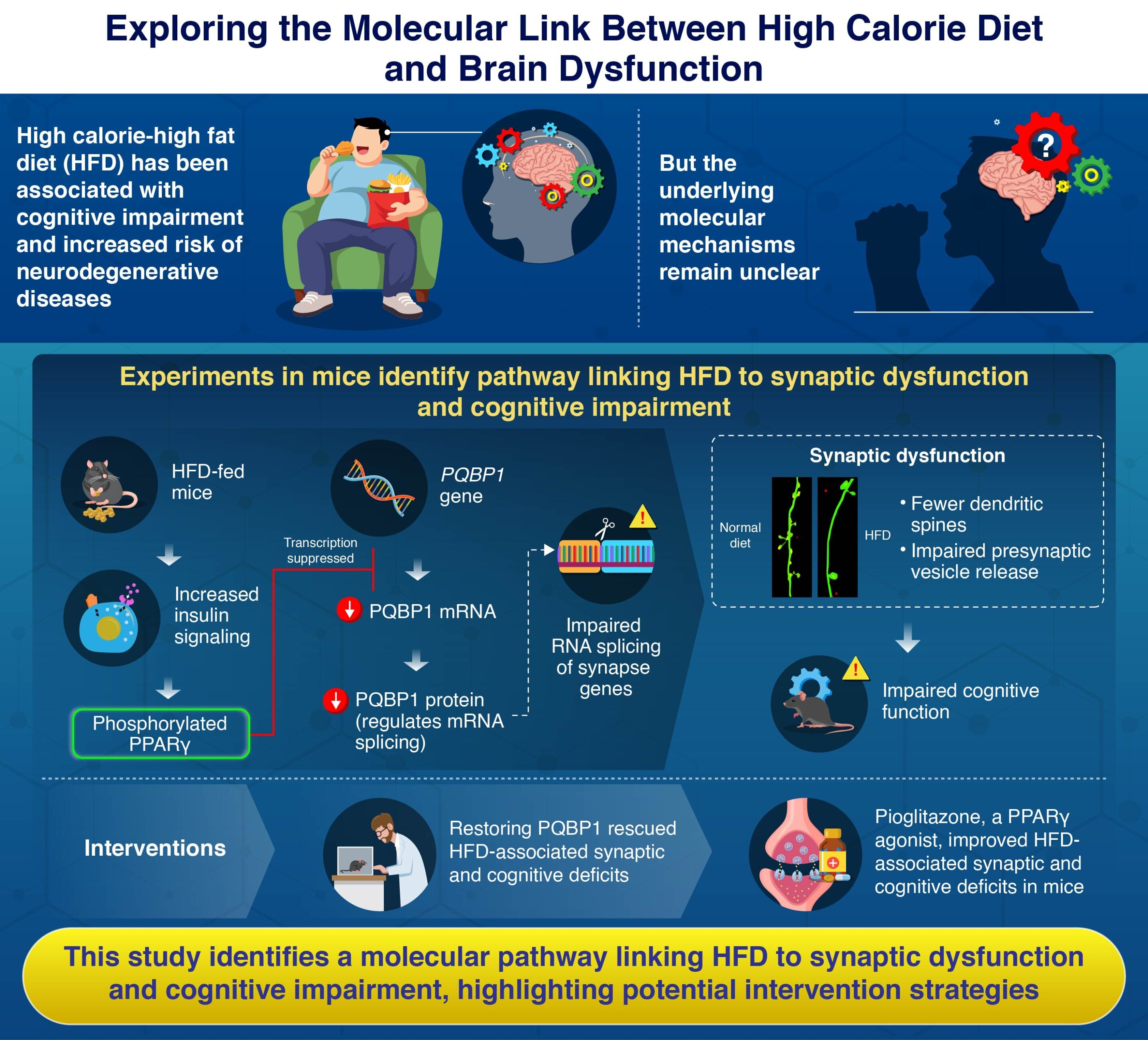
The molecular mechanisms linking a high-calorie diet to cognitive impairment remain unclear. Researchers at the Institute of Science Tokyo, Japan, investigated this association in mice, finding that the diet reduced expression of the nuclear protein PQBP1, disrupting the alternative splicing of genes involved in synaptic function. This was associated with synaptic abnormalities and cognitive impairment.
Treatment with pioglitazone or AAV-PQBP1 to restore PQBP1 levels improved synaptic and cognitive outcomes in mice, highlighting PQBP1-dependent RNA splicing as a potential therapeutic target.
Calorie-rich diets are well known to contribute to obesity and metabolic disorders such as diabetes. Growing evidence suggests that they can also affect brain function. Studies have linked high-calorie diets to poor cognitive performance and an increased risk of neurodegenerative conditions like Alzheimer's disease.
However, the precise molecular mechanisms linking a high-calorie diet to impaired cognitive function remain unclear. Previous research has implicated processes such as inflammation and insulin resistance, but understanding of the neuronal changes underlying diet-associated cognitive impairment remains limited.
To address this gap, a research team led by specially appointed professor Hitoshi Okazawa along with project associate professor Hikari Tanaka from the Center for Brain Integration Research, Institute of Science Tokyo (Science Tokyo), Japan, investigated how a high-fat diet affects brain function in mice.
The team collaborated with specially appointed professor Masanobu Kano of the Advanced Comprehensive Research Organization, Teikyo University, Japan (also professor emeritus at The University of Tokyo, Japan) and professor Albert R.
Source link