This article has been reviewed according to Science X's editorial process and policies. Editors have highlighted the following attributes while ensuring the content's credibility:
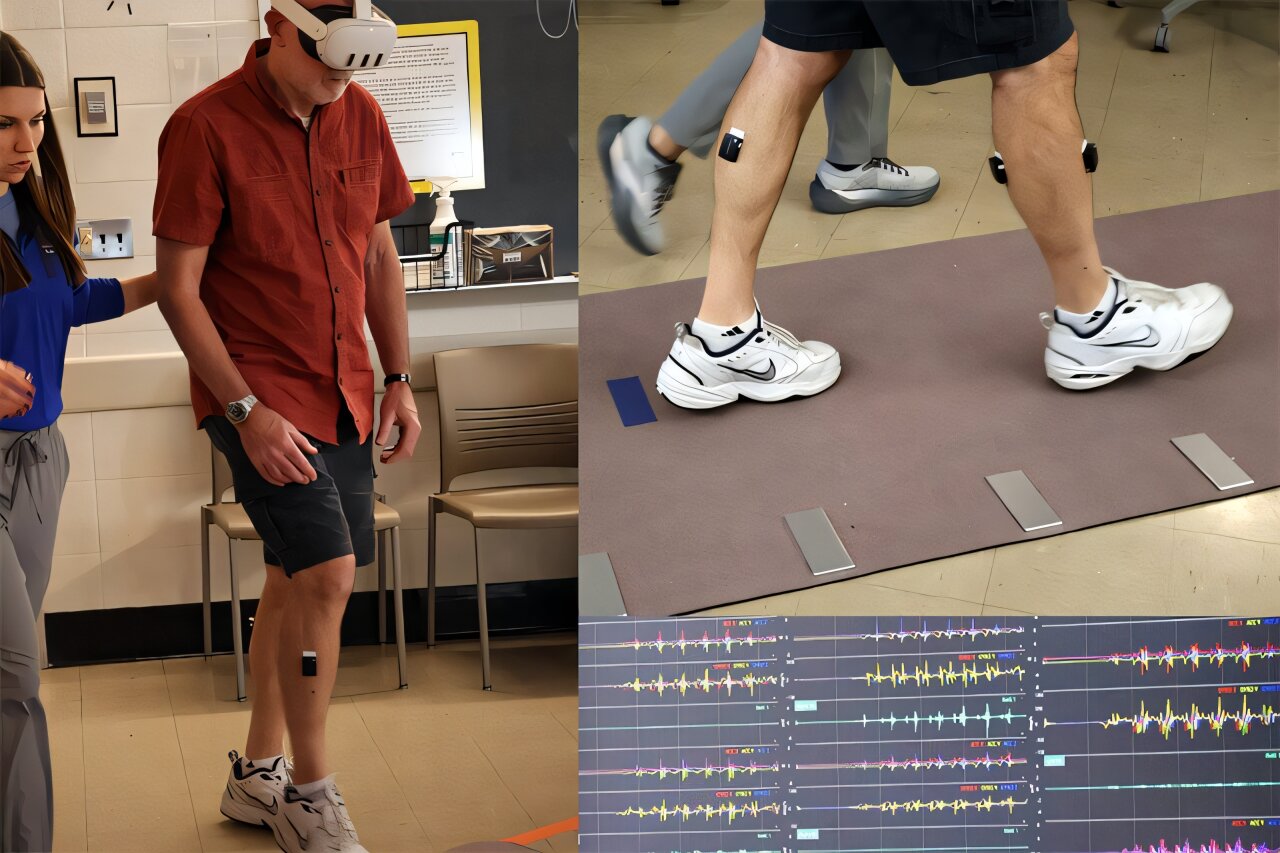
Imagine stepping into a virtual world while sensors embedded in wearable technology track the way that you move outside in the real world. For an individual with Parkinson's disease, this opportunity gives researchers a detailed look into how the disease affects movement and offers insight into how it can be more effectively treated.
That's the focus of a new study led by Rui Hua, an assistant professor in the department of biostatistics and health data science at Lehigh University's College of Health (COH). An electrical engineer by training, Hua runs the Smart Wearable Electronics and hEalth daTa (SWEET) Research Group, which is focused on developing wearable and artificial intelligence (AI)-powered digital health solutions in neurorehabilitation and remote patient monitoring for Parkinson's disease.
"We're developing a virtual reality platform with the use of wearable sensors to objectively evaluate gait impairments and freezing of gait in patients with Parkinson's disease," explained Hua. Freezing of gait is a symptom of Parkinson's that refers to a temporary, involuntary inability to move, as if the patient's foot is suddenly "glued to the floor." It can lead to falls, limited mobility and reduced independence or quality of life.
According to Hua, when clinicians examine patients in a clinic, their movements can be very different from those in real-world environments. "One of the reasons we're developing this virtual platform is that we want to standardize the environment across clinics and build in daily life contexts, such as a doorway or hallway, and ask the participants to navigate through obstacles while wearable sensors measure and quantify their gait.
Source link