This article has been reviewed according to Science X's editorial process and policies. Editors have highlighted the following attributes while ensuring the content's credibility:
New research presented at TCT 2026 and simultaneously published in JSCAI found that, in the primary analysis, mechanical thrombectomy was associated with lower short- and long-term mortality among patients with intermediate-risk pulmonary embolism compared with anticoagulation alone.
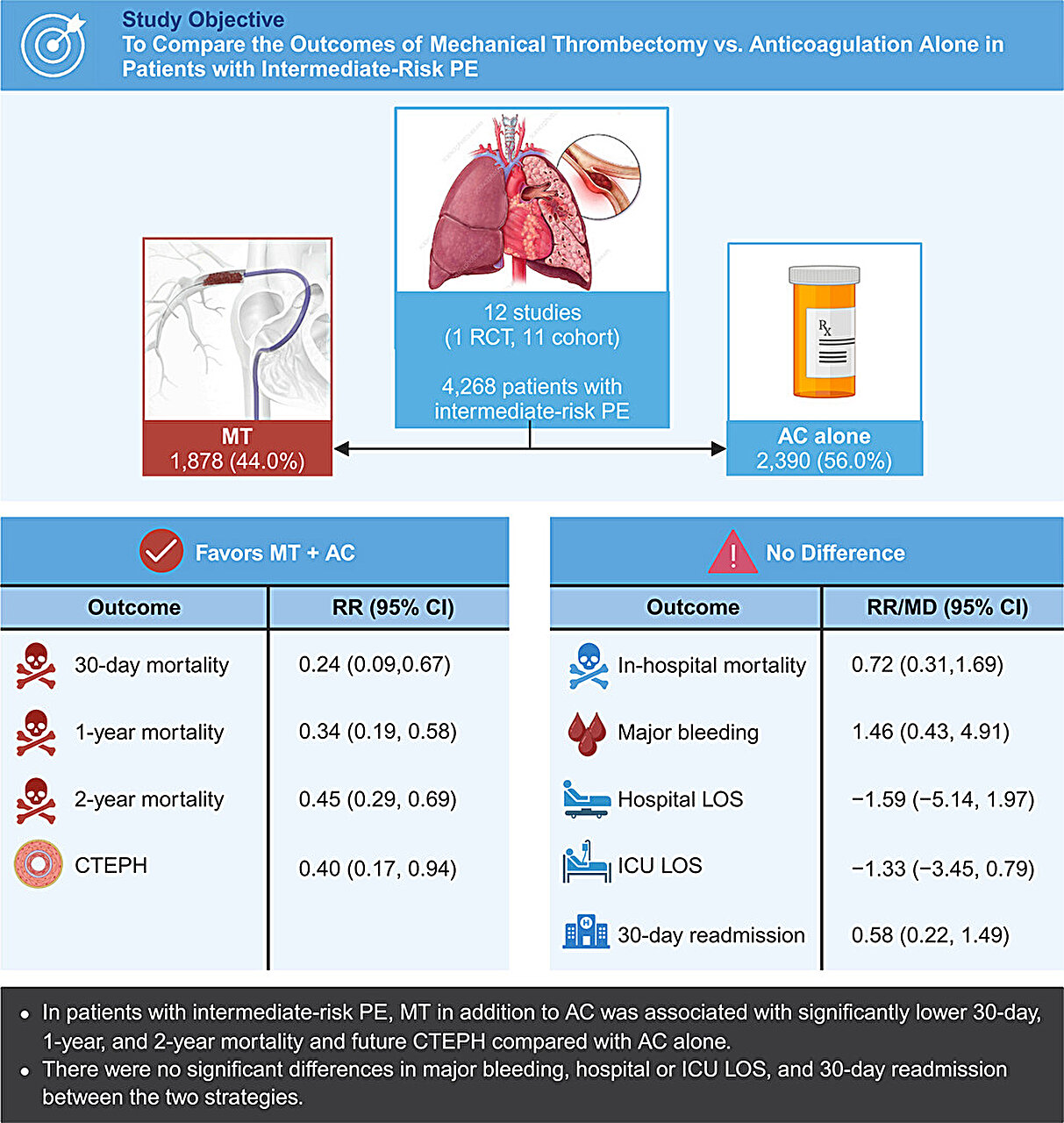
The study, "Mechanical Thrombectomy Versus Anticoagulation Alone for Intermediate-Risk Pulmonary Embolism: A Systematic Review and Meta-Analysis," included 12 studies involving 4,268 patients. Of these, 1,878 (44%) underwent mechanical thrombectomy.
In the primary analysis, mechanical thrombectomy was associated with lower 30-day, 1-year and 2-year mortality, as well as a lower risk of chronic thromboembolic pulmonary hypertension.
In a sensitivity analysis limited to studies exclusively enrolling patients with intermediate-risk pulmonary embolism, 30-day mortality was similar between the treatment groups. In contrast, the lower risk of chronic thromboembolic pulmonary hypertension remained statistically significant. The sensitivity analysis could not combine one- and two-year mortality because each outcome was reported by only one study.
"This analysis found encouraging associations between mechanical thrombectomy and lower short- and long-term mortality in patients with intermediate-risk pulmonary embolism," said study author Mahmoud Ismayl, M.D., interventional cardiology fellow and assistant professor at The Mayo Clinic.
"However, most of the available evidence is observational, and the more focused sensitivity analysis did not show a significant difference in 30-day mortality.
Source link