This article has been reviewed according to Science X's editorial process and policies. Editors have highlighted the following attributes while ensuring the content's credibility:
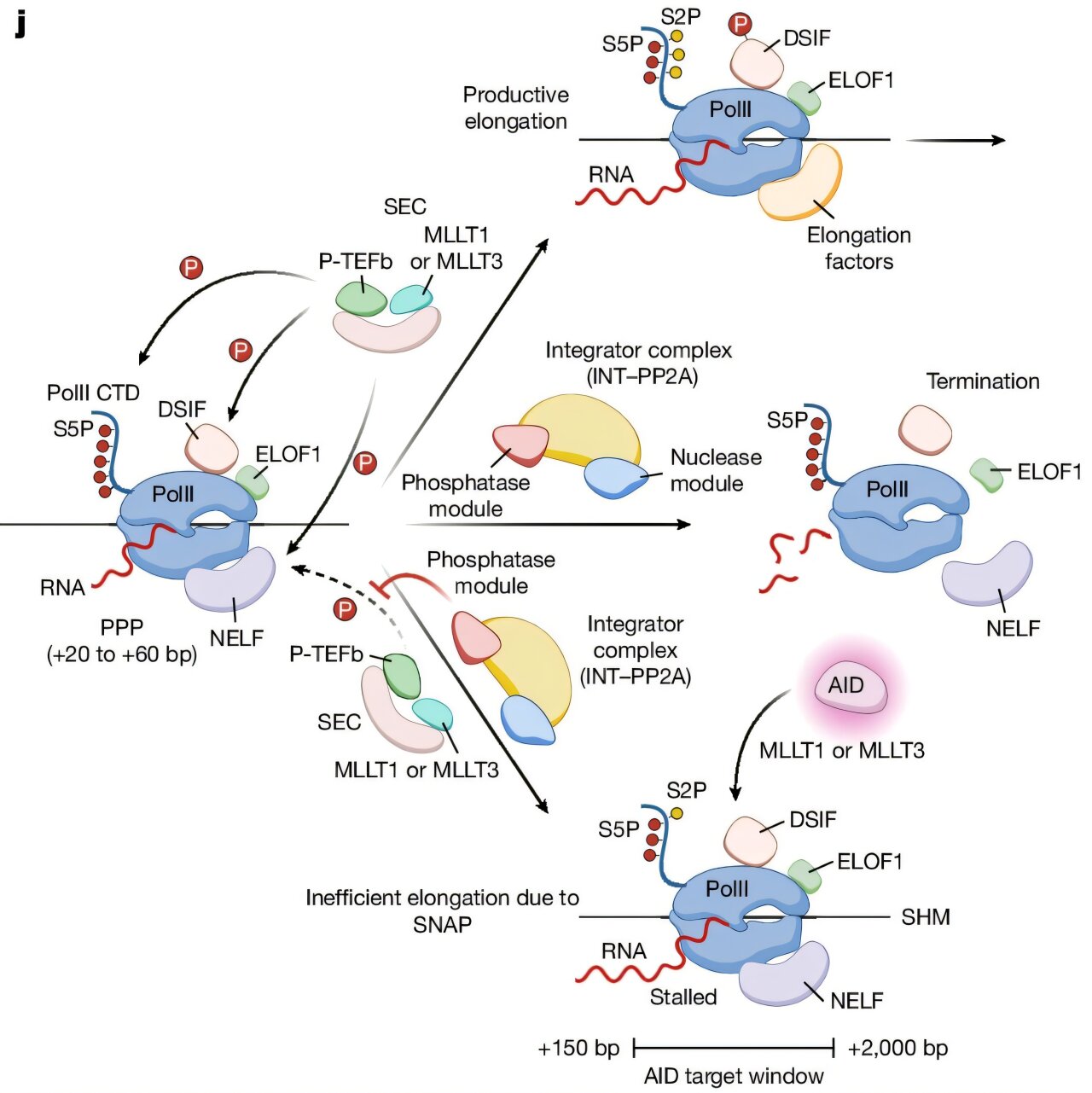
B cells, a type of white blood cell, protect our bodies by producing antibodies that recognize and bind to invaders like bacteria and viruses. After an infection, B cells undergo rapid mutations in the genes that encode antibodies. These mutations—known as somatic hypermutations—allow B cells to produce antibodies tailor-made to recognize the foreign pathogens they just encountered, making them more efficient at defense.
This is a key part of our immune system and how it adapts to new pathogens. But how cells unleash such an extreme kind of mutation—occurring at a rate 1 million times higher than in other genetic regions—in a defined stretch of DNA has remained unclear.
Now, researchers at Yale School of Medicine have found the molecular regulators that orchestrate this delicate process. Their findings were published in Nature.
"Somatic hypermutation has always been the 'poor aunt' of immunobiology. For a while, the field was really stuck in making significant headway to understand the process," says David Schatz, Ph.D., chair and Waldemar Von Zedtwitz Professor of Immunobiology at Yale School of Medicine and senior author of the study.
Part of the challenge in studying somatic hypermutation has been the difficulty in controlling the mutation process so it could be studied experimentally.
"If you manipulated the genes in the cell, and the cell got sick, by the time you wanted to see what hypermutations occurred, the cell would have already died," Schatz says.
Source link