
This article has been reviewed according to Science X's editorial process and policies. Editors have highlighted the following attributes while ensuring the content's credibility:
Why do some people develop Alzheimer's disease while others don't? Scientists have found several definite risk factors, including family history, specific gene variants, head injury and heart or circulatory problems.
Now a new study by researchers at Columbia University and Mount Sinai School of Medicine suggests another possible contributor: mechanical crowding in the brain. The study is published in the journal Alzheimer's & Dementia.
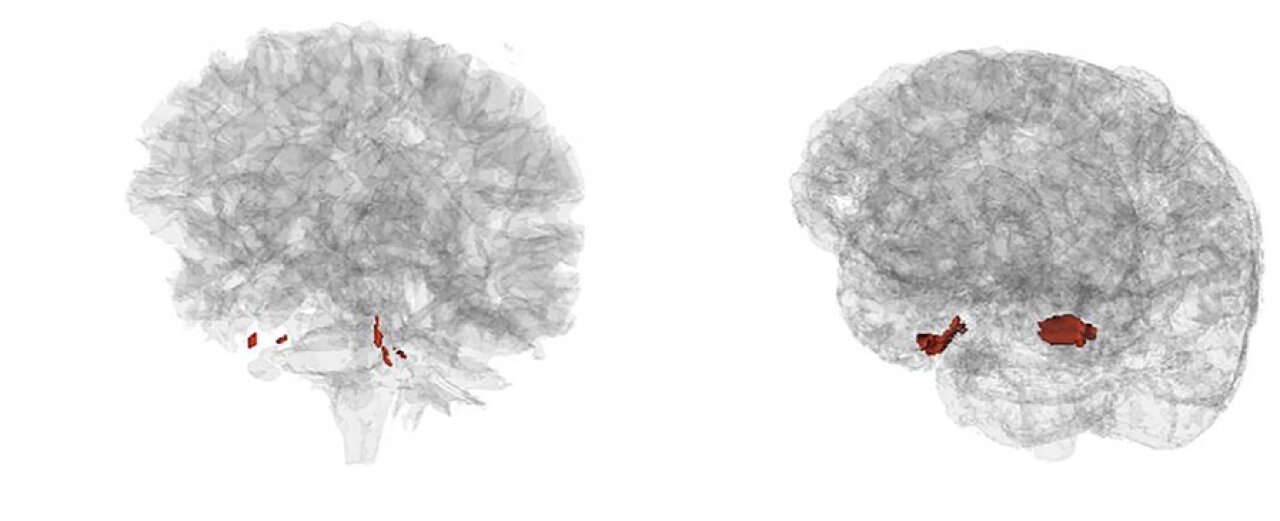
The provocative hypothesis sprang from the observation that Alzheimer's disease pathology often begins in the entorhinal cortex (EC), a small area on the bottom edge of the brain. This region rests alongside a stiff structure called the tentorial incisura, which varies slightly in size between individuals. That means the edge of the stiff incisura is very close to the EC in some people, while in others, the two structures are farther apart.
"This is something I've seen thousands of times looking at MRI scans: subtle variation in the proximity of the EC to the incisura, but we didn't really think much of it," says Frank Provenzano, assistant professor of neurological sciences at Columbia University Vagelos College of Physicians and Surgeons and senior author on the new study.
More recently, that variation led Provenzano and colleague John Crary, a neuropathologist at the Icahn School of Medicine at Mount Sinai, to wonder whether proximity between the EC and the incisura might play a role in either Alzheimer's disease progression or accumulation of neurofibrillary tangles, a toxic form of tau that is implicated in Alzheimer's and other neurodegenerative diseases.
Source link





