
This article has been reviewed according to Science X's editorial process and policies. Editors have highlighted the following attributes while ensuring the content's credibility:
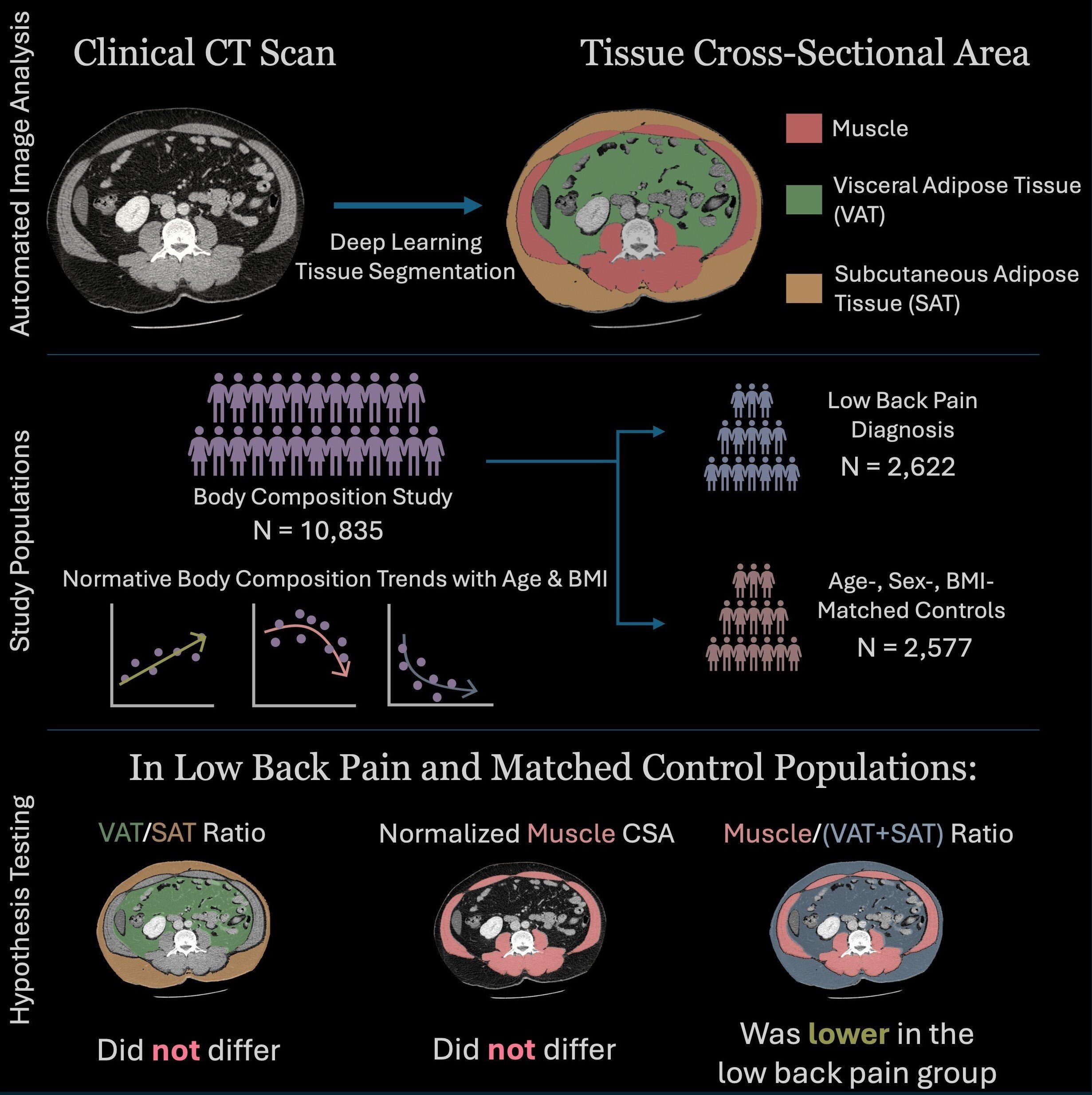
People with low back pain have about the same amount of abdominal muscle as people without it, but a lower ratio of abdominal muscle to fat, according to a new study published Nov. 19 in the journal PLOS Digital Health by Kathryn Marusich of Stanford University, U.S., and colleagues.
Low back pain is the leading cause of disability worldwide, and known risk factors include age, female sex and higher body mass index (BMI). However, the exact role of muscle and fat has been unclear; studies making associations between back pain and abdominal muscles have generally been small, often with fewer than 100 low back pain subjects.
In the new study, researchers used a machine learning tool to analyze abdominal CT scans and linked electronic health records from 23,508 patients at a single U.S. hospital. The CT scans provided information on muscle, visceral fat (fat surrounding abdominal organs) and subcutaneous fat (fat under the skin) while the electronic health records showed diagnoses of lower back pain as well as demographic information.
From the initial data set, the team used 10,835 patients to establish normal body composition trends. Then, 2,622 patients diagnosed with low back pain were compared with 2,577 age-, sex- and BMI-matched patients without the diagnosis.
9 vs. 792). 353 vs. 0001), though the effect size was small.
Source link





