
This article has been reviewed according to Science X's editorial process and policies. Editors have highlighted the following attributes while ensuring the content's credibility:
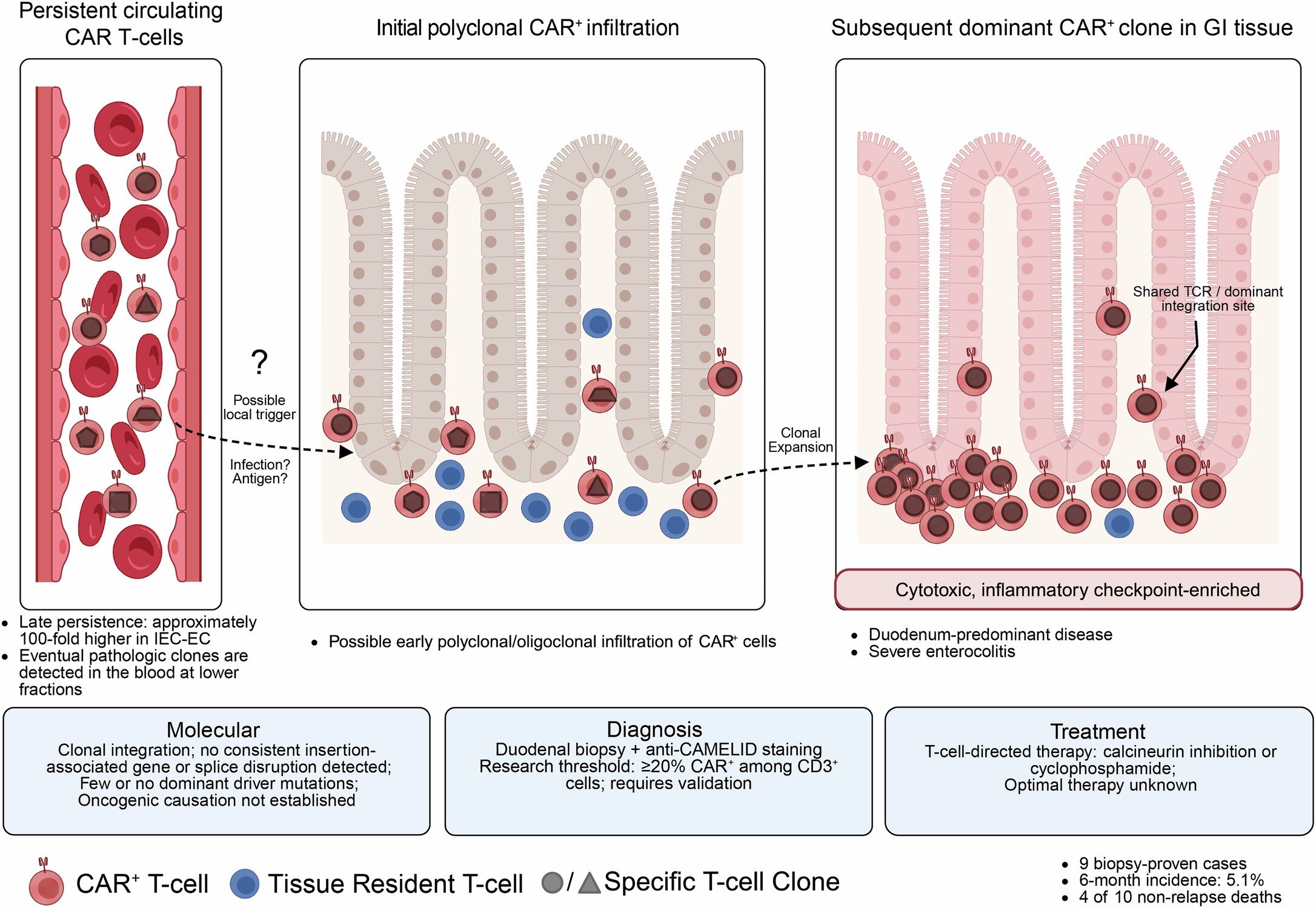
Patients with multiple myeloma who developed a serious gastrointestinal side effect after treatment with chimeric antigen receptor (CAR) T cell therapy had significantly more CAR T cells persisting in their bloodstream, according to new research from The University of Texas MD Anderson Cancer Center.
The findings, published in Nature Medicine, may help clinicians better diagnose and treat affected patients earlier.
Immune effector cell-associated enterocolitis (IEC-EC) is a rare but serious gastrointestinal side effect that can occur in patients after CAR T cell therapy. The complication is associated with severe clinical outcomes, including prolonged hospitalization, need for intensive nutritional support and increased mortality.
In the study, patients treated with the CAR T cell therapy ciltacabtagene autoleucel (cilta-cel) who developed IEC-EC had dramatically higher levels of long-term CAR T cell persistence in their blood—more than 100 times higher, on average, than in patients who did not develop the condition.
"Our study found that IEC-EC is not just inflammation of the gastrointestinal tract, but it is a distinct CAR T cell therapy–driven immune cell disorder," said the study's corresponding author Mark Hamilton, M.D., assistant professor of Lymphoma & Myeloma.
"By understanding the biology behind this complication, we can improve recognition of the syndrome and develop more effective strategies to monitor and treat patients."
Researchers analyzed nine cases of IEC-EC occurring among 158 patients treated with cilta-cel. IEC-EC occurred in approximately 5% of patients who received treatment.
Source link





