
This article has been reviewed according to Science X's editorial process and policies. Editors have highlighted the following attributes while ensuring the content's credibility:
As the primary command center of our bodies, human brains have several layers of protection to help keep them safe from dangerous invaders. Unfortunately, some of these safeguards—in particular, the blood–brain barrier (BBB)—make it hard to deliver medications to this essential organ.
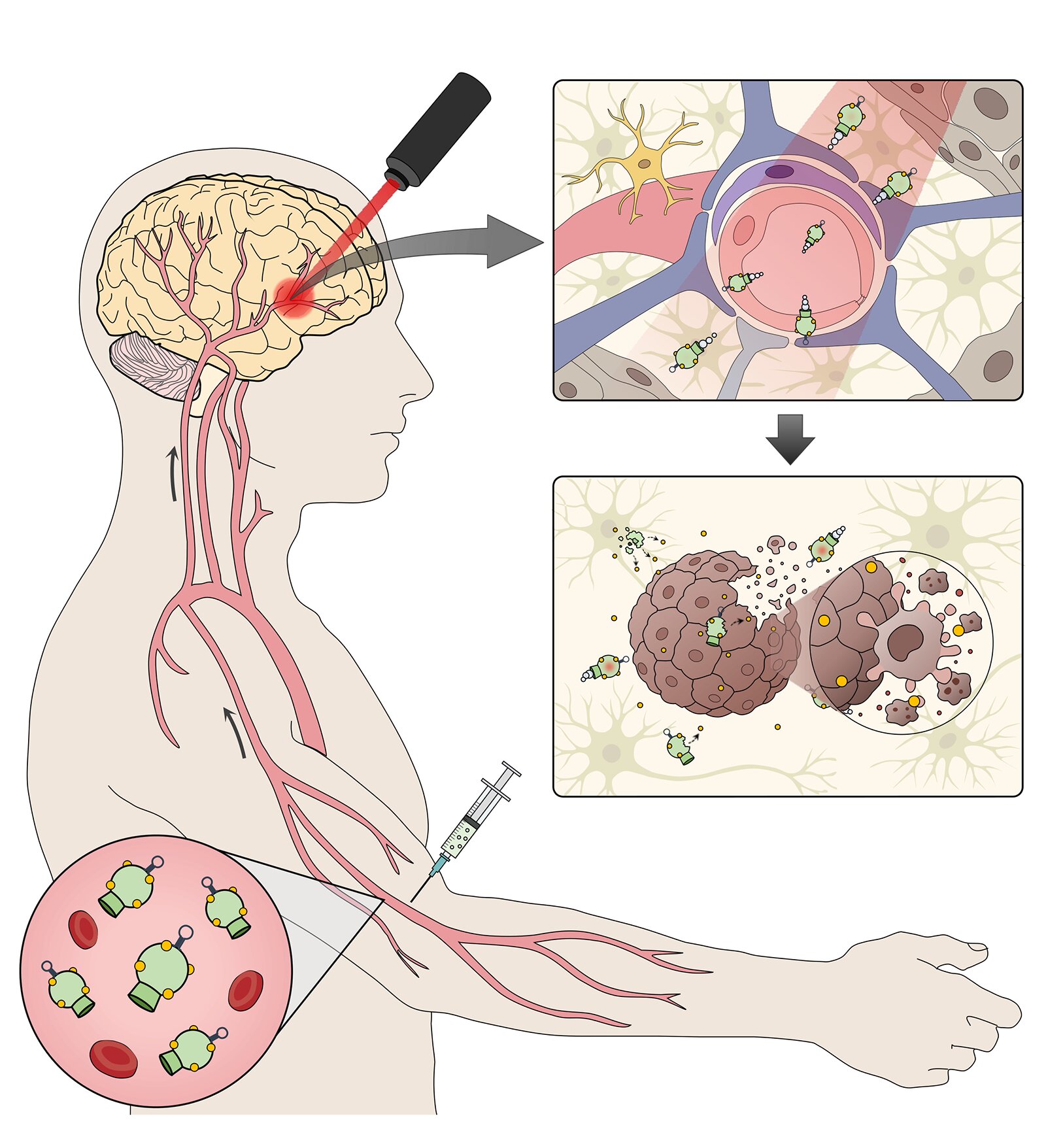
Researchers led by Caltech's Wei Gao, professor of medical engineering and a Heritage Medical Research Institute investigator, have now developed a nanorobotic system called BrainBots that can successfully cross the BBB to deliver lifesaving therapeutics for neurological disorders and other diseases, including cancer.
"We showed that our BrainBots can carry medication through the bloodstream and help deliver it across the blood–brain barrier, one of the biggest challenges in treating brain diseases," Gao says. In the study, light-activated BrainBots delivered approximately five times more medication to the brain than nonactivated counterparts.
Gao is the corresponding author of a paper published in Science Robotics about the team's advancements. The article is titled "Photothermally gated nanorobots for active blood–brain barrier transcytosis and brain delivery."
The BBB is a protective filter that lines the brain's blood vessels and is notoriously hard to penetrate, making the treatment of brain disorders very difficult. Many medications are delivered through intravenous (IV) injection, but the BBB prevents most drugs from entering the brain in sufficient amounts.
To address this issue, Gao and the team used established biocompatible and biodegradable materials to build nanoscale "robots" that can be activated by light to self-propel, pushing them toward the cells on the BBB, so they can then be ushered into the brain.
Source link





