
This article has been reviewed according to Science X's editorial process and policies. Editors have highlighted the following attributes while ensuring the content's credibility:
Many people rely on social media to learn more about health conditions and trends. A study published in Vaccine that examined TikTok videos about respiratory syncytial virus (RSV) prevention—including the maternal vaccine (Abrysvo) and the long-acting antibody nirsevimab (Beyfortus) for infants—finds that only 47% present high-quality information.
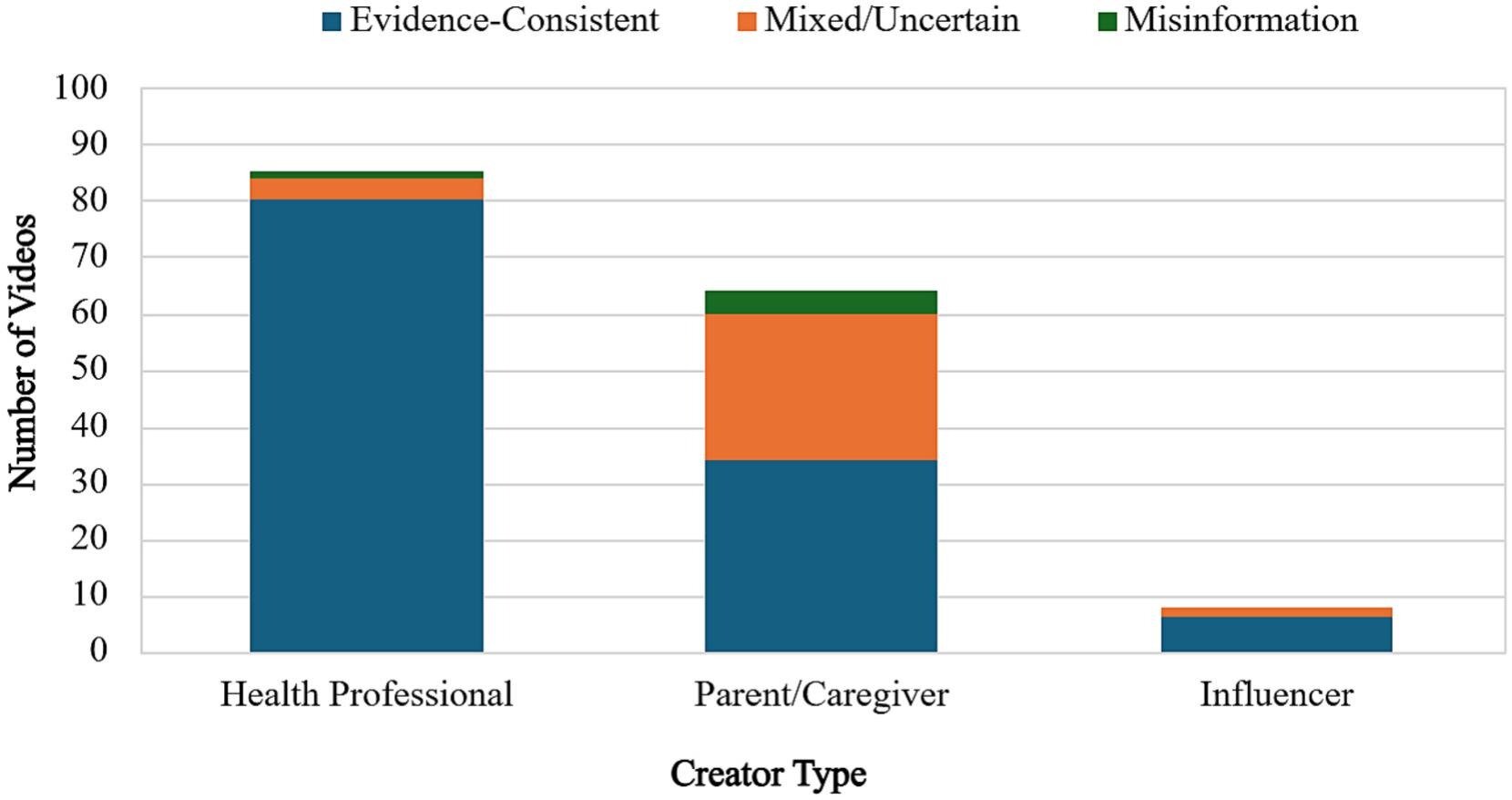
"Health professionals made half of all videos and most evidence-consistent content, while parents and caregivers made a larger share of mixed-or-uncertain content," wrote the authors, from Rutgers New Jersey Medical School.
The researchers watched 169 TikToks about RSV immunization using keywords such as RSV vaccine, RSV jab or RSV prophylaxis. The videos were posted from July 17, 2023, to Nov. 14, 2025, following the U.S. Food and Drug Administration's approval of nirsevimab.
Using the Global Quality Scale (GQS), the scientists evaluated TikToks for quality of health information on a scale from 1 to 5, with 1 representing low-quality information. Anything higher than a 4 is considered high-quality. The median GQS score was 3, and 79 TikToks fell into the high-quality category.
Health care professionals created most RSV-prevention TikToks (50.3%), with parents and caregivers next (37.9%), followed distantly by influencers (4.7%), social media creators of unclear affiliation (4.1%), clinics (1.8%) and scientists and researchers (1.2%).
Who created the video mattered, with health care professionals producing higher-quality TikToks than parents and caregivers. TikToks that offered mixed or uncertain content made up about 20% of the videos and were six times more common than misinformation (3%).
Source link





