
This article has been reviewed according to Science X's editorial process and policies. Editors have highlighted the following attributes while ensuring the content's credibility:
Researchers have developed an expandable line of intestinal support cells that can help sustain miniature gut tissues in the laboratory without added growth factors. By making these normally scarce, difficult-to-grow cells available for repeated experiments, the team has created a new tool for studying the environment that maintains intestinal stem cells.
The study, published in Cellular and Molecular Gastroenterology and Hepatology, was led by Dr. Michal Shoshkes-Carmel and Ph.D. students Marco Canella and Amal Gharbi from the Institute for Medical Research Israel-Canada at Hebrew University Medical School, with colleagues from The Organoid Center at Hadassah-Hebrew University Medical Organization.
Intestinal organoids—often called "mini-guts"—are three-dimensional tissue models that reproduce some features of the intestinal lining. Growing them typically requires adding growth factors to the culture medium to maintain stem-cell function and support continued tissue renewal. In the body, however, stem cells receive essential signals from neighboring cells within a specialized environment known as the stem-cell niche.
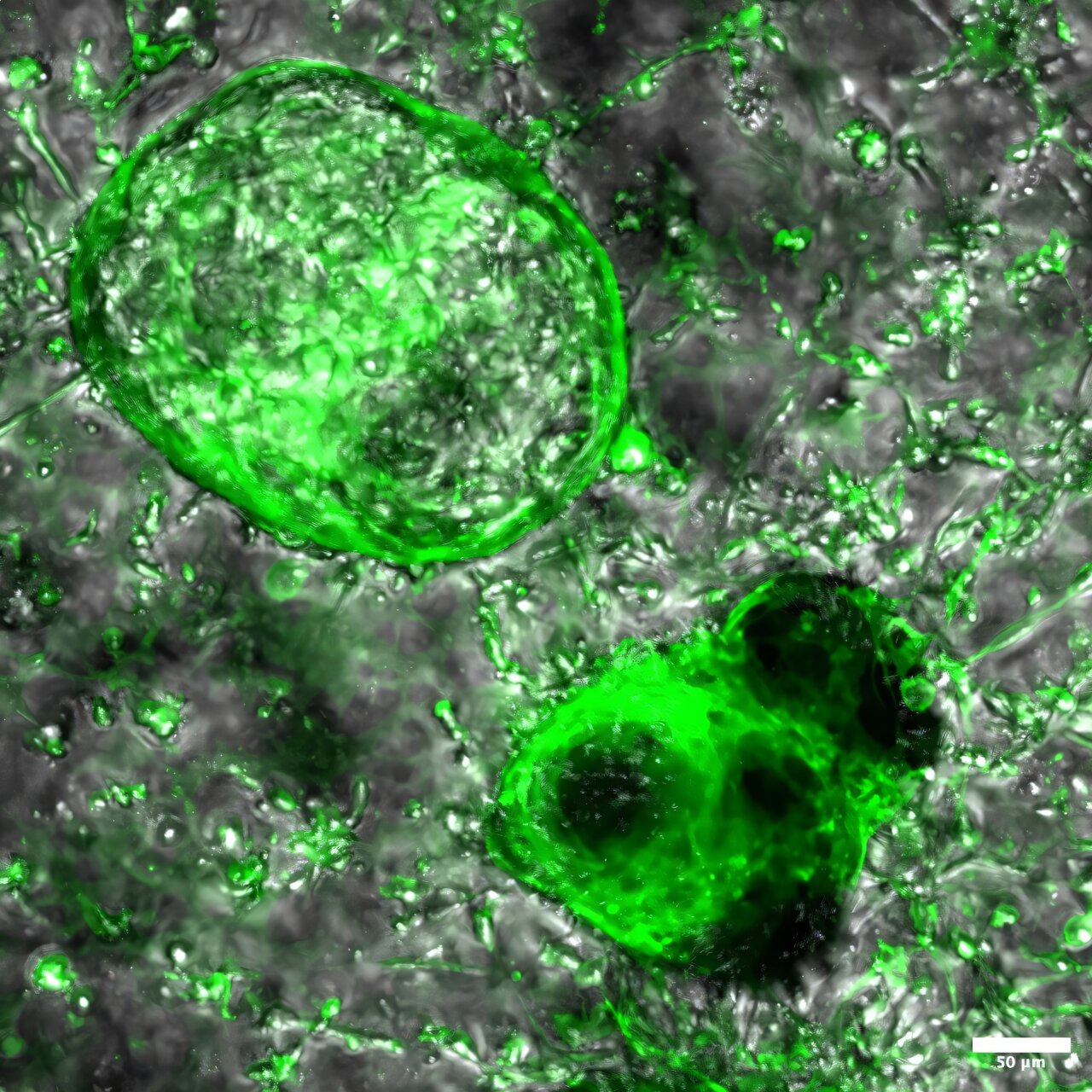
The new study brings an expandable cellular component of that niche into the laboratory. The researchers generated an immortalized line of telocytes and showed that these cells could support intestinal organoids, including human colon organoids, without the growth-factor supplements used in conventional comparison cultures.
Telocytes form a network beneath the intestinal lining and are an important component of the intestinal stem-cell niche in the body. Through their long, branching extensions and the signals they provide, they support the stem cells responsible for continually renewing the gut lining.
Source link





