
This article has been reviewed according to Science X's editorial process and policies. Editors have highlighted the following attributes while ensuring the content's credibility:
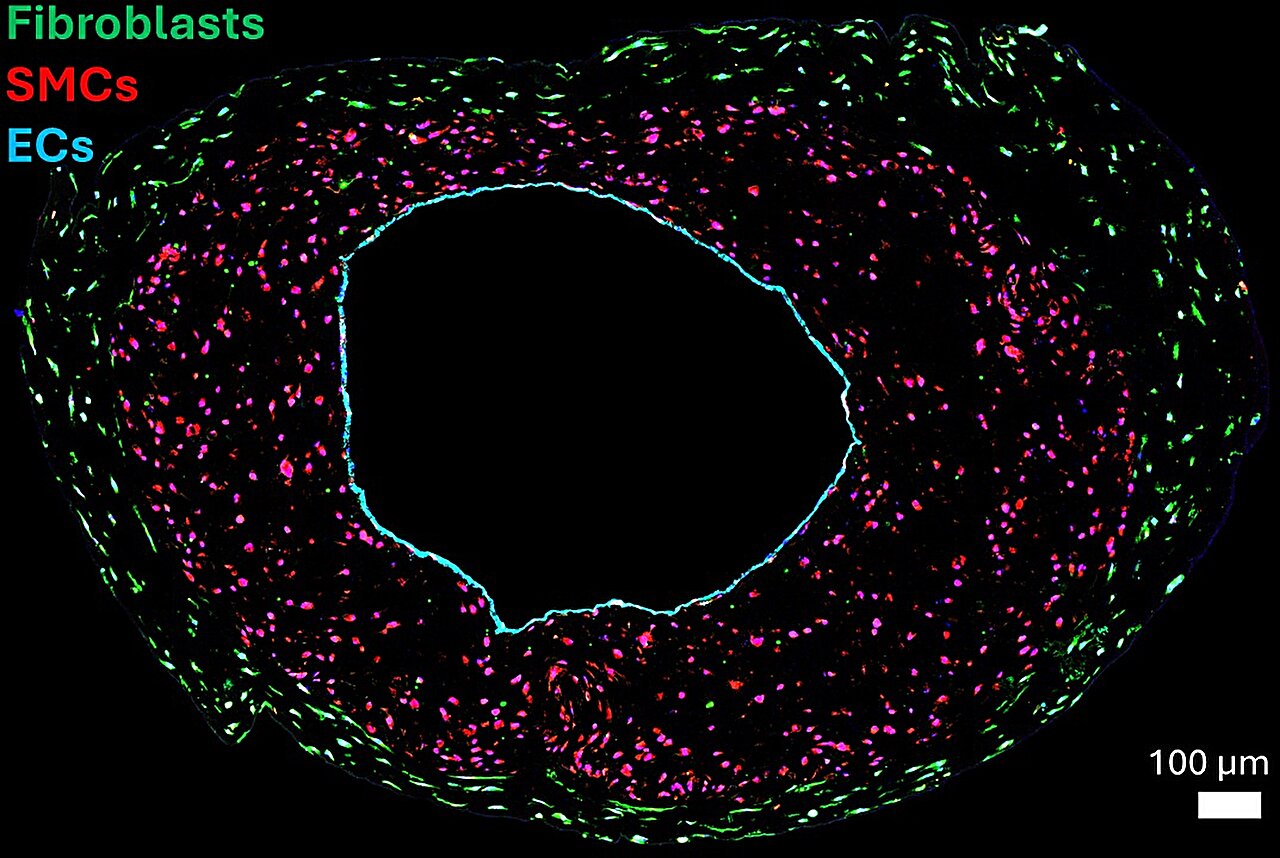
Biomedical engineers at Duke University have developed a three-layer model of human blood vessels that enables researchers to better understand how Hutchinson-Gilford progeria syndrome (HGPS), a rare genetic disorder that causes accelerated aging, affects the vascular system.
By combining three major types of cells found in blood vessel walls, this new model allows researchers to more comprehensively study how certain cells are affected by HGPS and explore how they respond to new therapies. The work is published in Science Advances.
HGPS is an extremely rare, fatal disease that causes accelerated aging in children. The condition is triggered by a random gene mutation, and children with it typically die in their teens or early 20s, often from cardiovascular complications like heart disease or stroke. But these complications don't arise from the typical drivers of cardiovascular disease, such as high cholesterol and the subsequent formation of artery-clogging plaques. Instead, blood vessels in people with HGPS undergo major structural changes, including the loss of smooth muscle cells and increased stiffness.
To better understand how and why these changes were occurring in HGPS, George Truskey, the R. Eugene and Susie E. D. graduate from the Truskey lab, built on an earlier tissue-engineered blood vessel model containing endothelial and smooth muscle cells by adding a third cell layer made from fibroblasts.
Source link





