
This article has been reviewed according to Science X's editorial process and policies. Editors have highlighted the following attributes while ensuring the content's credibility:
Researchers from The University of Texas MD Anderson Cancer Center have discovered that the IL-18 inflammatory protein helps pancreatic tumors grow and evade the immune system, highlighting its potential as a therapeutic target for pancreatic cancer.
Reducing levels of IL-18 in preclinical models reshaped the tumor microenvironment, slowed tumor growth, improved survival and enhanced the effects of KRAS-targeted therapies.
The study, published in Gastroenterology, was co-led by Yang Chen, Ph.D., assistant professor of Translational Molecular Pathology, and Xinlei Sun, Ph.D., postdoctoral fellow in Translational Molecular Pathology.
"Our results show that IL-18 helps pancreatic tumors stay hidden from the immune system and significantly contributes to disease progression and reduced survival," Chen said. "Finding a way to safely target IL-18 in humans could have tremendous potential for enhancing the benefits of KRAS-targeted therapies and improving patient outcomes."
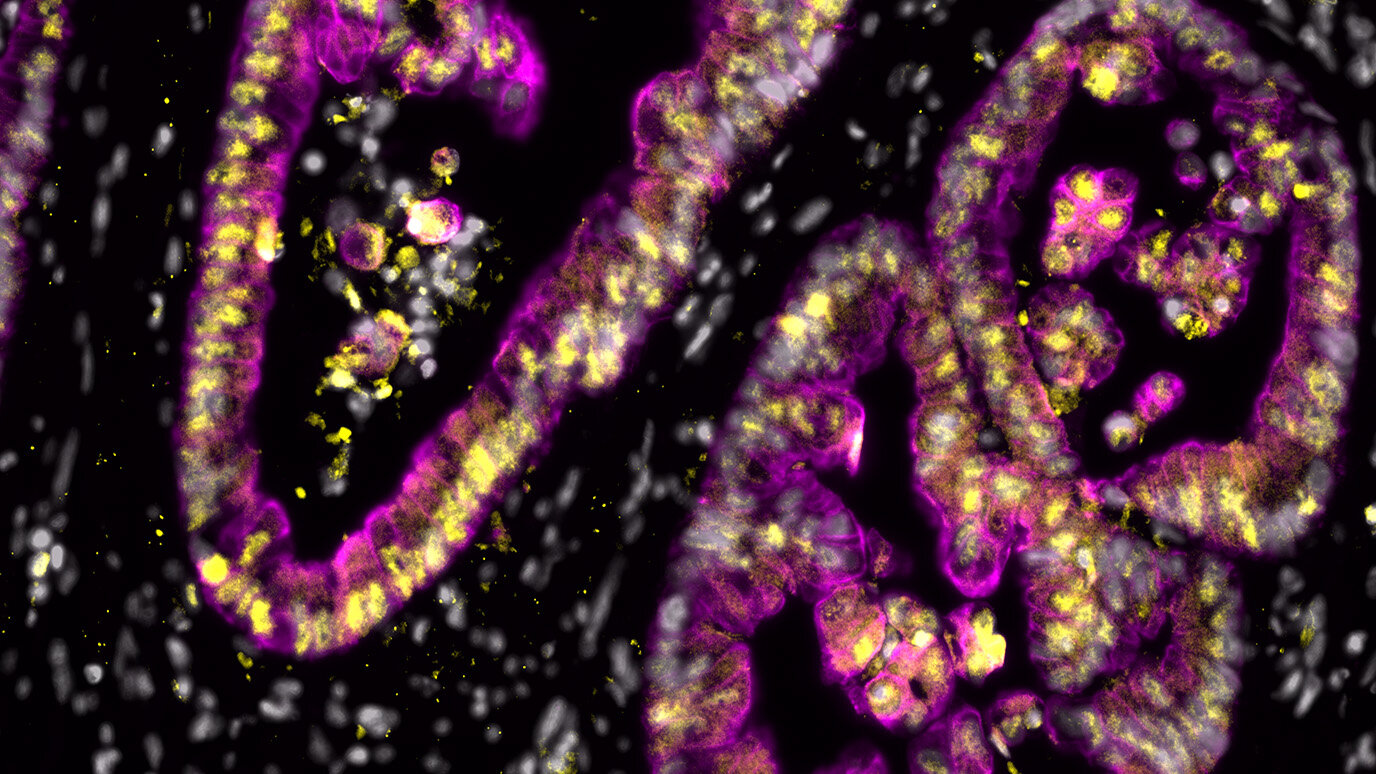
IL-18 is a pro-inflammatory protein that helps regulate the immune response. It is known to be elevated in pancreatic cancer and is typically associated with poor patient outcomes. To understand its role, the researchers created genetically engineered models of pancreatic cancer with reduced IL-18 protein levels and examined the resulting tumor microenvironment. Reducing IL-18 delayed disease progression and extended survival in these models.
Further single-cell analyses revealed that IL-18 increases levels of CD47, a protein that is known as the "don't eat me" signal because it helps cancer cells avoid being cleared by macrophage immune cells.
Source link





