
This article has been reviewed according to Science X's editorial process and policies. Editors have highlighted the following attributes while ensuring the content's credibility:
Neonicotinoids are among the most common insecticides worldwide, given their low cost and high efficacy. However, these insecticides take a long time to break down in the environment and can easily contaminate their surroundings, affecting food and water supplies. Despite the well-documented effects of neonicotinoids on insects and the environment, their impact on humans remains less clear.
Now, researchers from the University of Osaka have identified associations between neonicotinoid-related biomarkers measured in cord serum and selected aspects of neurodevelopment in children.
Neonicotinoids are known to act on nicotinic acetylcholine receptors in insects, leading to continuous firing, paralysis and then death. However, humans also have these receptors, and they are known to be important for brain cell maturation during fetal development. Past research on the presence of insecticides in Japan found that they are present all year round in drinking water, highlighting one pathway for human exposure.
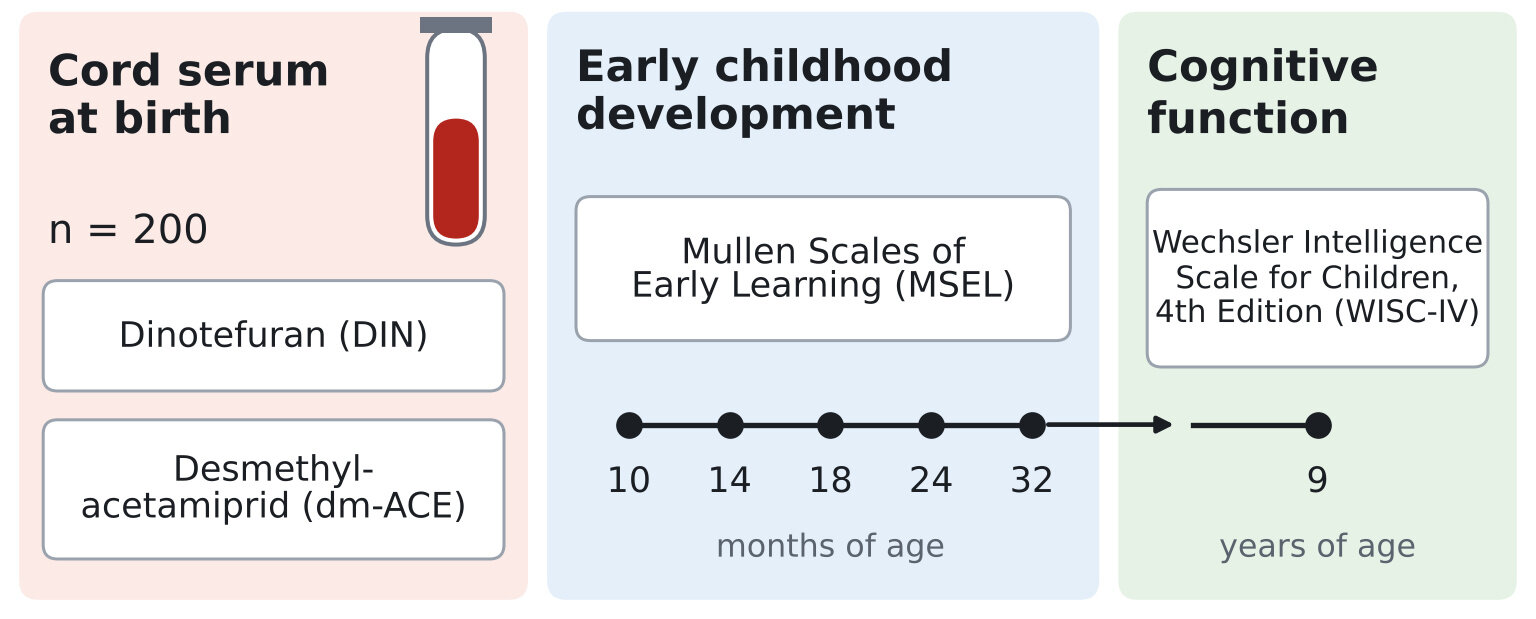
"Previous studies have largely focused on neurodevelopmental outcomes at a single time point," explains lead author Abir Nagata. "Our study examined the relationship between neonicotinoid-related biomarkers in umbilical cord serum at birth and measures of neurodevelopment from 10 months to 9 years of age."
Of the 10 neonicotinoid-related compounds measured, the research team focused on dinotefuran, a neonicotinoid insecticide, and desmethyl-acetamiprid, a metabolite of acetamiprid, both detected in more than half of the 200 cord serum samples. After statistically correcting for the number of comparisons made, no associations were identified between dinotefuran or desmethyl-acetamiprid concentrations and any neurodevelopmental measures from 10 to 32 months of age.
Source link





