
This article has been reviewed according to Science X's editorial process and policies. Editors have highlighted the following attributes while ensuring the content's credibility:
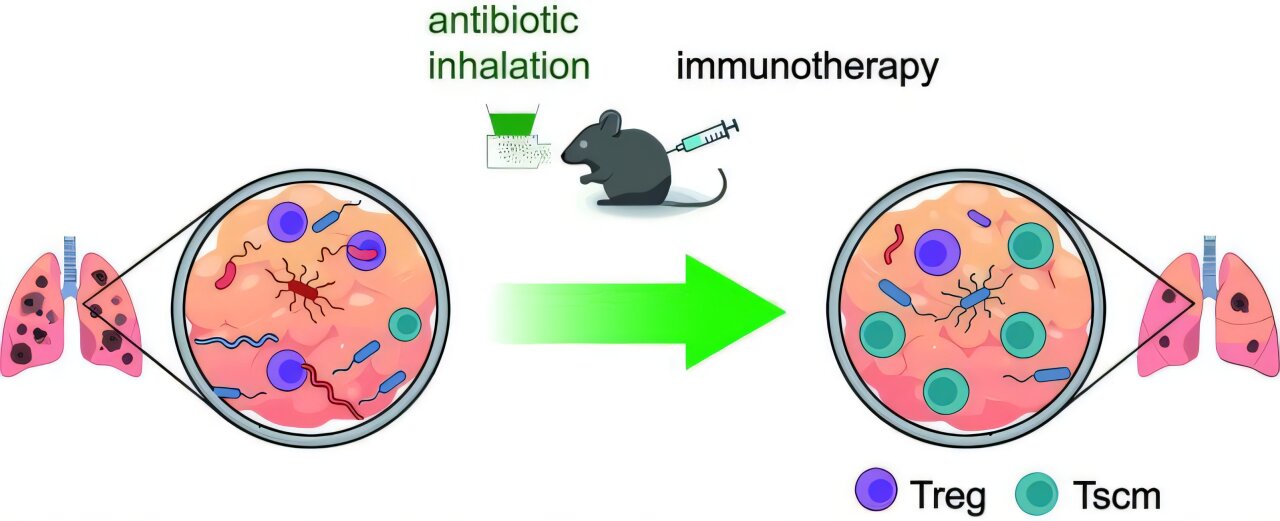
Researchers at the Leibniz Institute for Immunotherapy (LIT) in Regensburg, Germany, at the University of Milan and at the National Cancer Institute (INT) in Milan, Italy, have identified tumor-associated bacteria in lung metastases as a potential barrier to immunotherapy. In mice, aerosolized antibiotics disrupted this immunosuppressive environment and enhanced treatment responses, including complete tumor regressions. The study is published in Cancer Immunology Research.
The researchers used mouse models to investigate how bacteria colonizing the lower airways change when tumor metastases grow inside the lung and whether they influence the response to immune checkpoint therapies (ICT). ICT is a form of immunotherapy that activates the body's own immune defenses to fight cancer cells.
The researchers found that tumor-associated bacteria promoted the accumulation and activity of regulatory T cells (Tregs). These cells can suppress antitumor immune responses and thereby limit the effectiveness of immunotherapy. The bacteria supported the Treg response through metabolites including the amino acid valine. This finding points to a local interaction between tumor-resident microbes, bacterial metabolism and the immune cells that shape the tumor microenvironment.
Antibiotic treatment is typically considered detrimental to ICT as it causes unhealthy changes in the gut microbiota, disturbing the proper activation of tumor-fighting immune cells. When the researchers administered antibiotics as an aerosol instead of using the typical oral route, the treatment targeted the airways directly and restored a healthy lung microbiome.
Source link





