
This article has been reviewed according to Science X's editorial process and policies. Editors have highlighted the following attributes while ensuring the content's credibility:
A traumatic brain injury can have a lasting impact on a person's life. Beyond the immediate damage caused by the impact, subsequent processes can further impair brain function. These include inflammatory responses, which normally support defense and repair but can contribute to additional damage when strongly or persistently activated.
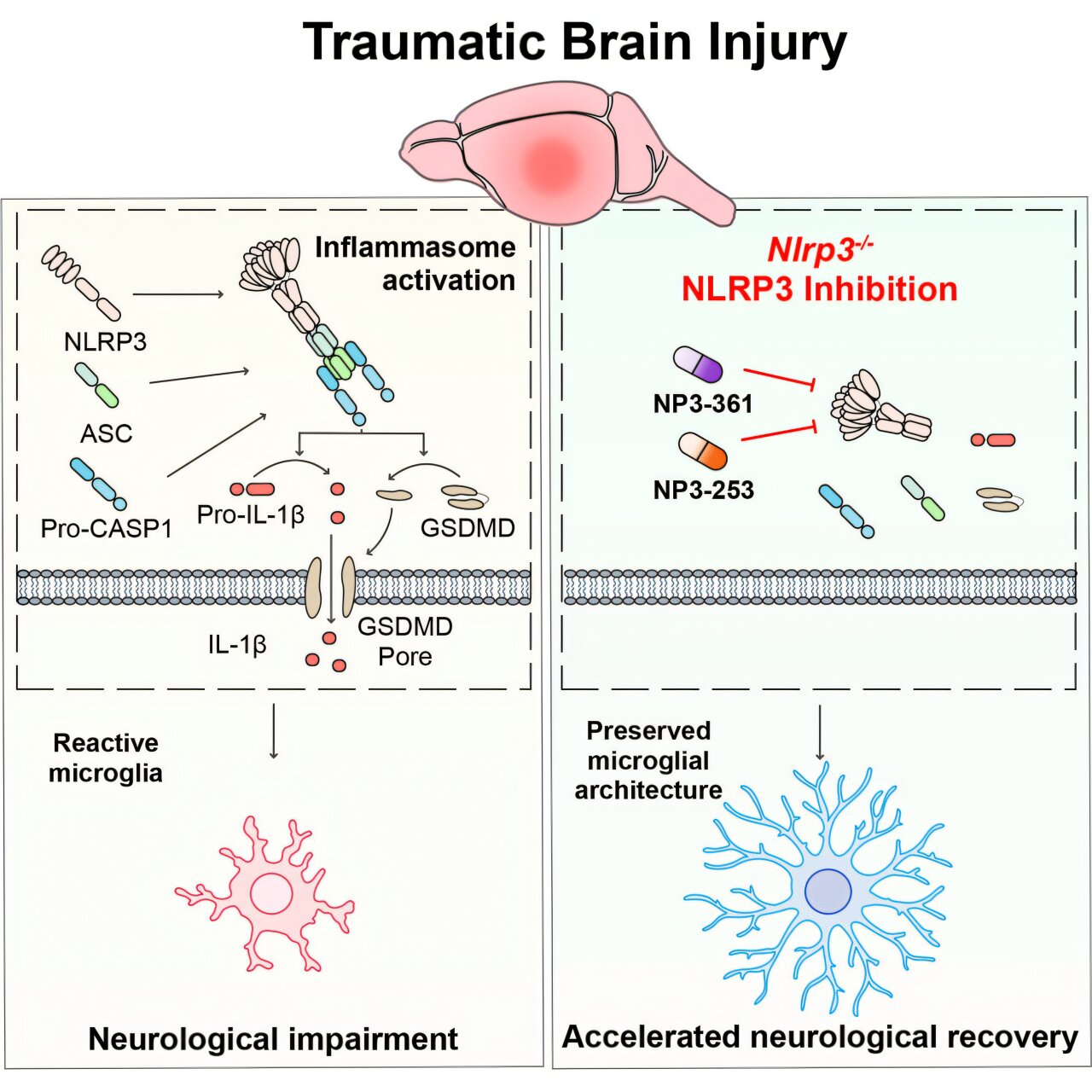
Microglia, the brain's immune cells, are among the cells involved in these responses. They monitor their surroundings, clear cellular debris and respond to injury. The protein NLRP3 is an important inflammatory sensor within these cells. When it detects danger signals, it can assemble with other proteins to form a complex known as an inflammasome. This complex triggers a signaling cascade that activates molecules promoting inflammation.
A team led by Dr. Sergio Castro-Gomez at UKB and professor Michael T. Heneka at the University of Luxembourg investigated the role of NLRP3 following an experimentally induced, controlled brain injury. Components of this inflammatory signaling pathway, together with numerous other inflammatory markers, were elevated, particularly during the first week after injury.
In the absence of the gene encoding NLRP3, brain tissue loss was reduced and neurological recovery was faster. Microglia also retained more of the finely branched structure characteristic of their uninjured state. Aggregates of the protein ASC, which contributes to inflammasome assembly, were also reduced. The study is published in the journal Cell Reports Medicine.
"Our findings identify NLRP3 as a central driver of post-traumatic neuroinflammation," said Castro-Gomez.
Source link





