
This article has been reviewed according to Science X's editorial process and policies. Editors have highlighted the following attributes while ensuring the content's credibility:
A ball flying toward your head, a car approaching as you cross the street or—in caveman days—a predator suddenly appearing. To react quickly, your brain needs to instantly know not only that something is moving, but which way it's going.
Scientists have long known that certain cells in the eye activate only when something moves in a particular direction, and they assumed the brain simply received that information directly from those eye cells. But no tool existed to confirm this hypothesis by mapping out the precise connections between cells in the eye and those in the brain.
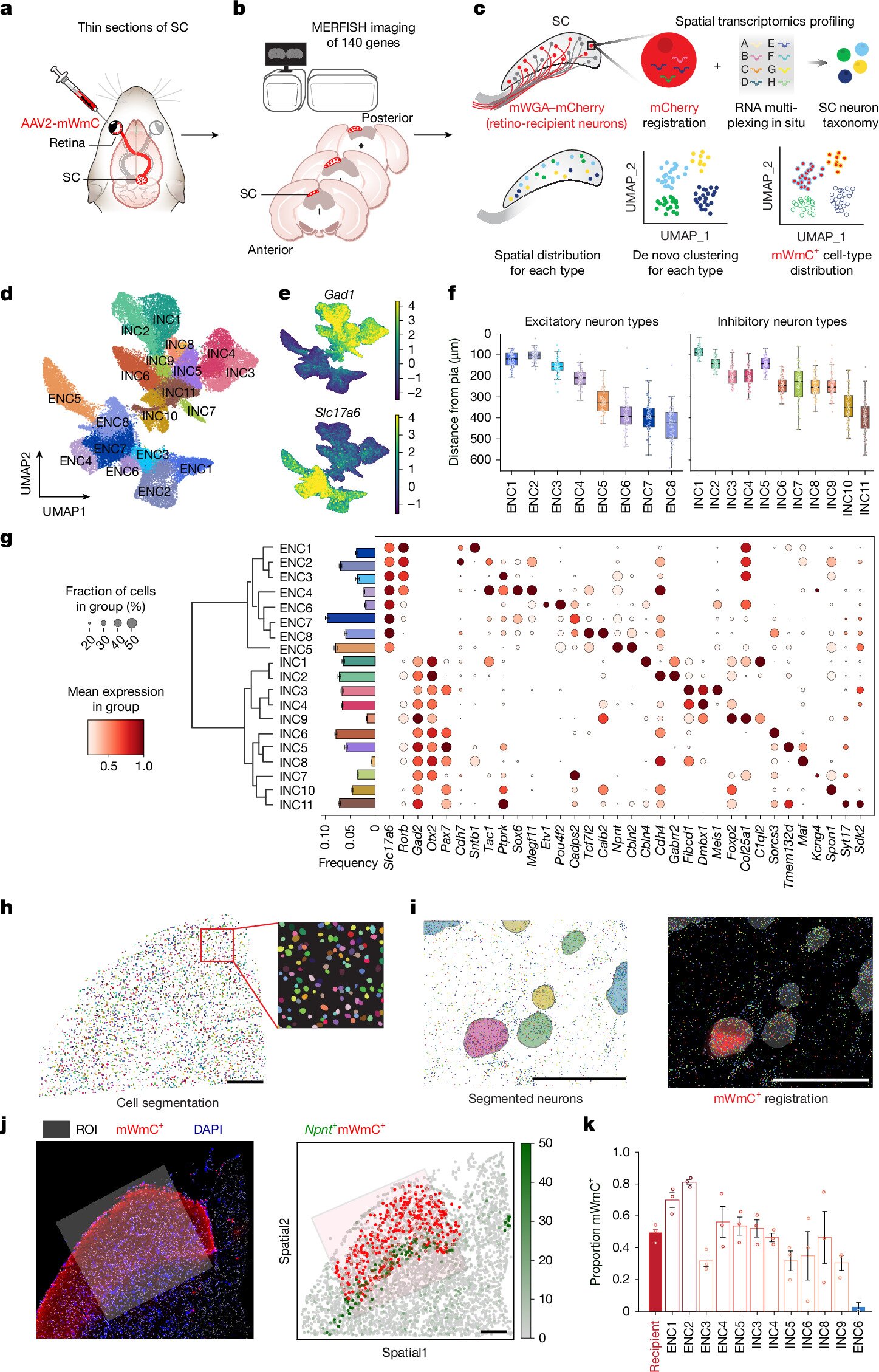
Now, researchers at UC San Francisco have developed a new brain-mapping tool to trace these connections. They used the technology to show that the brain doesn't just take the eye's word for the direction of motion; some cells in the brain also compute it on their own.
"This is a fundamental mechanism that has been understudied from a basic science perspective, but it also has applied value," said Xin Duan, Ph.D., a professor of ophthalmology at UCSF and a co-senior author of the new work. "If we ever want to repair or restore vision in people, we need to know which neural connections need to be rewired for functional vision."
The research , published in Nature , also offers a starting place for many other studies on how the eye and brain communicate.
Source link





