
This article has been reviewed according to Science X's editorial process and policies. Editors have highlighted the following attributes while ensuring the content's credibility:
The feeling that your hand belongs to your body arises from a complex interplay among brain regions that become active in a specific sequence, beginning even before your hand is touched. This was demonstrated in a study from Karolinska Institutet, in which researchers mapped participants' brain activity millisecond by millisecond. The results may, in the long term, contribute to a better understanding of disturbances in body perception after a stroke.
We take it for granted that our hands are part of our body, but how does the brain create this fundamental experience?
In a new study published in Nature Communications, researchers sought to find this out.
"We know quite a lot about which areas of the brain are involved in the sense that the body is our own, but considerably less about when different areas become active and how they interact. We have now been able to track how activity patterns in the brain develop over time," says Henrik Ehrsson, a professor in the Department of Neuroscience, Karolinska Institutet, who led the study.
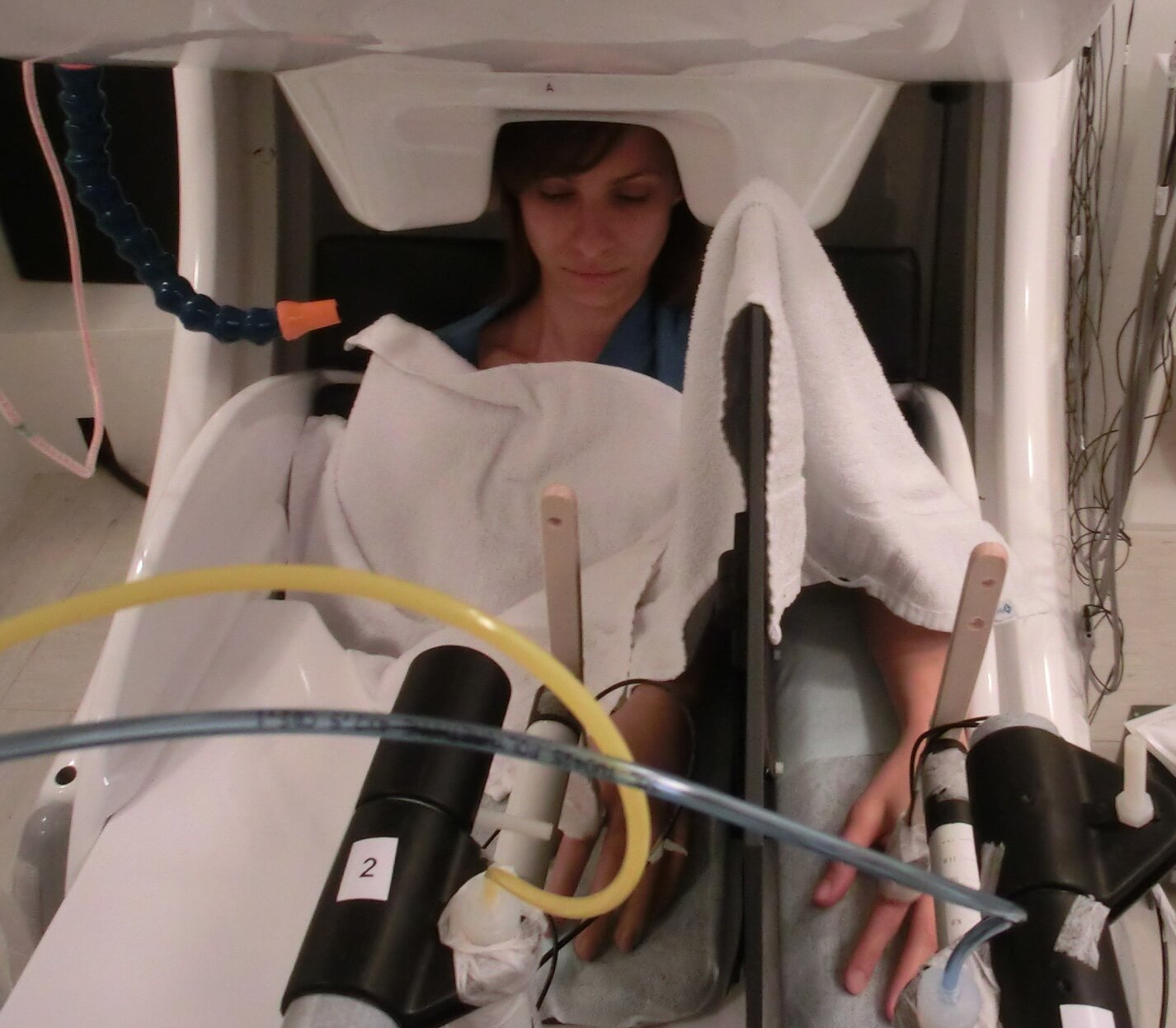
In the study, 45 healthy volunteers took part in an experiment using the well-known rubber hand illusion , in which participants can experience a lifelike artificial hand as part of their own body. Two robotic arms applied brief, light touches simultaneously to the rubber hand, which the participants could see, and to their real left hand, hidden behind a screen.
Source link





