This article has been reviewed according to Science X's editorial process and policies. Editors have highlighted the following attributes while ensuring the content's credibility:
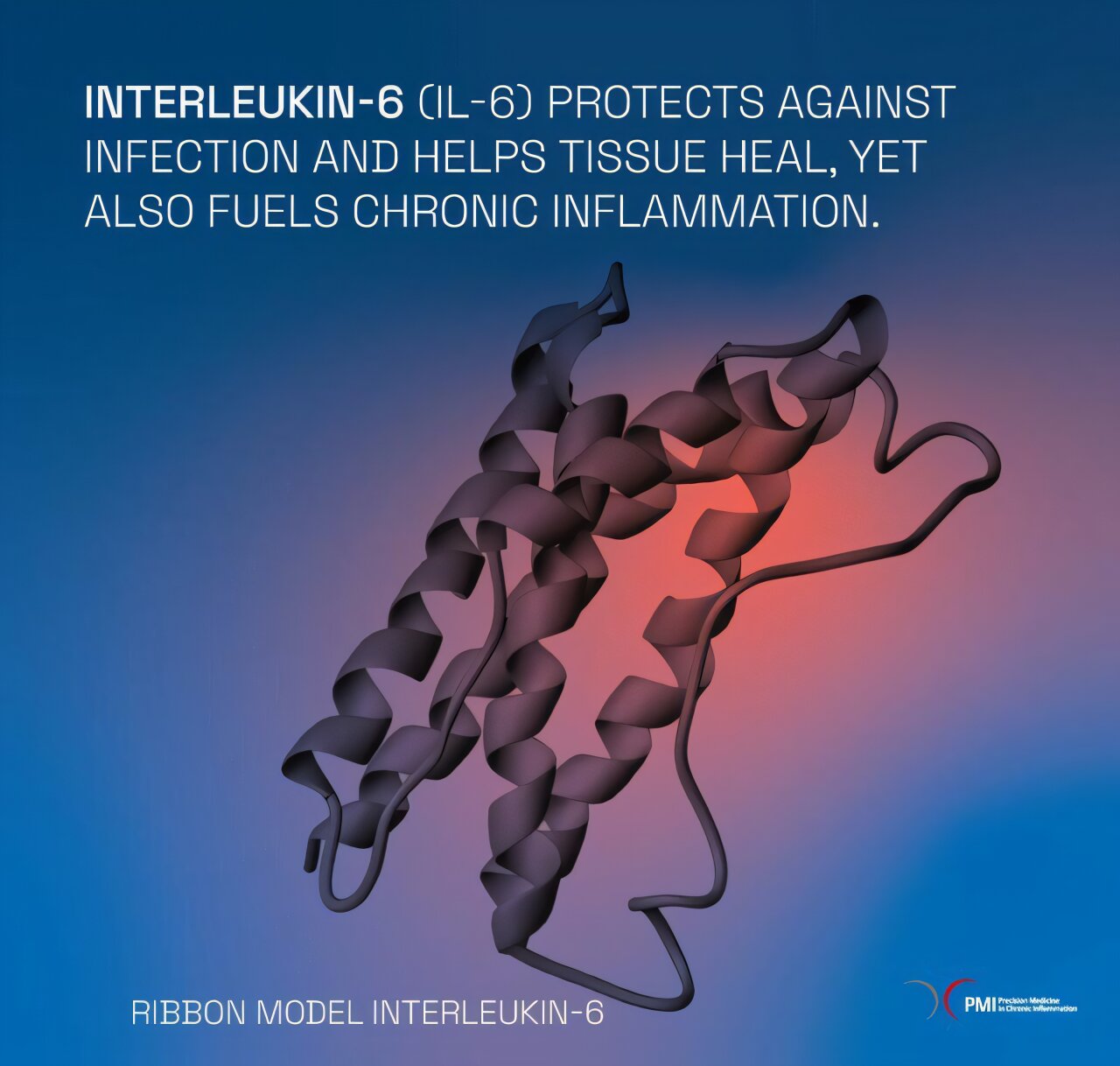
Interleukin-6 (IL-6) is a contradictory molecule in immunology. It helps the liver regenerate after injury and protects against infections, yet it also drives chronic inflammation in rheumatic diseases, inflammatory bowel disease and atherosclerosis. Current drugs block IL-6 across the board: They protect against inflammation but also switch off its beneficial functions.
A team led by professor Stefan Rose-John (Institute of Biochemistry, Kiel University), Dr. Georg Wätzig (CONARIS Research Institute AG, Kiel) and professor Stefan Schreiber (Department of Internal Medicine I, University Hospital Schleswig-Holstein, and Cluster of Excellence Precision Medicine in Chronic Inflammation) now shows how that could change. Their new review article appears in Nature Reviews Drug Discovery.
Conventional drugs cannot separate these two sides because of the way IL-6 works: The messenger can reach cells via two different routes. In the first, "classic" signaling, IL-6 binds to a receptor carried by only a few cell types, such as liver cells and certain immune cells. The complex of IL-6 and its receptor is then bound by a second receptor, the co-receptor glycoprotein 130 (gp130), which transmits the signal into the cell. This pathway is predominantly protective: It supports tissue regeneration and defense against infections.
In the second route, known as trans-signaling, the IL-6 receptor must be present in soluble form in the blood. This soluble IL-6 receptor is produced mainly by proteolysis. It can bind IL-6 and, together with it, reach any cell in the body because all cells carry the co-receptor gp130.
Source link