
This article has been reviewed according to Science X's editorial process and policies. Editors have highlighted the following attributes while ensuring the content's credibility:
Global efforts have sought to reduce mercury pollution, but methylmercury (MeHg) remains a persistent environmental hazard that bioaccumulates in aquatic food chains. Humans are exposed to MeHg primarily through contaminated seafood. Minamata disease, officially recognized in Japan in 1956, demonstrated the devastating neurological consequences of MeHg poisoning. Since then, researchers have investigated its neurotoxic effects, including sensory, motor and psychiatric symptoms. Despite clinical reports of behavioral disturbances in people affected by MeHg poisoning, the neural circuits underlying these abnormalities remain poorly understood.
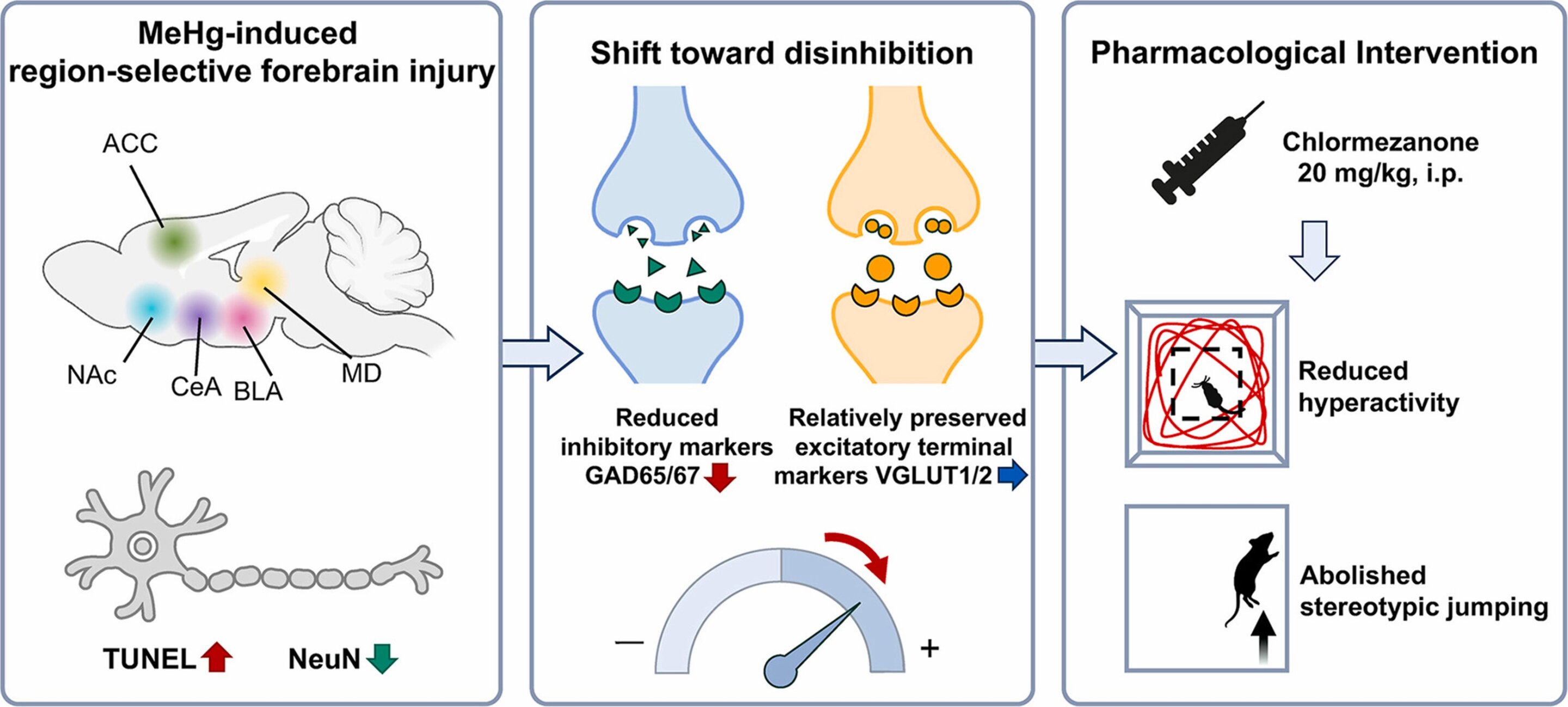
In a recent study, a research group from Japan used a mouse model of MeHg intoxication and discovered that the neural circuits in the forebrain were affected. The research group includes professor Takashi Uehara (Department of Medicinal Pharmacology, Graduate School of Medicine, Dentistry and Pharmaceutical Sciences, Okayama University, Japan), Dr. Ryohei Miki (a former doctoral researcher from the same department) and Dr. Masatake Fujimura (director of the Department of International Affairs and Research, National Institute for Minamata Disease, Japan).
When asked about the inspiration for this study, Uehara says, "Minamata disease has traditionally been studied mainly in terms of sensory disturbances and motor dysfunction. However, clinical reports have also described psychiatric and behavioral symptoms in people affected by MeHg poisoning, while the neural mechanisms underlying these manifestations remain poorly understood.
"We therefore asked whether MeHg might affect forebrain circuits responsible for controlling behavioral output, particularly inhibitory neural systems that normally act as a 'brake' on excessive neuronal and behavioral activity."
Source link





