This article has been reviewed according to Science X's editorial process and policies. Editors have highlighted the following attributes while ensuring the content's credibility:
Devices that link human minds to computers are progressing rapidly. Already, these brain-computer interfaces (BCIs) are allowing patients with severe paralysis to communicate, use digital devices or control smart homes with their brains.
Trials are also exploring whether they could help restore patients' speech or control robotic machinery. One British patient with a spinal injury has even had a BCI fitted to restore some of his body's movement.
For now, these medical BCIs are largely implantable—requiring surgical insertion into the brain or onto its surface to work. They're also still experimental.
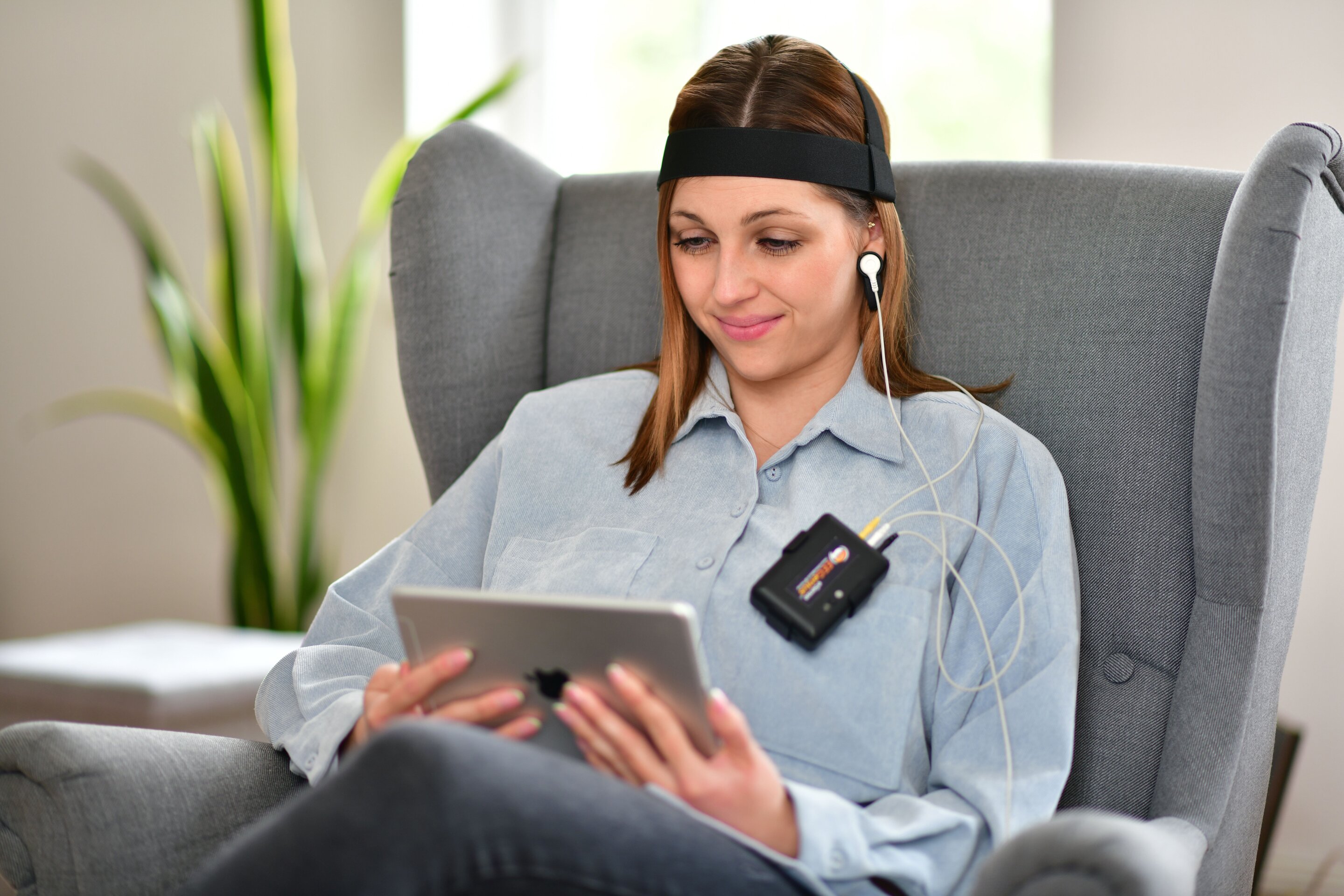
But alongside them, a number of wearable, nonimplantable BCIs are emerging. Despite their novelty, these are already being sold to consumers as tools for enhancing daily activities and treating cognitive and physical issues.
Companies are marketing wearable devices for meditation, attention monitoring and cognitive training. Some are selling wearables they claim can monitor fatigue, be used for gaming or increase states of flow while working. There are wearable BCIs on the market that come as headbands, sensorized headphones or baseball caps.
There are sensing devices—systems that measure brain activity from outside the body. Typically, these use electroencephalography (EEG), which detects tiny electrical brain signals from the scalp, or functional near-infrared spectroscopy (fNIRS), which measures changes in blood flow associated with brain activity.
These aim to translate noisy biological signals into meaningful information—for instance, whether your brain is struggling to focus and needs a rest—or enable some alternative interaction with or control of digital devices.
Source link