
This article has been reviewed according to Science X's editorial process and policies. Editors have highlighted the following attributes while ensuring the content's credibility:
As clinicians and researchers, we often see how heavily migraine attacks weigh on children and adolescents, yet non-pharmacological, child-friendly treatment options remain strikingly scarce. For years, our team at Nanfang Hospital and collaborating institutes have been looking into ways to bridge this gap.
Recently, our team set out to explore whether a gentle, at-home wearable technology—transcutaneous auricular vagus nerve stimulation (taVNS)—could offer a safe and feasible way to help young patients manage acute migraine episodes.
To understand how this works, you first need to know about the vagus nerve. It is one of the most extensive cranial nerves in our body, acting as a major highway between the brain and the internal organs. It plays a key role in the parasympathetic nervous system to regulate involuntary functions such as heart rate, digestion, and physiological homeostasis.
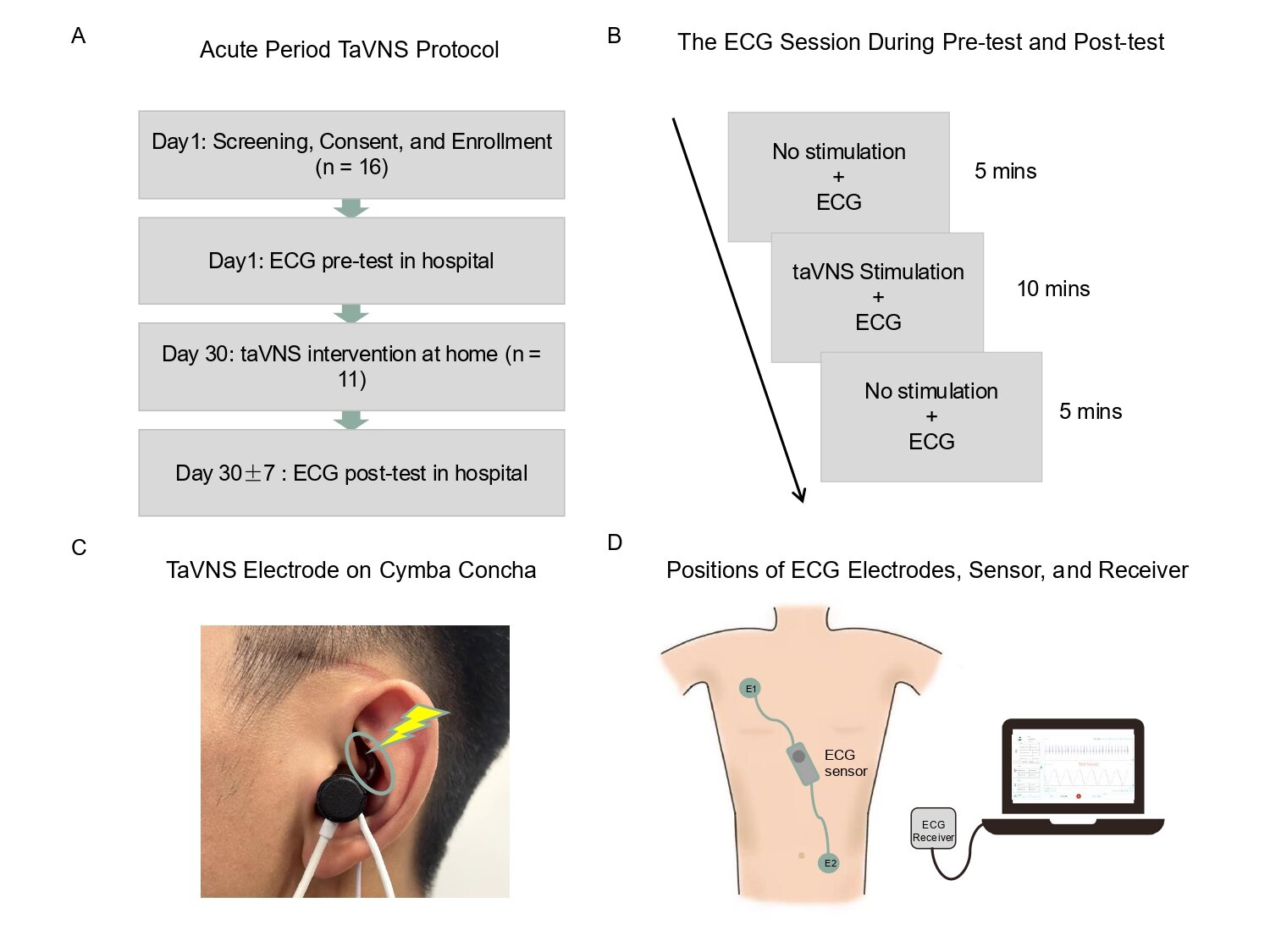
During a migraine attack, central pain processing and autonomic regulation can become disrupted. Transcutaneous auricular vagus nerve stimulation (taVNS) delivers mild electrical pulses to the auricular branch of the vagus nerve—specifically at the left cymba conchae of the outer ear, a region rich in vagal innervation. This non-invasive stimulation is thought to modulate autonomic activity and activate central pain-inhibitory pathways in the brain.
In our prospective, single-arm exploratory study recently published in Neuromodulation: Technology at the Neural Interface , we evaluated 11 pediatric and adolescent patients (ages 7 to 18) who self-administered 30-minute taVNS sessions at home over a 4-week period, tracking a total of 72 treated attacks.
Source link





