
This article has been reviewed according to Science X's editorial process and policies. Editors have highlighted the following attributes while ensuring the content's credibility:
What if a conversation about HIV prevention began not in a doctor's office but in a neighborhood beauty shop?
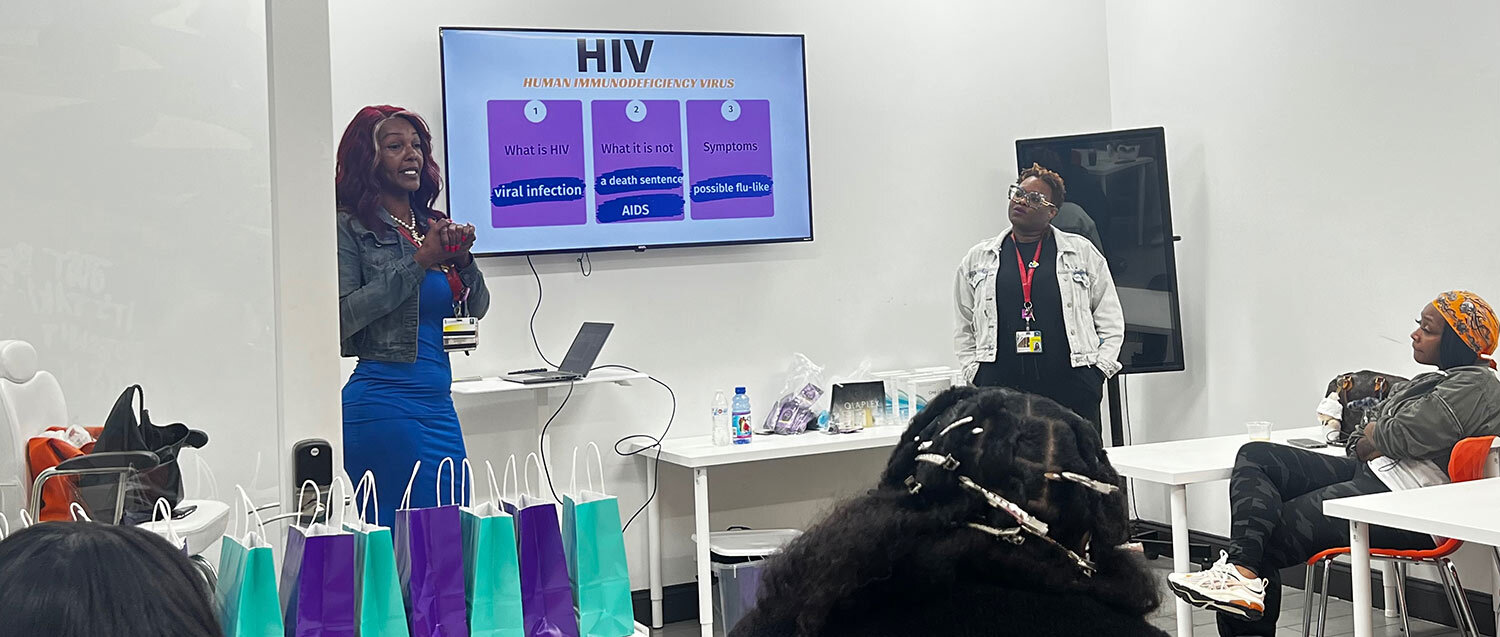
A new study from the JACQUES Initiative at the University of Maryland School of Medicine highlights the potential of Tea Talk, a community-designed sexual health education initiative that brings HIV prevention information into Black-owned beauty shops across Baltimore. Published Oct. 26 in the Journal of the International AIDS Society (JIAS), the study demonstrates how partnering with trusted community professionals can help make sexual health education more accessible, culturally responsive and relevant to the women it aims to reach.
In collaboration with six Baltimore-area beauty industry professionals, Tea Talk was designed to address barriers to HIV prevention among Black women by meeting them in familiar spaces where relationships, trust and open conversations already exist.
Black women continue to experience a disproportionate burden of HIV in the United States—accounting for half of HIV diagnoses in women, according to 2022 research, despite making up only 13% of the female population. Uptake of pre-exposure prophylaxis (PrEP)—medication that can prevent HIV acquisition—remains low among all women. Limited awareness, medical mistrust, stigma and the effects of gendered racism can all influence access to prevention services. Tea Talk offers a different approach: rather than expecting women to navigate these barriers on their own, the initiative brings prevention education into their communities.
"When we call Black women 'hard to reach,' we overlook how often our systems fail to show up in places where trust already lives.
Source link





