
This article has been reviewed according to Science X's editorial process and policies. Editors have highlighted the following attributes while ensuring the content's credibility:
The heart does not beat like a regular clock. Even at rest, the time between successive heartbeats continuously varies. Researchers at Tampere and Stanford universities have shown that the patterns of these subtle variations can reveal the early effects of cardiomyopathy, which is a hereditary heart disease. The paper is published in the journal Circulation: Arrhythmia and Electrophysiology.
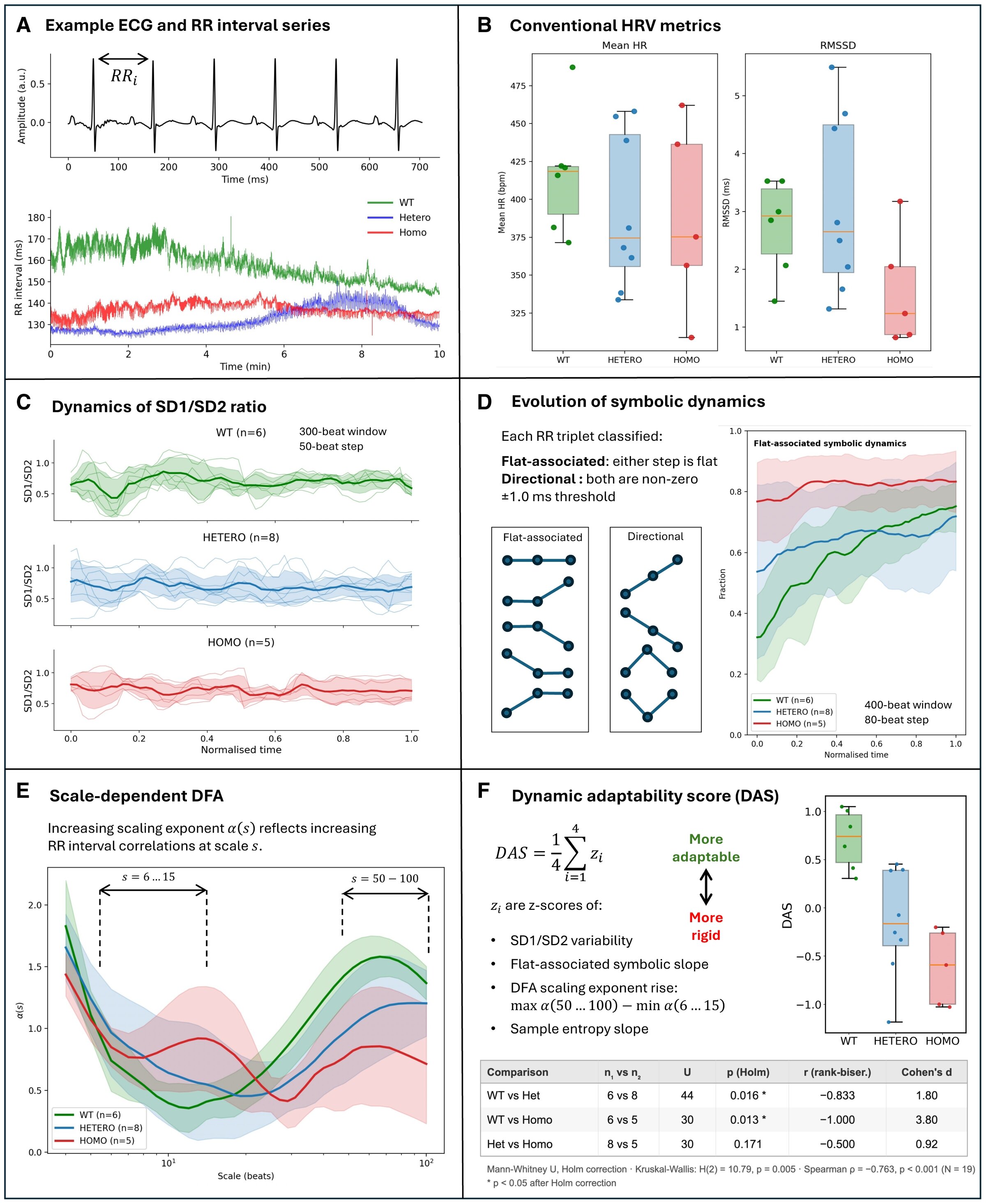
Heart function is commonly assessed by measuring heart rate and heart rate variability. Heart rate variability describes the variation between the intervals of successive heartbeats. However, conventional measures, such as ECG, do not fully capture how this variation is organized over time.
In their recently published study, researchers from Tampere and Stanford universities analyzed these variations in great detail across different timescales. The study combined experimental cardiac electrophysiology in an LMNA mouse model with advanced time-series analysis methods developed in physics. The methods enabled the detection of signs of heart disease at a very early stage.
LMNA is a gene that encodes proteins that form the structural framework of the cell nucleus. Mutations in this gene can cause cardiomyopathy, a disease of the heart muscle that may lead to abnormal heart rhythm, heart failure or sudden cardiac death. In the study, mice were engineered to carry an LMNA mutation that mimics the effects of cardiomyopathy in the heart.
Source link





