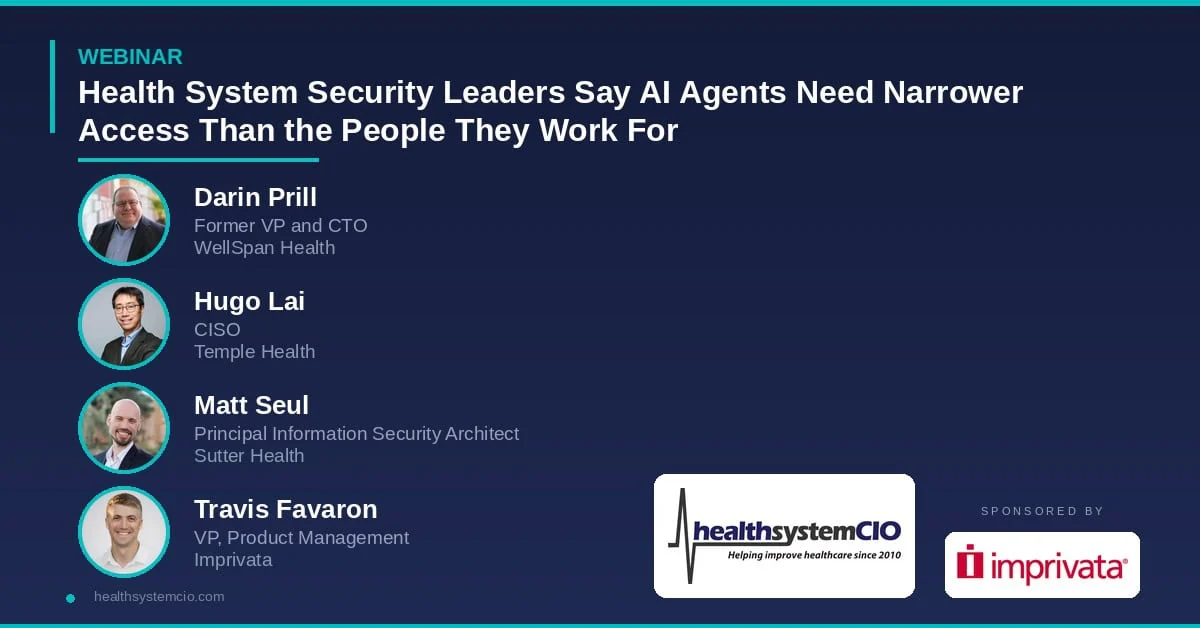
A former WellSpan Health CTO and panelists from Temple Health, Sutter Health and Imprivata explain how to stop AI agents from inheriting their users’ full permissions. Watch below or on YouTube.
An AI agent that signs in with an employee’s credentials can reach whatever that employee can, and it can find forgotten files in seconds. For that reason, the security leaders on a recent healthsystemCIO Webinar, sponsored by Imprivata, said agents need permissions of their own, limited to what each task requires. The panel included Darin Prill, MBA, CHCIO, former vice president and chief technology officer at WellSpan Health; Hugo Lai, chief information security officer at Temple Health; Matt Seul, principal information security architect at Sutter Health; and Travis Favaron, vice president of product management at Imprivata. Seul said he spoke as a private citizen.
The situation is a little chaotic, Prill said. Enterprise teams build agents for defined jobs in operations, clinical care and the revenue cycle. At the same time, researchers, physicians and other staff build their own, including agents that sort an inbox or flag an email from the boss. “The first tenet of security is know what you’re covering,” he said. The first job is learning who builds agents and what they authorize them to do.
In addition, the inventory has several layers, Lai said. It includes personal assistants such as Copilot and Claude, AI built into third-party products and models researchers deploy internally. Vibe coding adds a further risk, as researchers and doctors use it to build their own applications.
Source link