This article has been reviewed according to Science X's editorial process and policies. Editors have highlighted the following attributes while ensuring the content's credibility:
People with inflammatory bowel conditions such as ulcerative colitis often suffer from severe, long-lasting gut pain that lingers even after signs of inflammation are gone. Such abdominal pain can significantly affect one's quality of life, but unfortunately there are few treatment options. Uncertainty about the underlying mechanisms that drive this type of pain is responsible for the lack of effective treatments.
To clarify these mechanisms, researchers investigated how chronic gut pain is triggered and sustained in conditions like ulcerative colitis, focusing on the behavior of immune cells. They wanted to see if immune cells could directly feel physical pressure and trigger pain via nerve sensitization.
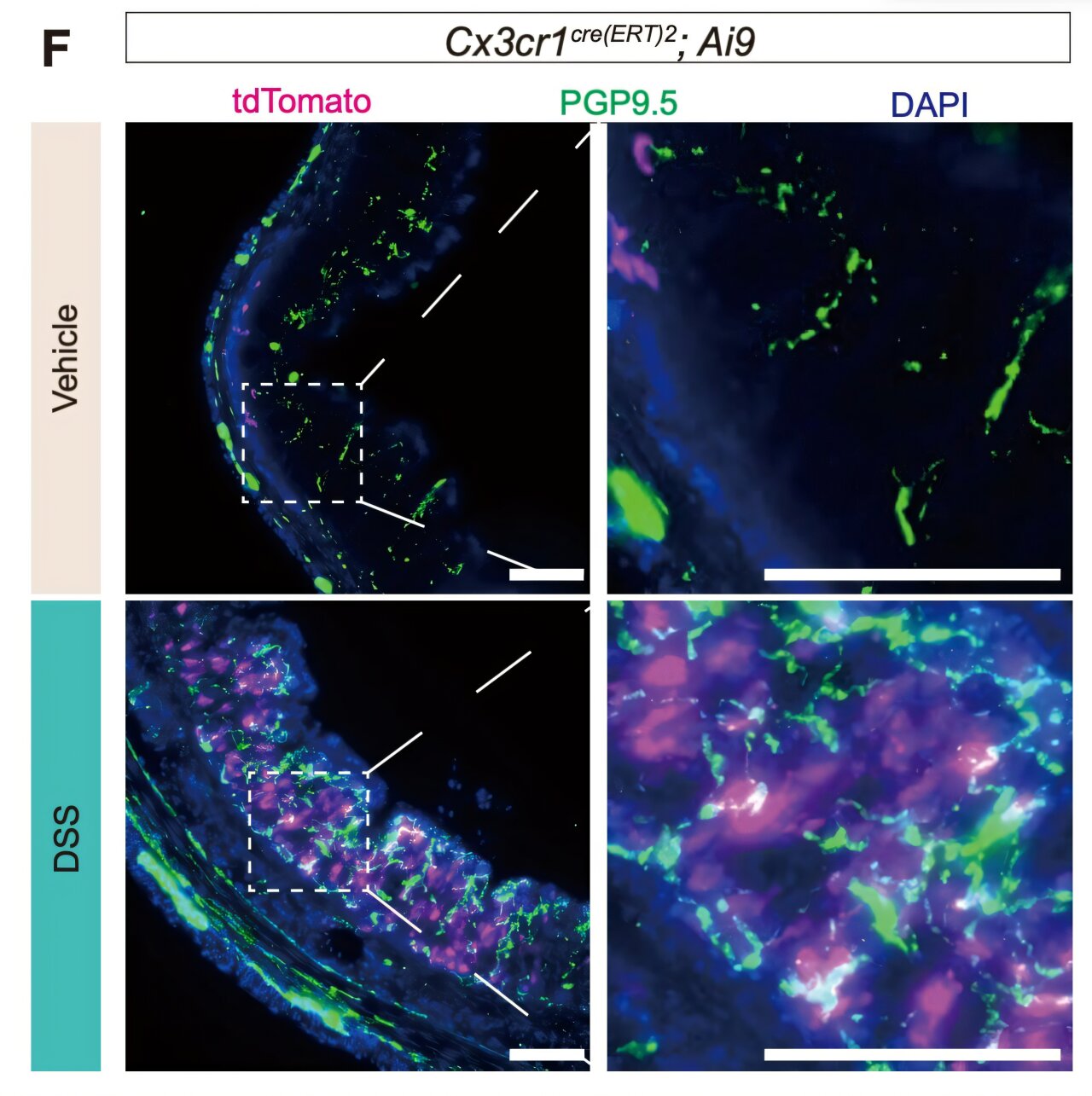
With the help of genetically engineered mice with ulcerative colitis-like inflammation, the researchers examined whether gut-wall immune cells called tissue-resident CX3CR1⁺ macrophages carry the mechanosensitive channel Piezo1. They then traced how tissue stiffness sets off a molecular chain reaction through this channel and the role it plays in pain pathways.
The resident CX3CR1⁺ macrophages turned out to be the major actors. They use Piezo1 to sense harmful mechanical changes in inflamed tissue, which activates a protein that switches on nerve growth factor (NGF) production. NGF carries the pain message from the immune cell to the pain-sensing nerve. Disrupting any part of this process by genetically knocking it out eliminated visceral pain sensitivity in both inflammatory and noninflammatory models.
Doctors have noticed that, in clinical practice, anti-inflammatory drugs can heal the gut lining, clear active ulcers and calm the immune system in people with inflammatory bowel conditions such as ulcerative colitis.
Source link